
Atari helped define the early history of home video gaming and played a major role in introducing electronic entertainment to millions of households around the world. Long before modern gaming systems became powerful multimedia devices connected to the internet, Atari consoles represented something entirely new and exciting: the ability to interact with a television screen from the comfort of home. From the earliest days of Pong to the ambitious Jaguar system of the 1990s, Atari’s hardware reflected both the rapid evolution of technology and the growing cultural importance of video games.

(1972 – Atari’s first Pong game)

(1977 – Atari Tele-Games Video Game console sold through Sears)
The story began in 1972 with Pong, one of the first commercially successful video games. Originally released as an arcade machine, Pong transformed a simple electronic table tennis concept into a social phenomenon. The game’s simplicity was one of its greatest strengths. Two paddles, one ball, and straightforward gameplay made it instantly understandable to nearly anyone who encountered it. Atari quickly discovered that the public was fascinated by interactive electronic entertainment, and the success of Pong helped establish the foundation of the modern video game industry. Soon afterward, Atari brought Pong into the home, proving that video games could become part of everyday family life.
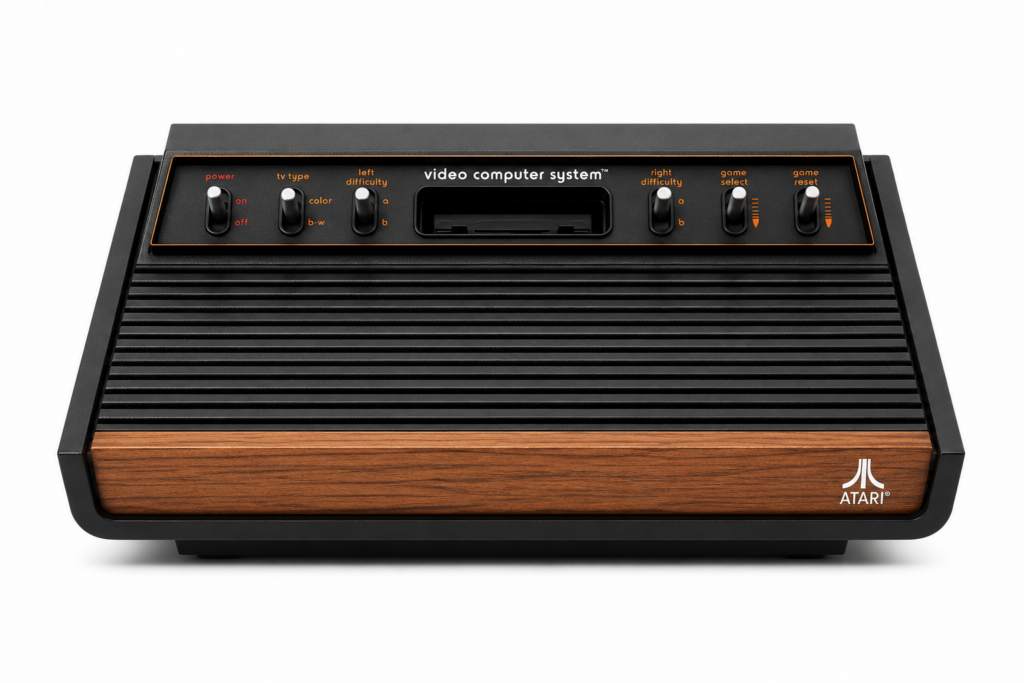
(1977 – Atari 2600 “Heavy-sixer” was released)
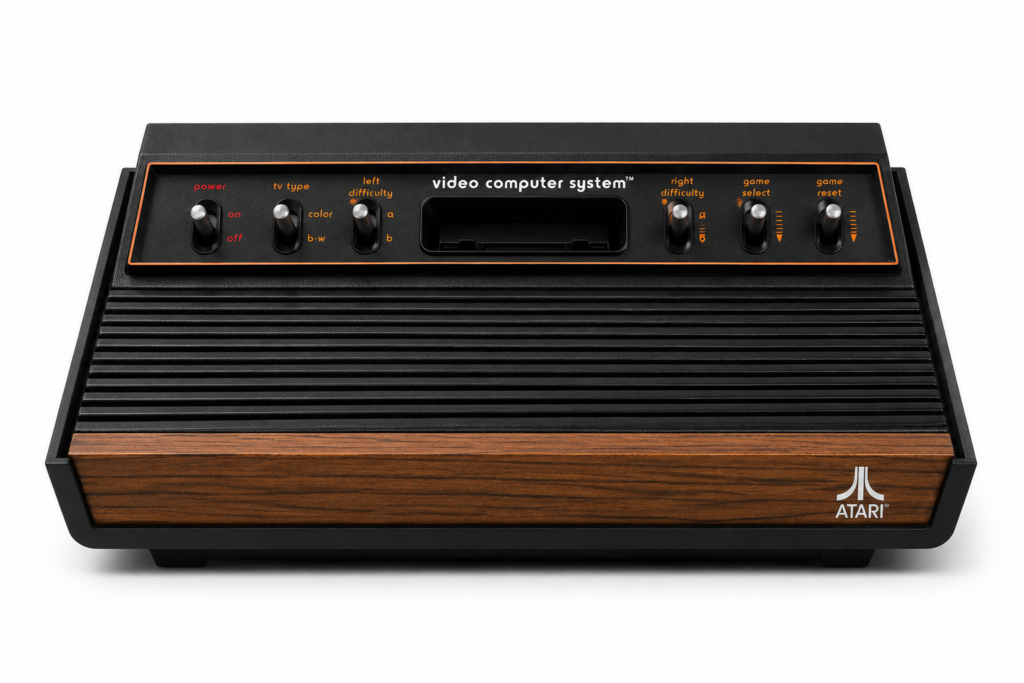
(1978 – Atari 2600 – “light-sixer” was released)
That early success eventually led to one of the most important systems in gaming history: the Atari 2600. Released in 1977 as the Atari Video Computer System (VCS), the console revolutionized home gaming through the use of interchangeable game cartridges. Instead of purchasing a dedicated machine that could play only one game, consumers could now build entire libraries of games for a single system. This idea became one of the defining standards of the video game industry.
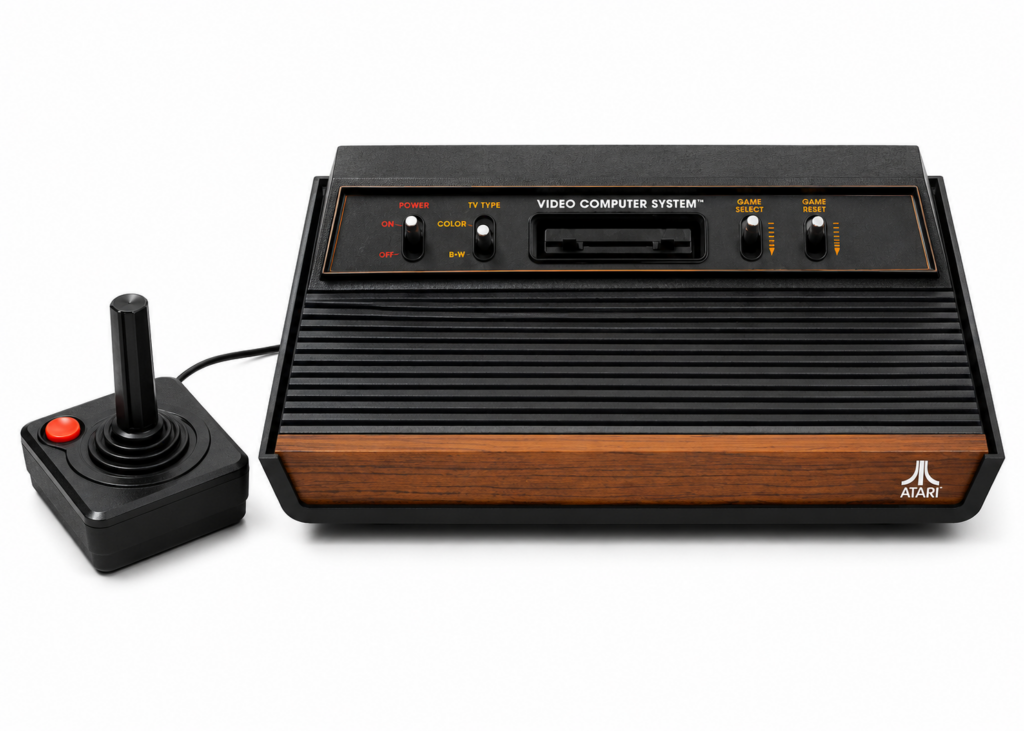
(1980 – Atari 2600 “Woody 4-switch” was released)
The Atari 2600 quickly became a cultural icon. Its distinctive woodgrain styling, simple joystick controller, and expanding library of games helped bring video gaming into living rooms across North America and beyond. Popular titles such as Adventure, Space Invaders, Missile Command, Pitfall!, and Asteroids became legendary parts of gaming history. For many people, the Atari 2600 was more than just a toy — it was their first experience with interactive technology. It introduced an entire generation to the excitement of digital entertainment and helped shape the future of gaming culture.
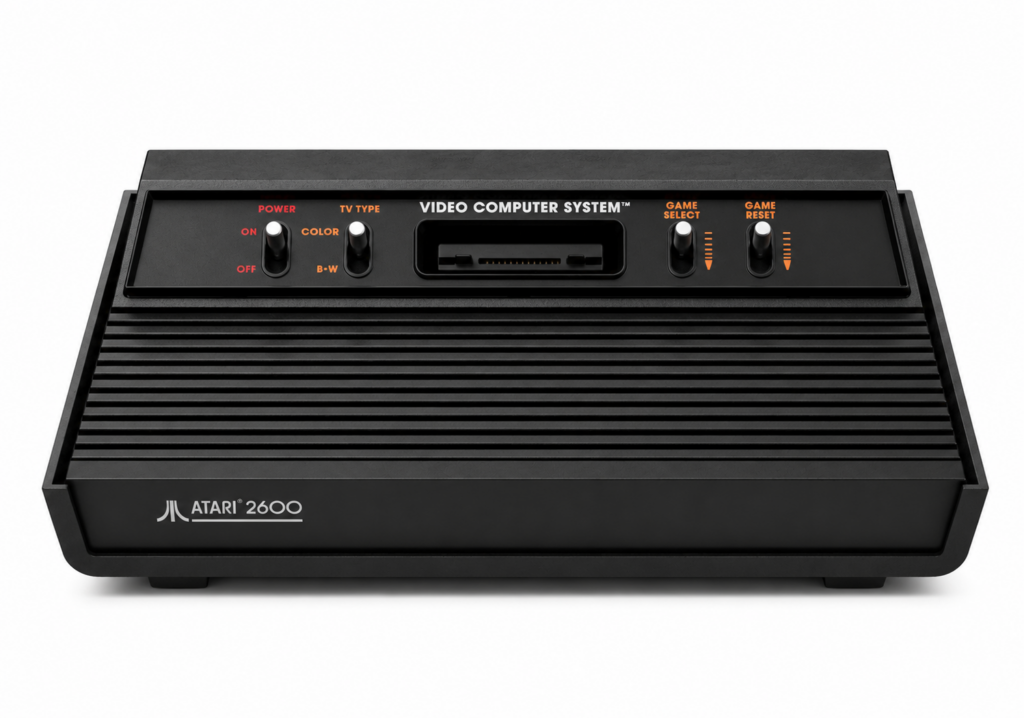
(1982 – Atari 2600 – Darth Vader was released)
As the gaming industry evolved during the early 1980s, Atari continued experimenting with more advanced systems. The Atari 5200 expanded upon Atari’s existing technology with improved graphics, sound, and arcade-style gameplay inspired by the company’s successful 8-bit computers. While the system faced challenges with controller design and compatibility, it demonstrated Atari’s ambition to push home gaming technology forward.
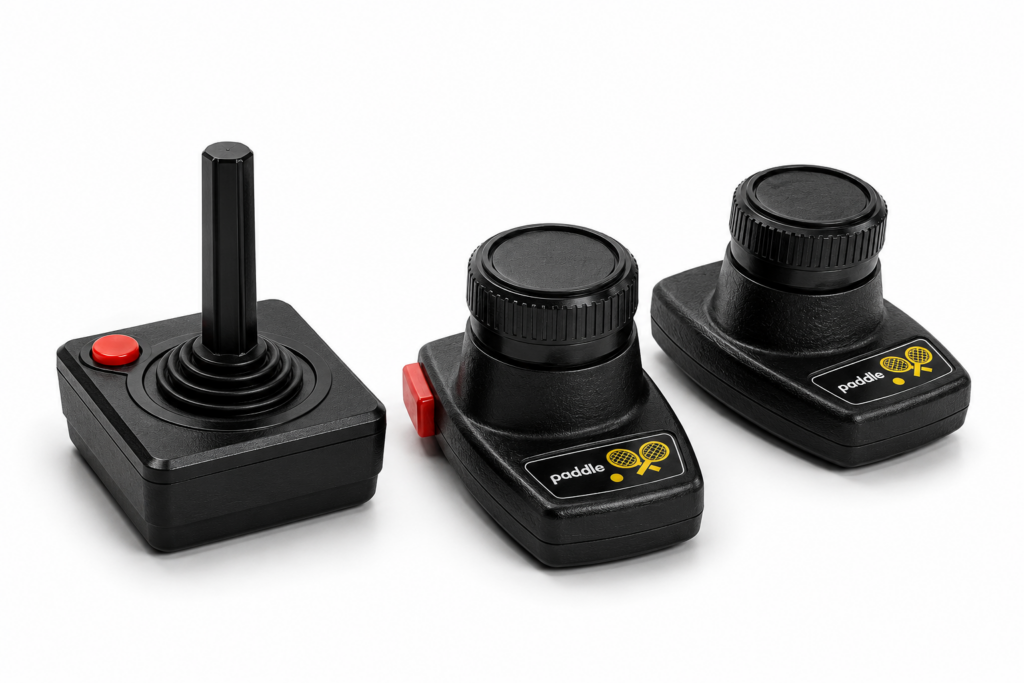
(Classic game controllers – The joystick and the paddles)
Following the video game crash of 1983, Atari attempted to rebuild its position in the market with the Atari 7800. Designed to offer arcade-quality gaming at home while remaining compatible with many Atari 2600 games, the 7800 represented Atari’s effort to reconnect with players who had grown up with the brand. Although competition from companies like Nintendo and Sega would reshape the gaming landscape during this period, Atari still maintained a loyal fan base and continued producing innovative hardware.

(1982 – Atari 5200 was released)
Atari also explored portable gaming technology with the release of the Atari Lynx in 1989. The Lynx was technologically impressive for its time, featuring a full-color backlit screen, advanced graphics capabilities, and support for multiplayer gaming. In many ways, the system was ahead of its time, offering features that would not become common in handheld gaming devices until years later. While it struggled against Nintendo’s dominant Game Boy, the Lynx remains highly respected among collectors and retro gaming enthusiasts for its ambitious design and impressive library of games.

(1986 – Atari 7800+ was released)
In the 1990s, Atari made one final major push into the console market with the Atari Jaguar. Marketed as the world’s first 64-bit gaming system, the Jaguar represented Atari’s attempt to compete in a rapidly changing industry dominated by increasingly powerful hardware and growing competition. The console featured advanced technical capabilities and ambitious game concepts, though it ultimately struggled to gain widespread commercial success. Despite this, the Jaguar remains a fascinating and important part of Atari’s legacy, symbolizing both the company’s enduring ambition and the challenges of surviving in a highly competitive gaming market.

(1987 – Atari XEGS was released)
Today, Atari consoles continue to hold a special place in the history of technology and entertainment. Collectors, historians, retro gaming enthusiasts, and longtime fans continue to preserve, restore, and celebrate these systems decades after their original release. Whether it is the unmistakable click of an Atari joystick, the glow of a CRT television displaying Pong, or the nostalgia of loading a favorite cartridge into an Atari 2600, these machines still evoke powerful memories for millions of people around the world.

(1989 – Atari Lynx was released)
Atari’s consoles were more than just gaming systems. They represented a moment when the future of interactive entertainment was still being discovered. These machines helped transform televisions into interactive devices, introduced families to home gaming, and inspired generations of programmers, designers, and technology enthusiasts. Their influence can still be seen throughout modern gaming culture today.

(1993 – Atari Jaguar was released)
If you would like to explore the complete history of Atari’s home gaming systems in greater detail, including hardware variations, accessories, rare systems, behind-the-scenes stories, and the lasting impact of Atari on gaming and technology culture, be sure to check out my book, Atari Addict: A Collector’s and Historian’s Guide.
