
Release Information
- Released: 1982
- Original Name: Atari Video Computer System (VCS)
- Manufacturer: Atari
- Nickname: “Darth Vader” console
- Type: Cartridge-based home video game console
The Atari 2600 “Darth Vader”
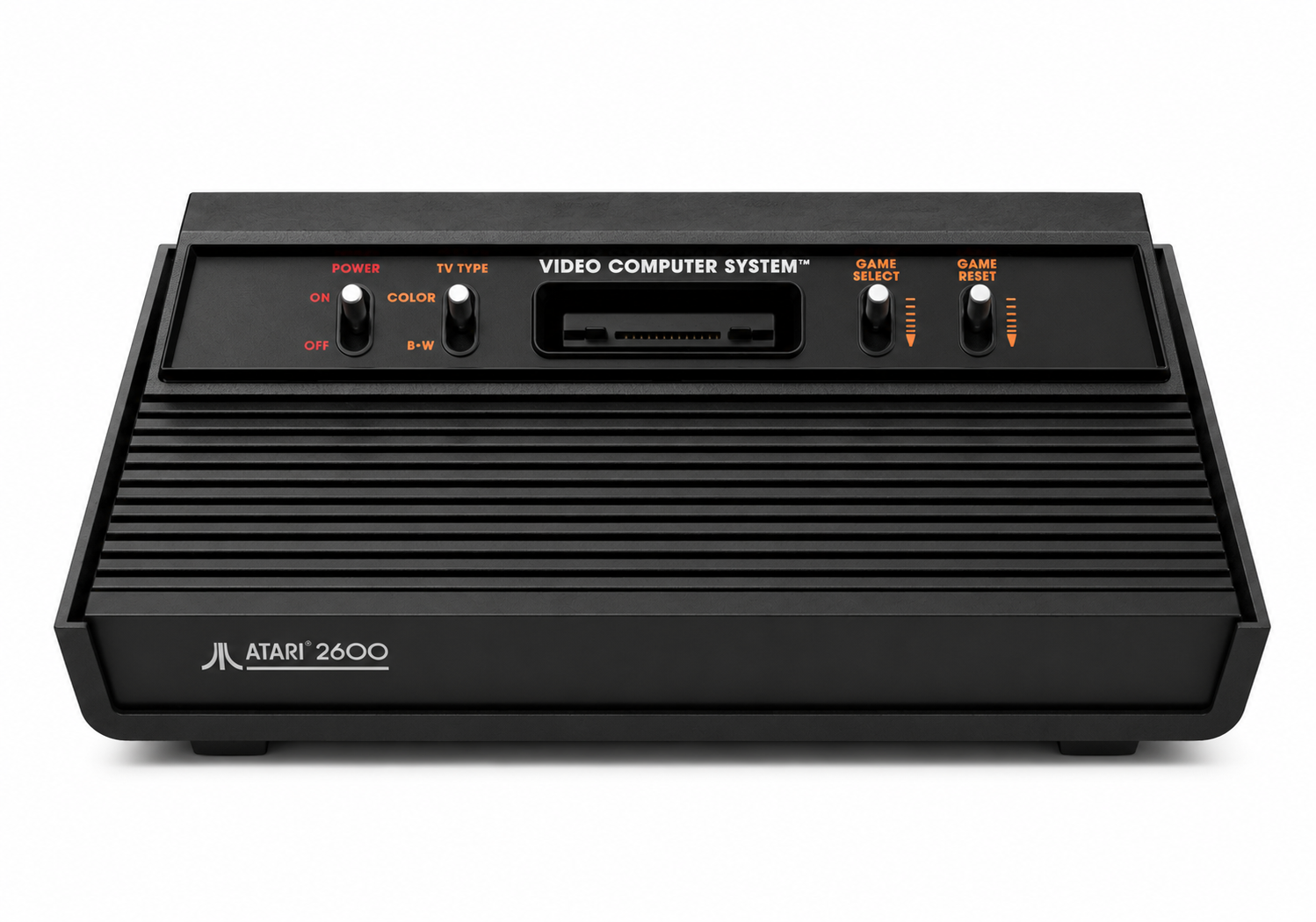
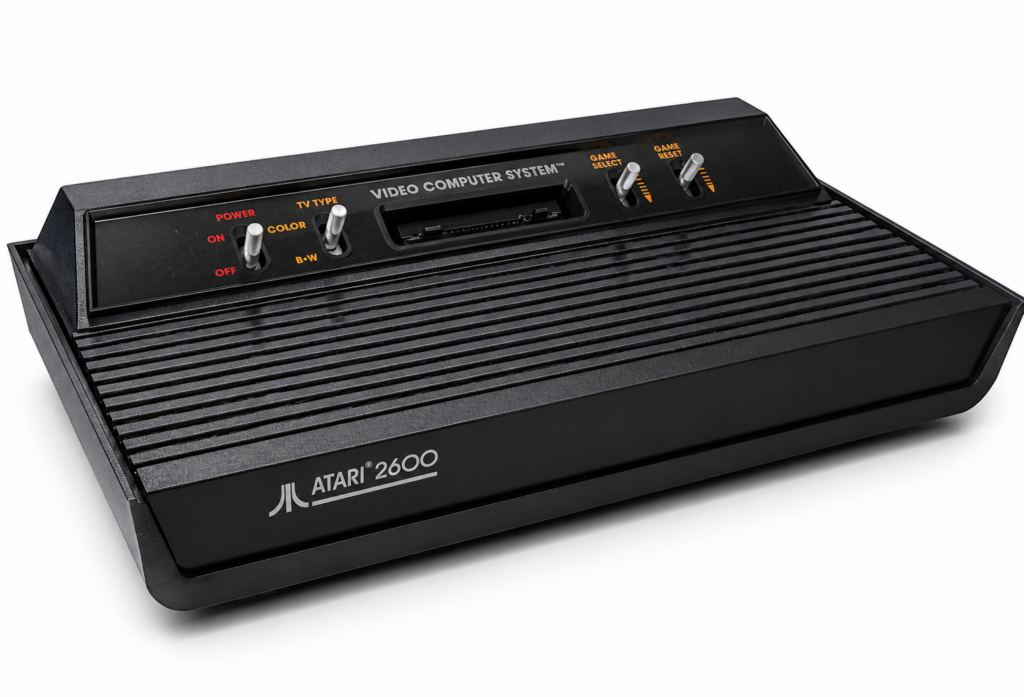
The Atari 2600 “Darth Vader” console is one of the most recognizable later versions of the Atari 2600 and remains a favorite among retro gaming enthusiasts and collectors. Released in the early 1980s, the nickname “Darth Vader” was never officially used by Atari, but fans quickly adopted it because of the console’s sleek all-black appearance, which reminded many people of the famous Darth Vader character from the Star Wars films. The darker design marked a major visual departure from the earlier faux woodgrain “Woody” versions of the Atari 2600 and reflected the changing design trends of consumer electronics during the 1980s.
The Darth Vader model represented Atari’s effort to modernize the appearance of the Atari 2600 while keeping the system affordable and competitive in an increasingly crowded video game market. The console featured a streamlined black plastic case with silver trim and a simplified four-switch design. Unlike earlier six-switch models, the player difficulty switches were moved to the rear of the console, helping create a cleaner and more compact front panel layout. Despite the cosmetic redesign, the system remained fully compatible with Atari’s massive library of cartridge-based games.
By the time the Darth Vader model was introduced, the Atari 2600 had already become one of the most successful home gaming systems in history. The console supported hundreds of games covering arcade action, sports, adventure, racing, educational software, and more. Titles such as Pitfall!, Space Invaders, River Raid, Missile Command, Adventure, and Yars’ Revenge helped solidify the Atari 2600’s reputation as the dominant home gaming platform of its era. For many players growing up in the early 1980s, the Darth Vader console became their introduction to home video gaming.
Internally, the Darth Vader version still relied on the same fundamental hardware architecture that powered earlier Atari 2600 systems. Using the MOS Technology 6507 processor and Atari’s custom TIA graphics and sound chip, the console demonstrated how creative programming could overcome severe technical limitations. With only 128 bytes of RAM, developers were still able to create surprisingly complex and entertaining games that pushed the hardware far beyond its original expectations.
Today, the Atari 2600 Darth Vader console remains one of the most iconic later revisions of the Atari 2600 family. Its sleek black design, strong connection to early 1980s gaming culture, and compatibility with one of the most legendary game libraries in video game history continue to make it highly collectible and deeply nostalgic for retro gaming fans around the world.
Physical Design
- All-black plastic case
- Silver trim accents
- Four front-mounted switches
- Difficulty switches relocated to rear panel
- Streamlined cost-reduced design
CPU
- MOS Technology 6507
- Clock Speed: Approximately 1.19 MHz
Graphics & Sound
- Custom TIA (Television Interface Adapter) chip
- Approximate resolution: 160 × 192
- Color graphics support
- Two-channel sound output
Memory
- RAM: 128 bytes
- Cartridge-based ROM game storage
Media Format
- Plug-in game cartridges
- Compatible with large Atari 2600 software library
Controllers
- Atari CX40 joystick support
- Paddle controllers
- Driving controllers
- Keyboard controllers (supported by some games)
Output
- RF television output
- Compatible with CRT televisions
Switches
- Power
- TV Type (Color/B&W)
- Game Select
- Game Reset
- Left Difficulty (Located on Rear)
- Right Difficulty (Located on Rear)
Notable Features
Most famous four-switch Atari 2600 model
- Sleek black redesign of the classic Atari console
- Fully compatible with earlier Atari 2600 games and accessories
- One of the most recognizable Atari console variations ever produced

Atari 2600 “Darth Vader”
- The Atari 2600 “Darth Vader” earned its nickname from its sleek all-black design.
- It replaced the earlier woodgrain styling used on classic Atari 2600 consoles.
- It became one of the most recognizable and collectible later versions of the Atari 2600.
