

Few companies have left a mark on technology and entertainment quite like Atari. Long before video games became a multi-billion-dollar industry, Atari helped introduce the world to interactive electronic entertainment. From arcades and home consoles to personal computers and handheld gaming systems, Atari’s innovations inspired a generation of players, programmers, and technology enthusiasts. The company’s history is one of remarkable successes, bold experimentation, unexpected setbacks, and a lasting legacy that continues to influence gaming and computing today.
Want to Learn More?
The history presented on this page offers a high-level overview of Atari’s remarkable journey, from the creation of Pong in 1972 to the modern Atari revival. However, Atari’s story is far richer and more fascinating than can be captured in a single timeline. If you’d like to explore the people, products, innovations, successes, and challenges that shaped one of the most influential companies in gaming and computing history, consider picking up a copy of Atari Addict. The book takes a deeper dive into Atari’s consoles, computers, peripherals, software, and legacy, providing collectors, enthusiasts, and newcomers with a comprehensive look at the company that helped change the world of technology and entertainment forever.
The Bushnell Era (1972–1978)
The Birth of an Industry
Atari was founded in 1972 by Nolan Bushnell and Ted Dabney in Sunnyvale, California. At the time, the idea of electronic games was still in its infancy. Inspired by early computer experiments and a desire to bring interactive entertainment to the masses, Bushnell and Dabney created Atari with a simple goal: make games that people would enjoy playing.
That same year, Atari released Pong, a simple electronic table-tennis game that quickly became a sensation. What began as a test machine in a local bar soon attracted crowds of eager players, proving that video games could be a viable form of entertainment. Pong’s success helped launch the arcade video game industry and established Atari as one of the most exciting young companies in Silicon Valley.
Throughout the 1970s, Atari expanded rapidly. The company released a growing collection of arcade hits, including Breakout, Night Driver, and numerous variations of Pong. In 1975, Atari brought video gaming into the living room with Home Pong, allowing families to experience electronic gaming without visiting an arcade.
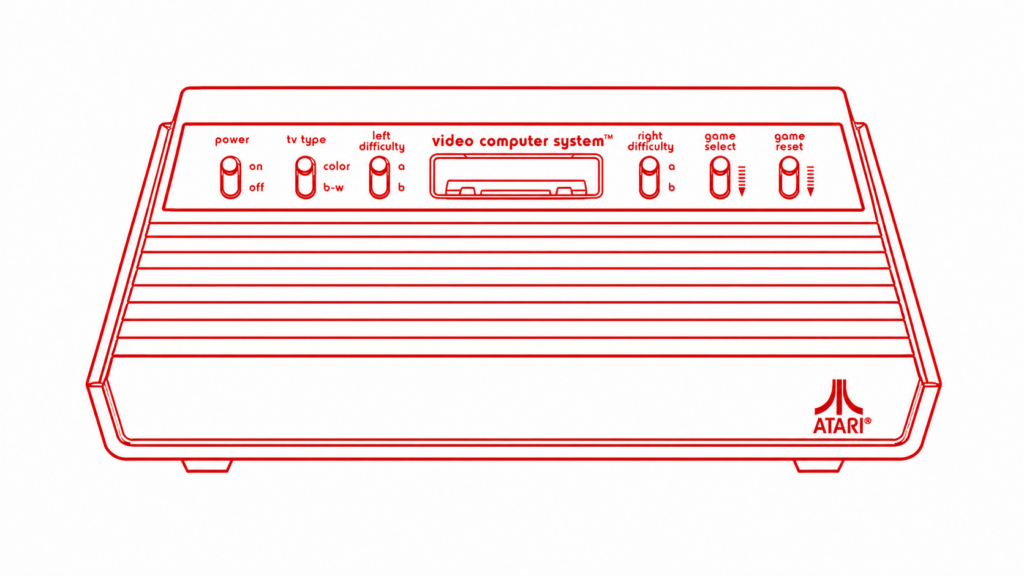
The company’s most important breakthrough arrived in 1977 with the release of the Atari Video Computer System, later known as the Atari 2600. Unlike earlier dedicated game consoles, the Atari 2600 used interchangeable cartridges, allowing players to build a library of games. This revolutionary concept helped define the future of home gaming.
As Atari’s success accelerated, Bushnell sold the company to Warner Communications in 1976. By the end of the decade, Atari had become one of the fastest-growing companies in America and had firmly established itself as the leader of the emerging video game industry.
The Warner Era (1978–1984)
The Golden Age of Atari
Under Warner Communications, Atari entered what many fans consider its golden age. The company dominated arcades, home gaming, and home computing simultaneously, a remarkable achievement that few technology companies have ever matched.
Atari’s arcade division produced some of the most influential games ever created. Asteroids, Missile Command, Centipede, Tempest, and Star Wars became iconic arcade experiences that defined the golden age of coin-operated gaming. Arcades around the world filled with Atari cabinets, introducing millions of people to video games for the first time.
At home, the Atari 2600 became a cultural phenomenon. The release of Space Invaders in 1980 demonstrated that arcade-quality experiences could be brought into the living room, helping drive console sales to unprecedented levels. For many families, the Atari 2600 became their first gaming system and their introduction to interactive entertainment.
Atari was also a major force in personal computing. The Atari 400 and Atari 800 computers offered advanced graphics and sound capabilities that often surpassed competing systems. Throughout the early 1980s, Atari’s XL series continued to expand the company’s presence in homes, schools, and hobbyist communities.
However, rapid growth brought challenges. Increased competition, market saturation, inconsistent software quality, and a flood of third-party games contributed to a decline in consumer confidence. These problems culminated in the Video Game Crash of 1983, one of the most significant downturns in gaming history. Sales collapsed across the industry, and Atari found itself struggling to adapt to a rapidly changing marketplace.
By 1984, Warner Communications decided to sell Atari’s consumer division, bringing an end to one of the most successful chapters in the company’s history.
The Tramiel Era (1984–1996)
Reinvention Through Computing
In 1984, Atari’s consumer division was purchased by Jack Tramiel, founder of Commodore International. Tramiel brought a new vision to Atari, focusing heavily on personal computers and positioning the company as a competitor in the rapidly expanding home computing market.
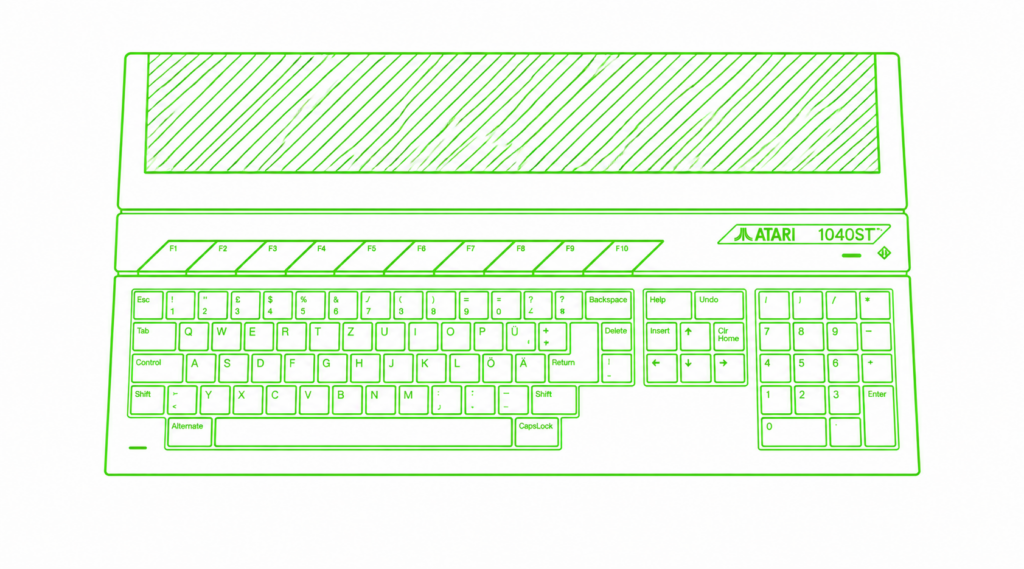
The result was the Atari ST, introduced in 1985. Featuring a graphical user interface, built-in MIDI ports, and impressive performance for its price, the ST became particularly popular among musicians, graphic artists, desktop publishers, and computer enthusiasts. While it faced stiff competition from Apple, Commodore, and IBM-compatible PCs, the Atari ST developed a loyal following, especially throughout Europe.
During this period, Atari continued to experiment with new hardware. The company released the Atari Lynx in 1989, one of the world’s first color handheld gaming systems. Technically advanced and ahead of its time, the Lynx offered impressive graphics and multiplayer capabilities, though it struggled against Nintendo’s dominant Game Boy.
Atari also pursued high-end computing with systems such as the TT030 and Falcon030. These machines showcased Atari’s commitment to innovation and multimedia capabilities, but they remained niche products in an increasingly competitive marketplace.
In 1993, Atari launched its final major console, the Atari Jaguar. Marketed as the world’s first 64-bit gaming system, the Jaguar offered impressive technical specifications but faced challenges related to software support, marketing, and growing competition from Sega, Nintendo, and Sony. Despite its ambitious design, the Jaguar failed to achieve significant commercial success.
In 1996, Atari Corporation merged with JTS, effectively ending Atari’s role as a major hardware manufacturer. Although the company would continue through various ownership changes, the era of Atari-designed computers and consoles had come to a close.
Atari’s Lasting Legacy
While Atari’s dominance eventually faded, its influence never disappeared. The company helped create the arcade industry, pioneered cartridge-based home gaming, contributed to the growth of personal computing, and inspired countless developers, engineers, and entrepreneurs.
Today, Atari remains one of the most recognizable names in gaming history. Modern products such as the Atari VCS, Atari 2600+, and Atari 7800+ demonstrate that interest in the brand remains strong more than fifty years after Pong first appeared in a California bar.
More importantly, Atari’s legacy lives on through the people whose lives it touched. For many enthusiasts, Atari was their first video game, first computer, first experience with programming, or first glimpse into the possibilities of technology. The machines may have changed, but the sense of discovery and excitement that Atari inspired continues to connect generations of fans around the world.
The story of Atari is ultimately more than the story of a company. It is the story of an industry being born, evolving, and transforming the world of entertainment forever.
Atari Hardware Timeline (1972–Present)
Welcome to the Atari Hardware Timeline, a chronological journey through more than five decades of Atari innovation. From the release of Pong in 1972 to modern systems such as the Atari 2600+ and Atari 7800+, Atari has produced an extraordinary range of hardware that helped shape the video game, home computer, and digital entertainment industries.
This timeline brings together Atari’s arcade machines, pinball tables, home consoles, handheld systems, personal computers, peripherals, and modern revival hardware in a single reference. Each entry includes the year of release, a brief description of the product, its primary release regions, and available sales information where reliable figures exist. In some cases, exact production or sales numbers were never published by Atari, and estimates may vary between sources.
Whether you are a longtime collector, a retro gaming enthusiast, a computer historian, or someone discovering Atari for the first time, this timeline serves as a comprehensive overview of the hardware legacy of one of the most influential names in technology and gaming history. From the Atari 2600 and Atari 800XL to the Atari ST, Lynx, Jaguar, and beyond, every product tells part of the story of a company whose impact continues to be felt around the world.
Note: This timeline focuses on Atari-branded hardware products and major hardware releases. Software titles, game cartridges, and most third-party accessories are not included unless they represent a significant hardware platform or peripheral in Atari’s history.
| Year | Product | Type | What it was | Main release area | Rough sales |
|---|---|---|---|---|---|
| 1972 | Pong | Arcade cabinet | Atari’s first major arcade hit; electronic table-tennis game. | U.S., later international | Over 8,000 arcade units by end of 1974. (Wikipedia) |
| 1973 | Space Race | Arcade | Two-player space racing game. | U.S. | Unknown |
| 1973 | Pong Doubles | Arcade | Four-player Pong variation. | U.S. | Unknown |
| 1973 | Gotcha | Arcade | Maze/chase arcade game. | U.S. | Unknown |
| 1974 | Quadrapong / Elimination | Arcade | Four-player Pong-style game, also tied to Kee Games. | U.S. | Unknown |
| 1974 | Rebound | Arcade | Volleyball-style Pong variant. | U.S. | Unknown |
| 1974 | Gran Trak 10 | Arcade | Early driving arcade game with steering wheel and pedals. | U.S. | Unknown |
| 1974 | Gran Trak 20 | Arcade | Two-player version of Gran Trak. | U.S. | Unknown |
| 1974 | Touch Me | Electronic arcade | Simon-style memory game before Simon. | U.S. | Unknown |
| 1975 | Hi-Way | Arcade cockpit | Early sit-down driving cabinet. | U.S. | Unknown |
| 1975 | Steeplechase | Arcade | Horse-racing arcade game. | U.S. | Unknown |
| 1975 | Indy 800 | Arcade | Large eight-player driving cabinet. | U.S. | Unknown |
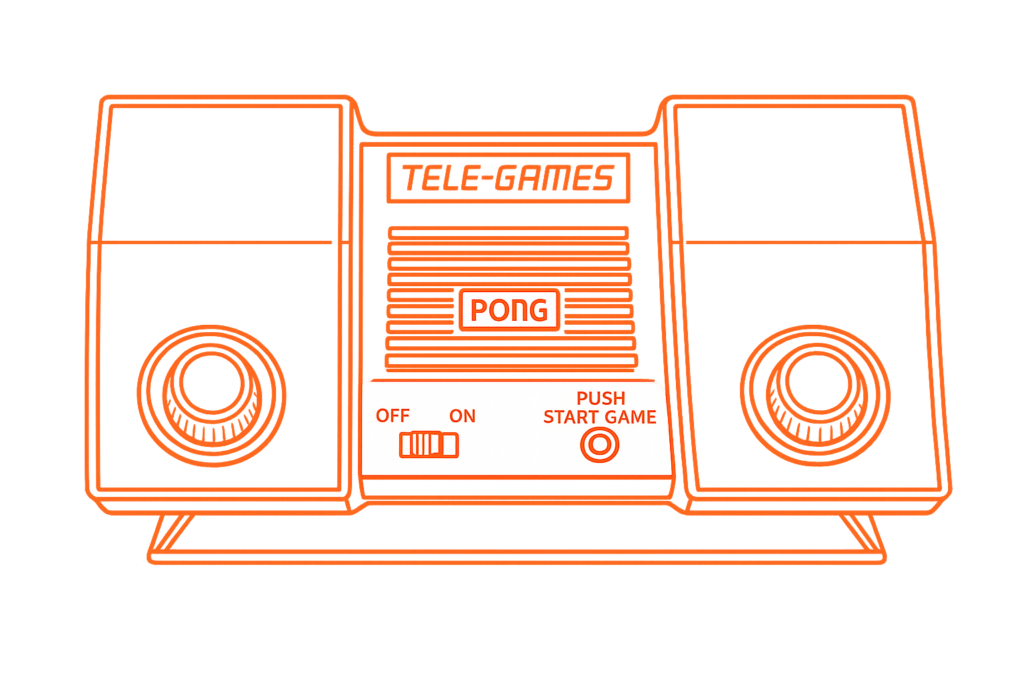
| 1975 | Home Pong / Sears Tele-Games Pong | Dedicated home console | Home version of Pong, initially sold through Sears. | U.S. | About 150,000 Sears units in 1975 plus about 50,000 Atari-branded units later. (Wikipedia) |
| 1976 | Super Pong | Dedicated console | Home Pong system with multiple Pong-style games. | U.S. | Unknown |
| 1976 | Hockey Pong | Dedicated console | Dedicated hockey/Pong variant. | U.S. | Unknown |
| 1976 | Atari Video Music C-240 | Music visualizer | Home device that generated TV visuals from music input. | U.S. | Unknown; niche product |
| 1976 | Night Driver | Arcade | First-person driving arcade game. | U.S., international | Unknown |
| 1976 | Sprint 2 | Arcade | Two-player driving game. | U.S. | Unknown |
| 1976 | LeMans | Arcade | Driving arcade game. | U.S. | Unknown |
| 1976 | Cops ’n Robbers | Arcade | Maze/chase driving game. | U.S. | Unknown |
| 1976 | Flyball | Arcade | Baseball arcade game. | U.S. | Unknown |
| 1976 | Breakout | Arcade | Brick-breaking arcade classic. | U.S., international | Unknown |
| 1977 | Atari Video Pinball | Dedicated console | Home console for pinball/breakout-style games. | U.S. | Unknown |
| 1977 | Super Pong Ten | Dedicated console | Ten-game Pong-style console. | U.S. | Unknown |
| 1977 | Ultra Pong / Ultra Pong Doubles | Dedicated console | Expanded home Pong systems. | U.S. | Unknown |
| 1977 | Stunt Cycle | Dedicated console | Motorcycle stunt game console. | U.S. | Unknown |
| 1977 | Atari VCS / Atari 2600 | Home console | Cartridge-based console that became Atari’s most famous system. | U.S., later worldwide | Commonly cited around 30 million worldwide. (Wikipedia) |
| 1977 | Atari Pinball | Pinball machine | Atari’s first pinball machine. | U.S. | Unknown |
| 1977 | Airborne Avenger | Pinball | Wide-body pinball machine. | U.S. | Unknown |
| 1977 | Time 2000 | Pinball | Atari pinball machine. | U.S. | Unknown |
| 1977 | Sprint 4 / Sprint 8 | Arcade | Four- and eight-player driving cabinets. | U.S. | Unknown |
| 1977 | Canyon Bomber | Arcade | Bombing/target arcade game. | U.S. | Unknown |
| 1977 | Destroyer | Arcade | Naval combat arcade game. | U.S. | Unknown |
| 1977 | Dominos / Dominos 4 | Arcade | Snake/domino-style multiplayer arcade game. | U.S. | Unknown |
| 1978 | Middle Earth | Pinball | Fantasy-themed Atari pinball machine. | U.S. | Unknown |
| 1978 | Space Riders | Pinball | Atari pinball machine. | U.S. | Unknown |
| 1978 | Super Bug | Arcade | Driving arcade game. | U.S. | Unknown |
| 1978 | Avalanche | Arcade | Paddle/catching arcade game. | U.S. | Unknown |
| 1978 | Football | Arcade | Trackball sports arcade game. | U.S. | Unknown |
| 1978 | Fire Truck | Arcade | Cooperative driving arcade game. | U.S. | Unknown |
| 1979 | Hercules | Pinball | Oversized pinball machine, famous for its huge cabinet. | U.S. | Unknown |
| 1979 | Atari 400 | 8-bit computer | Entry-level home computer with membrane keyboard. | U.S., Europe | Part of Atari 8-bit family, total family sales roughly 2–4 million, depending on source. (Wikipedia) |
| 1979 | Atari 800 | 8-bit computer | Higher-end 8-bit computer with full keyboard and expansion. | U.S., Europe | Included in Atari 8-bit totals. |
| 1979 | Lunar Lander | Arcade | Vector arcade game based on landing a spacecraft. | U.S., international | Unknown |
| 1979 | Asteroids | Arcade | Vector arcade classic and one of Atari’s biggest coin-op hits. | U.S., international | Roughly 70,000+ often cited, but varies by source. |
| 1980 | Atari 2600 “4-switch” model | Console revision | Cost-reduced redesign of the VCS/2600. | U.S., worldwide | Included in 2600 total |
| 1980 | Battlezone | Arcade | Vector tank-combat arcade game. | U.S., international | Unknown |
| 1980 | Missile Command | Arcade | Trackball defense arcade classic. | U.S., international | Unknown |
| 1980 | Centipede | Arcade | Trackball shooter arcade classic. | U.S., international | Unknown |
| 1981 | Tempest | Arcade | Color vector tube-shooter arcade game. | U.S., international | Unknown |
| 1981 | Warlords Cocktail | Arcade | Four-player paddle arcade table. | U.S. | Unknown |
| 1981 | Atari 410 Program Recorder | Computer peripheral | Cassette storage device for Atari 8-bit computers. | U.S., Europe | Unknown |
| 1981 | Atari 810 Disk Drive | Computer peripheral | 5.25-inch floppy drive for Atari 8-bit computers. | U.S., Europe | Unknown |
| 1981 | Atari 820 / 822 / 825 Printers | Computer peripherals | Printer line for Atari computers. | U.S., Europe | Unknown |
| 1982 | Atari 5200 SuperSystem | Home console | More powerful console based on Atari 8-bit architecture. | Mainly North America | Often cited around 1–3 million, but figures vary. |
| 1982 | Atari 2600 “Darth Vader” model | Console revision | Black four-switch 2600 redesign. | U.S., worldwide | Included in 2600 total |
| 1982 | Dig Dug | Arcade | Atari-published Namco arcade release in North America. | U.S. | Unknown |
| 1982 | Kangaroo | Arcade | Atari-published Sun Electronics arcade game. | U.S. | Unknown |
| 1982 | Pole Position | Arcade | Namco driving game published by Atari in North America. | U.S., international | Major hit; exact Atari sales unclear |
| 1982 | Atari 1020 Color Plotter | Computer peripheral | Small color plotter for Atari computers. | U.S., Europe | Unknown |
| 1982 | Atari 1025 Printer | Computer peripheral | Dot-matrix printer. | U.S., Europe | Unknown |
| 1983 | Atari 1200XL | 8-bit computer | Premium redesigned Atari 8-bit computer. | Mainly U.S. | Low; discontinued quickly |
| 1983 | Atari 600XL | 8-bit computer | Compact 16K XL-series computer. | U.S., Europe | Included in Atari 8-bit totals |
| 1983 | Atari 800XL | 8-bit computer | Best-known XL-series 64K computer. | U.S., Europe | Included in Atari 8-bit totals; one of the strongest sellers |
| 1983 | Atari 1010 Program Recorder | Computer peripheral | XL-style cassette recorder. | U.S., Europe | Unknown |
| 1983 | Atari 1050 Disk Drive | Computer peripheral | 5.25-inch floppy drive for XL/XE computers. | U.S., Europe | Unknown |
| 1983 | Atari 1027 Printer | Computer peripheral | Letter-quality printer. | U.S., Europe | Unknown |
| 1983 | Atari 1030 Modem | Computer peripheral | 300-baud modem for Atari 8-bit computers. | U.S. | Unknown |
| 1983 | Star Wars | Arcade | Vector arcade game using the Star Wars license. | U.S., international | Unknown; major arcade hit |
| 1983 | Major Havoc | Arcade | Vector arcade action game. | U.S. | Unknown |
| 1983 | Firefox | Laserdisc arcade | Laserdisc-based arcade game. | U.S. | Unknown |
| 1984 | Atari 7800 ProSystem | Home console | Backward-compatible console designed to replace the 2600. Test-marketed in 1984, relaunched in 1986. | North America, later Europe | AtariAge discussion cites 3.77 million North American 1986–1990 sales, but figures are debated. (AtariAge Forums) |
| 1984 | Marble Madness | Arcade | Trackball arcade game on Atari System 1 hardware. | U.S., international | Unknown |
| 1984 | I, Robot | Arcade | Early polygon 3D arcade game. | U.S. | Unknown; low production |
| 1984 | Paperboy | Arcade | Handlebar-controller arcade game. | U.S., international | Unknown |
| 1985 | Atari 65XE | 8-bit computer | XE-series 64K home computer. | U.S., Europe | Included in Atari 8-bit totals |
| 1985 | Atari 130XE | 8-bit computer | XE-series computer with 128K RAM. | U.S., Europe | Included in Atari 8-bit totals |
| 1985 | Atari 520ST | 16-bit computer | First mass-market Atari ST computer with GEM desktop and MIDI. | U.S., Europe | ST family estimates range from about 3–6 million worldwide. (AtariAge Forums) |
| 1985 | Atari 260ST | 16-bit computer | Lower-memory ST model, limited release. | Europe/selected markets | Unknown |
| 1985 | Atari SF354 Disk Drive | ST peripheral | Single-sided 3.5-inch floppy drive. | U.S., Europe | Unknown |
| 1985 | Atari SF314 Disk Drive | ST peripheral | Double-sided 3.5-inch floppy drive. | U.S., Europe | Unknown |
| 1985 | Atari SM124 Monitor | ST monitor | High-resolution monochrome ST monitor, popular for MIDI/DTP. | U.S., Europe | Unknown |
| 1985 | Gauntlet | Arcade | Four-player fantasy arcade game. | U.S., international | Major hit; exact sales unclear |
| 1986 | Atari 1040STF / 1040STFM | 16-bit computer | ST with 1 MB RAM and built-in floppy drive; FM added RF modulator. | U.S., Europe | Included in ST totals |
| 1986 | Atari 7800 wider release | Home console | Full commercial relaunch after Warner/Tramiel transition. | North America, Europe | See 7800 note above |
| 1986 | Atari 2600 Jr. | Console revision | Smaller budget redesign of the 2600. | Worldwide | Included in 2600 total |
| 1986 | Atari 1040ST Monitor bundle systems | Computer bundle | Popular ST packages with monochrome or color monitors. | U.S., Europe | Included in ST totals |
| 1986 | Atari SH204 Hard Drive | ST peripheral | 20 MB external hard drive. | U.S., Europe | Unknown |
| 1986 | Atari SC1224 Monitor | ST monitor | Color RGB monitor for ST computers. | U.S., Europe | Unknown |
| 1986 | Gauntlet II | Arcade | Four-player sequel. | U.S., international | Unknown |
| 1986 | 720° | Arcade | Skateboarding arcade cabinet. | U.S., international | Unknown |
| 1986 | RoadBlasters | Arcade | Combat driving arcade game. | U.S., international | Unknown |
| 1987 | Atari Mega ST | 16-bit computer | Professional ST desktop system with separate keyboard. | U.S., Europe | Included in ST totals |
| 1987 | Atari XEGS | Game console/computer hybrid | Console version of Atari 8-bit line with detachable keyboard. | North America, Europe | Included partly in 8-bit family; exact sales unknown |
| 1987 | Atari 800XE | 8-bit computer | XE-series model, mostly European markets. | Europe | Included in Atari 8-bit totals |
| 1987 | Atari PC1 | IBM-compatible PC | Atari-branded MS-DOS compatible desktop. | Europe mainly | Unknown |
| 1987 | Atari SLM804 Laser Printer | ST peripheral | Laser printer using ST processing power. | U.S., Europe | Unknown |
| 1987 | Atari Megafile 20/30/60 | ST hard drives | External hard drives for ST/Mega ST. | U.S., Europe | Unknown |
| 1987 | APB | Arcade | Police driving arcade game. | U.S., international | Unknown |
| 1987 | Xybots | Arcade | Third-person maze shooter. | U.S., international | Unknown |
| 1988 | Atari PC2 / PC3 / PC4 | IBM-compatible PCs | Atari’s PC-compatible desktop line. | Europe mainly | Unknown |
| 1988 | Atari Abaq / ATW Transputer Workstation | Workstation | Experimental/professional transputer-based workstation. | Very limited | Very low/unknown |
| 1988 | Cyberball | Arcade | Futuristic football arcade game. | U.S., international | Unknown |
| 1988 | Vindicators | Arcade | Tank combat arcade game. | U.S., international | Unknown |
| 1989 | Atari Lynx | Handheld console | Color handheld console originally designed by Epyx. | North America, Europe, Japan limited | Often cited around 2–3 million worldwide. (Atari Owners’ Club) |
| 1989 | Atari Portfolio | Palmtop computer | IBM-compatible handheld/palmtop computer. | U.S., Europe | Unknown |
| 1989 | Atari Stacy | Portable ST computer | Luggable battery-capable ST-compatible computer. | U.S., Europe | Low/unknown |
| 1989 | Atari TT030 | 32-bit computer | High-end 68030 workstation-class Atari computer. | Europe, North America | Low/unknown |
| 1989 | Hard Drivin’ | Arcade | 3D polygon driving simulator cabinet. | U.S., international | Unknown |
| 1989 | S.T.U.N. Runner | Arcade | 3D tunnel racing/shooter cabinet. | U.S., international | Unknown |
| 1990 | Atari Mega STE | 16-bit computer | Enhanced ST with 16 MHz 68000 and professional case. | Europe, North America | Low/unknown |
| 1990 | Atari Lynx II | Handheld revision | Smaller, improved Lynx with better battery life. | North America, Europe | Included in Lynx total |
| 1990 | Atari PC5 | IBM-compatible PC | Later Atari PC-compatible system. | Europe mainly | Unknown |
| 1990 | Race Drivin’ | Arcade | Sequel/update to Hard Drivin’. | U.S., international | Unknown |
| 1990 | Pit-Fighter | Arcade | Digitized fighting arcade game. | U.S., international | Unknown |
| 1991 | Atari ST Book | Portable ST computer | Thin portable ST-compatible notebook. | Europe mainly | Very low; often described as rare |
| 1991 | Atari Panther | Console prototype | Planned 32-bit console; not commercially released. | Unreleased | No commercial sales |
| 1991 | Atari ABC PC line | IBM-compatible PCs | Later Atari PC-compatible systems. | Europe mainly | Unknown |
| 1991 | Steel Talons | Arcade | 3D helicopter combat arcade game. | U.S., international | Unknown |
| 1992 | Atari Falcon030 | 32-bit computer | Multimedia-focused 68030 computer with DSP. | Europe, North America | Low; often estimated around tens of thousands |
| 1992 | Atari Falcon peripherals | Computer accessories | Falcon-compatible monitors, drives, and expansion accessories. | Europe, North America | Unknown |
| 1992 | Relief Pitcher | Arcade | Baseball arcade game. | U.S. | Unknown |
| 1993 | Atari Jaguar | Home console | Cartridge-based console marketed as 64-bit. | North America, Europe | Under 150,000 commonly cited. (Wikipedia) |
| 1993 | Atari Jaguar PowerPad Controller | Controller | Standard Jaguar controller with keypad. | North America, Europe | Included with Jaguar |
| 1994 | Atari Jaguar Team Tap | Peripheral | Four-player adapter for Jaguar. | North America, Europe | Unknown |
| 1994 | Area 51 | Arcade | Light-gun arcade game published by Atari Games. | U.S., international | Unknown |
| 1995 | Atari Jaguar CD | Console add-on | CD-ROM add-on for Jaguar. | North America, Europe | Very low; often cited around 20,000 or fewer, but exact number uncertain |
| 1995 | Atari Jaguar ProController | Controller | Six-button upgraded Jaguar controller. | North America, Europe | Unknown |
| 1995 | Atari Jaguar JagLink | Peripheral | Link cable for multiplayer Jaguar games. | North America, Europe | Unknown |
| 1996 | San Francisco Rush | Arcade | 3D racing arcade game by Atari Games. | U.S., international | Unknown |
| 1997 | Atari Games arcade hardware | Arcade | Atari Games continued arcade production under changing ownership. | U.S., international | Product-dependent |
| 1998 | Atari Games/Midway-era arcade cabinets | Arcade | Later Atari Games titles before the brand was absorbed. | U.S., international | Product-dependent |
| 2004 | Atari Flashback | Plug-and-play console | Mini console with built-in Atari games. | North America | Unknown |
| 2005 | Atari Flashback 2 | Plug-and-play console | Improved 2600-style plug-and-play system. | North America | Unknown |
| 2010s | Atari Flashback series | Plug-and-play consoles | Licensed retro consoles by AtGames. | North America, Europe | Unknown |
| 2020 | Atari VCS backer units | Modern console/mini-PC | Linux-based console/PC hybrid inspired by the original VCS. | Backers first | At least around 10,000 backer units planned/shipped. (Wikipedia) |
| 2021 | Atari VCS retail release | Modern console/mini-PC | Retail release of the modern Atari VCS. | U.S., Canada, Australia/NZ; limited availability | Exact sales unknown; Atari later reported VCS underperformance. (Wikipedia) |
| 2023 | Atari 2600+ | Modern cartridge console | HDMI console that plays original 2600 and 7800 cartridges. | North America, Europe | Not publicly disclosed. (Atari®) |
| 2024 | THE400 Mini / Atari 400 Mini | Mini computer console | Half-size Atari 400-style system emulating Atari 8-bit and 5200 software. | North America, Europe | Not publicly disclosed. (Atari®) |
| 2024 | Atari 7800+ | Modern cartridge console | HDMI 7800-style console supporting 2600 and 7800 cartridges. | North America, Europe | Not publicly disclosed. (Atari®) |
| 2025 | Atari 2600+ Pac-Man Edition | Special edition console | Yellow Pac-Man-themed 2600+ bundle. | North America, Europe | Not publicly disclosed. (TechRadar) |
Estimated sales numbers
| Family | Estimated sales |
|---|---|
| Atari 2600 / VCS | About 30 million |
| Atari 8-bit computers | About 2–4 million, depending on source |
| Atari ST family | Usually cited between 3–6 million |
| Atari 7800 | Around 3–4 million+, but debated |
| Atari Lynx | Around 2–3 million |
| Atari Jaguar | Under 150,000 |
| Jaguar CD | Very low, often cited around 20,000 or fewer, uncertain |
Continue the Journey
If you’ve enjoyed exploring Atari’s history here on Atari Addict, there’s much more to discover. While this page provides an overview of Atari’s evolution through the arcade, home gaming, and computer eras, Atari Addict takes a much deeper look at the machines, people, innovations, and stories that defined the company. Written by longtime Atari enthusiast Ron Leblanc, the book celebrates more than fifty years of Atari history and is perfect for collectors, retro gamers, computer enthusiasts, and anyone interested in one of the most influential technology companies of all time.