
Release Information
- Released: Late 1970s
- Original Name: Atari Video Computer System (VCS)
- Manufacturer: Atari
- Type: Cartridge-based home video game console
The Atari 2600 “Woody”
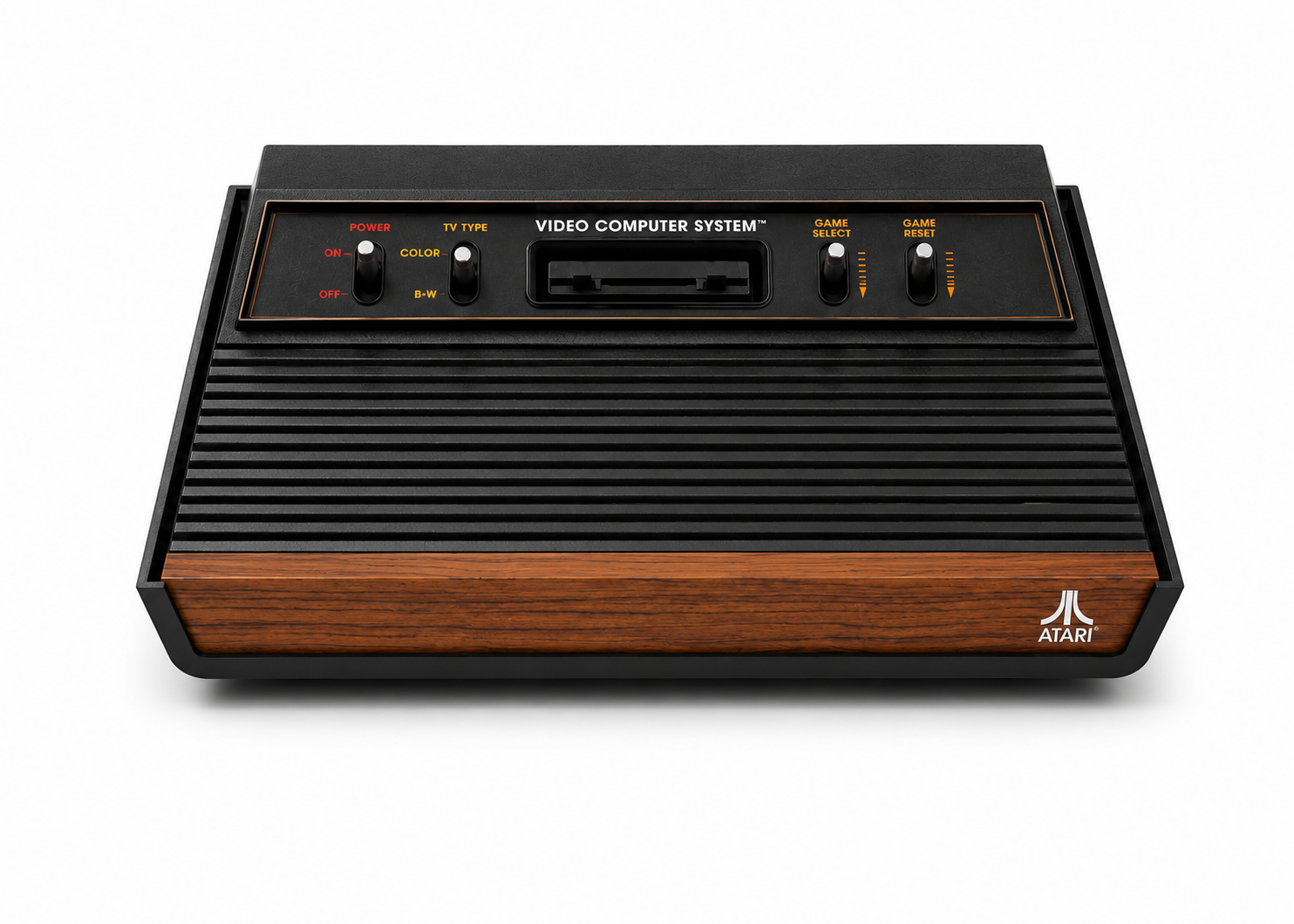
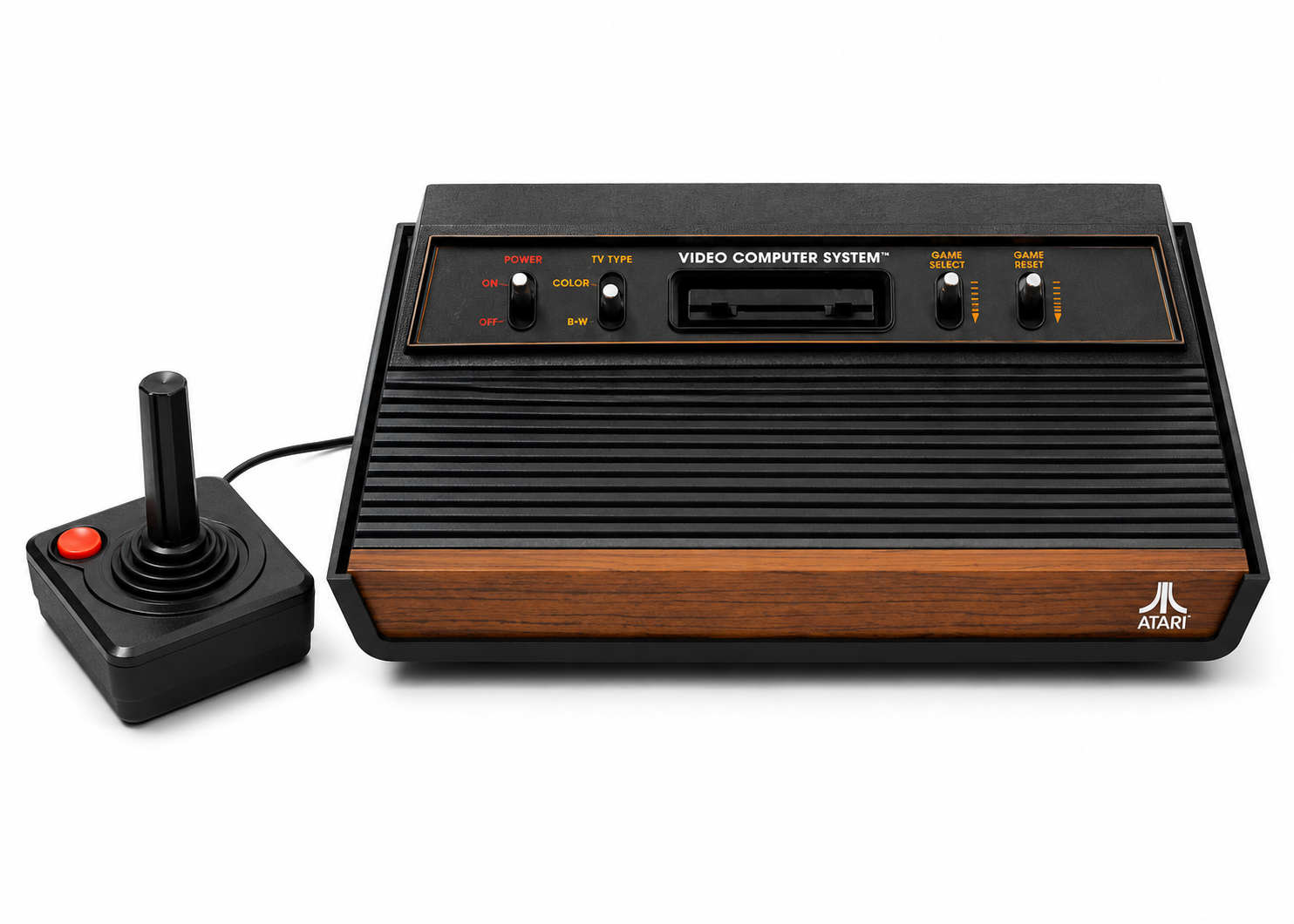
The Atari 2600 “Woody” is one of the most iconic and recognizable versions of the Atari 2600 ever produced. The nickname “Woody” comes from the console’s distinctive faux woodgrain front panel, which became one of the defining visual symbols of late 1970s home entertainment technology. While Atari never officially used the term “Woody,” collectors and enthusiasts adopted the nickname to describe the early woodgrain versions of the Atari 2600 that helped bring video gaming into millions of homes around the world.
Released during the height of Atari’s early success, the Woody represented the classic look most people associate with the Atari 2600 era. The combination of black plastic, ribbed top surfaces, silver trim, and woodgrain styling gave the system a premium appearance designed to blend in with the stereos, televisions, and hi-fi systems commonly found in living rooms of the time. Atari intentionally designed the console to feel like a sophisticated consumer electronics device rather than a toy, helping make home gaming more socially acceptable for families during the early days of the industry.
The Atari 2600 Woody became famous for its cartridge-based design, which allowed players to build large libraries of games for a single console. This was a revolutionary concept at the time and helped establish the future direction of the video game industry. Popular games such as Adventure, Space Invaders, Pitfall!, Missile Command, River Raid, and Yars’ Revenge transformed the Atari 2600 into a cultural phenomenon. The system’s simple joystick controller and accessible gameplay made it easy for players of all ages to enjoy electronic gaming at home.
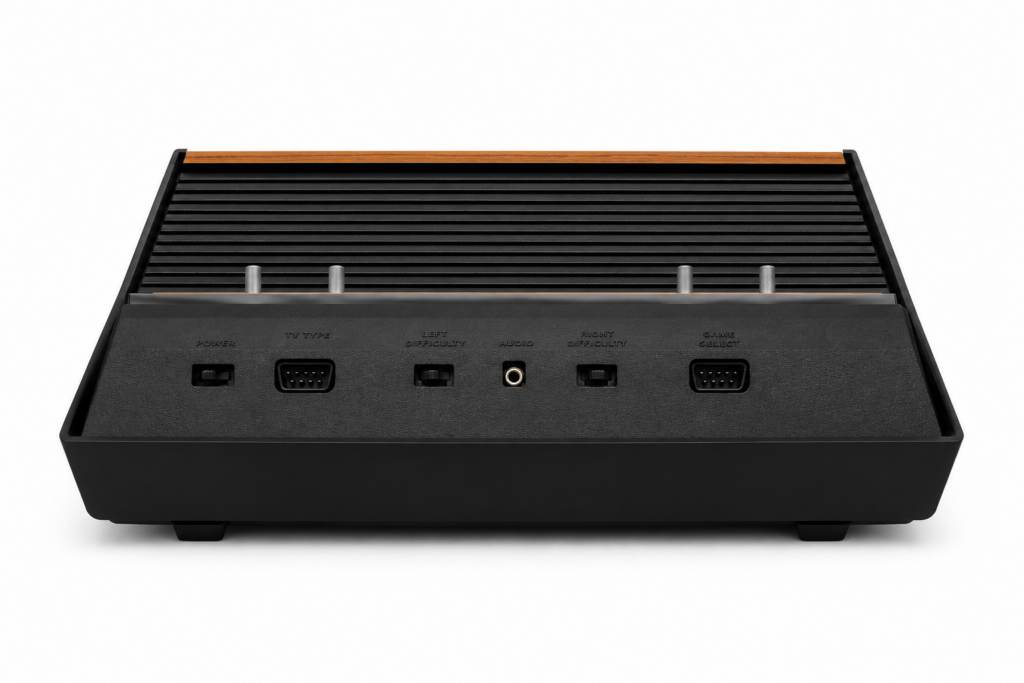
Over time, Atari released several variations of the Woody design, including six-switch and later four-switch models. The earlier six-switch systems retained separate difficulty switches and front-mounted controls, while later revisions simplified the design to reduce manufacturing costs. Despite these changes, the classic woodgrain styling remained strongly associated with the Atari brand throughout much of the console’s lifespan.
Internally, the Atari 2600 Woody used relatively simple hardware by modern standards, including the MOS Technology 6507 processor and Atari’s custom TIA graphics and sound chip. However, creative programmers continually pushed the hardware far beyond what many people thought possible. Despite having only 128 bytes of RAM, the system produced hundreds of memorable games and helped define the entire early home gaming industry.
Today, the Atari 2600 Woody remains one of the most beloved and collectible retro gaming consoles ever created. Its unmistakable appearance, legendary game library, and importance in gaming history have made it a lasting symbol of the golden age of early home video games.
Physical Design
- Faux woodgrain front panel
- Black ribbed plastic top
- Silver trim accents
CPU
- MOS Technology 6507
- Clock Speed: Approximately 1.19 MHz
Graphics & Sound
- Custom TIA (Television Interface Adapter) chip
- Approximate resolution: 160 × 192
- Color graphics support
- Two-channel audio output
Memory
- RAM: 128 bytes
- Game ROM stored on cartridges
Media Format
- Plug-in ROM cartridges
- Large interchangeable game library
Controllers
- Atari CX40 joystick support
- Paddle controllers
- Driving controllers
- Keyboard controllers (later accessories)
Output
- RF television output
- Compatible with CRT televisions
Front Switches
- Power TV
- Type (Color/B&W)
- Game Select
- Game Reset
- Left Difficulty (Located on back)
- Right Difficulty (Located on back)
Notable Features
Arguably the most recognizable Atari 2600 design
- Helped popularize cartridge-based gaming
- Featured one of the largest game libraries of the early gaming era
- Became a defining symbol of home gaming in the late 1970s and early 1980s

“Woody” facts
- The Atari 2600 “Woody” is named after its distinctive faux woodgrain front panel design.
- he Woody became one of the most recognizable home video game consoles of the late 1970s and early 1980s.
- Its cartridge-based design helped establish the future of the home gaming industry
