
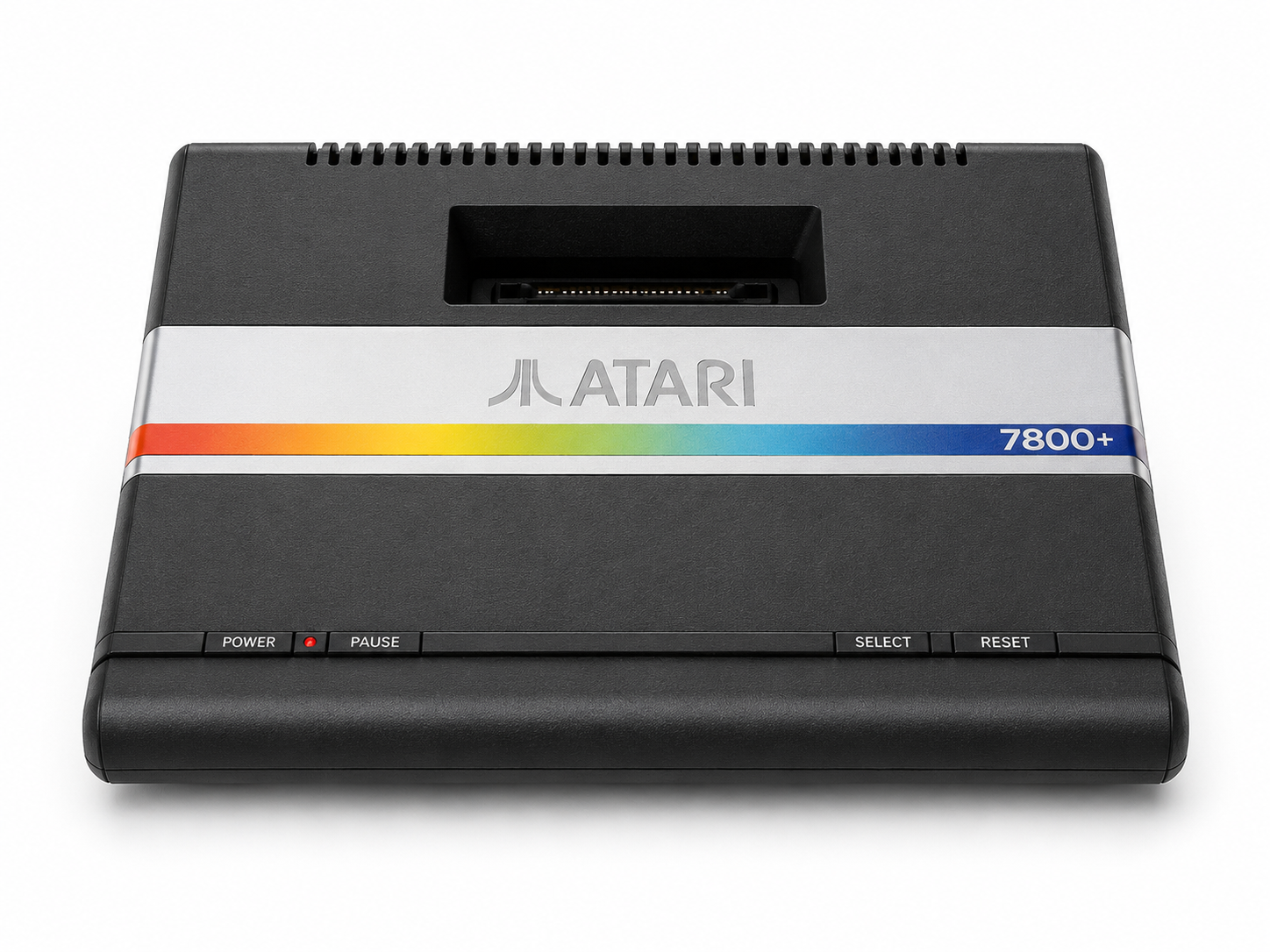
Release Information
- Released: 1984 (limited), 1986 (wide release)
- Manufacturer: Atari
- Type: Cartridge-based home video game console
The Atari 7800
The Atari 7800 was Atari’s attempt to regain its position in the rapidly evolving home video game market during the mid-1980s. Originally developed in 1984 and later widely released in 1986, the Atari 7800 was designed as the successor to the Atari 5200 while also maintaining backward compatibility with the enormously successful Atari 2600. This compatibility became one of the system’s greatest strengths, giving players immediate access to a massive existing library of Atari games while introducing newer titles with improved graphics and arcade-style gameplay.
The Atari 7800 featured a much more modern and minimalist design compared to earlier Atari consoles. The system used a sleek, low-profile black plastic case with angular styling that reflected the growing influence of modern consumer electronics during the 1980s. Internally, the console represented a significant technical improvement over the Atari 2600, with enhanced graphics capabilities and the ability to display larger numbers of on-screen objects and colors. Atari positioned the 7800 as an affordable but powerful alternative to competing systems entering the market at the time.
One of the most important features of the Atari 7800 was its strong focus on arcade-quality gaming. Atari wanted the system to reproduce the feel of popular arcade experiences in the home, and many of the console’s best-known titles reflected this goal. Games such as Galaga, Food Fight, Xevious, Joust, Pole Position II, and Ms. Pac-Man demonstrated the console’s improved graphical capabilities and smooth gameplay. The system also featured noticeably reduced flicker and more detailed visuals compared to earlier Atari hardware.
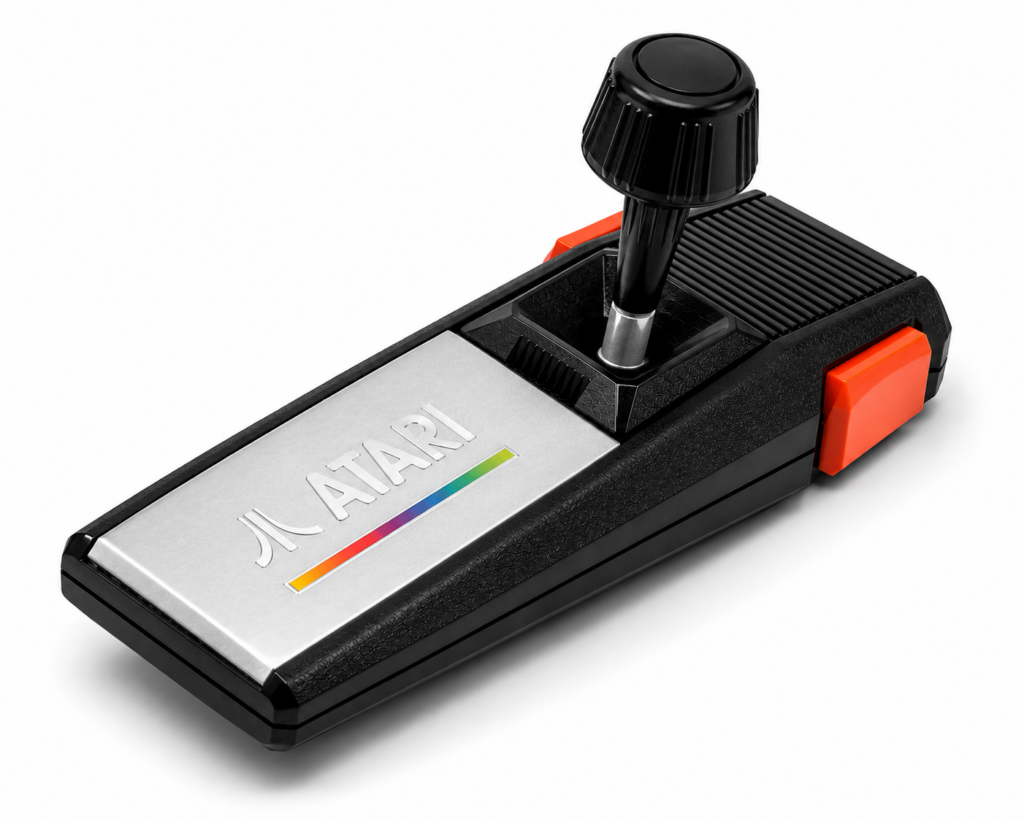
Unlike the Atari 5200, which used complicated analog controllers, the Atari 7800 returned to a simpler digital controller design. The included controllers featured a joystick-style directional pad with two side buttons, providing a more straightforward and reliable gameplay experience. Although opinions on the controller design varied among players, it represented Atari’s attempt to balance modern functionality with the accessibility of earlier Atari systems.
The Atari 7800 entered a gaming market that had changed dramatically since Atari’s dominance during the late 1970s and early 1980s. Competitors such as the Nintendo and Sega were rapidly reshaping the industry with new technology, aggressive marketing, and strong third-party game support. While the Atari 7800 never regained Atari’s former market dominance, the system developed a loyal fan base and remains highly respected among retro gaming enthusiasts today.
Technically, the Atari 7800 represented an interesting bridge between the early cartridge-based consoles of the late 1970s and the more advanced gaming systems that would dominate the late 1980s and early 1990s. Its backward compatibility, arcade-focused design philosophy, and strong library of classic games helped secure its place as one of the most important later-generation Atari consoles.
Today, the Atari 7800 remains a favorite among collectors and retro gamers because of its unique position in gaming history. It represents Atari’s final major cartridge-based home console before the company moved into newer hardware generations such as the Lynx and Jaguar. For many players, the Atari 7800 serves as both a continuation of the classic Atari gaming experience and a glimpse into the future of home console gaming.
CPU
- Atari SALLY (custom 6502 variant)
- Clock Speed: Approximately 1.79 MHz
Graphics
- MARIA graphics chip
- Resolution up to 320 × 240
- Support for large numbers of on-screen sprites
- Expanded color capabilities compared to Atari 2600
Sound
- TIA sound chip (same family as Atari 2600)
- Some cartridges included additional sound hardware
Memory
- RAM: 4 KB
Media Format
- ROM cartridge-based games
- Backward compatible with most Atari 2600 cartridges
Controllers
- Digital joystick controllers
- Two side-mounted action buttons
Output
- RF television output
- Compatible with CRT televisions
Physical Design
- Low-profile black plastic case
- Angular 1980s industrial design
- Front cartridge slot
Notable Features
Backward compatibility with Atari 2600 games
- Improved arcade-style graphics
- Designed as a cost-effective next-generation Atari console
- Reduced screen flicker compared to earlier Atari systems
- One of Atari’s final major cartridge-based home consoles
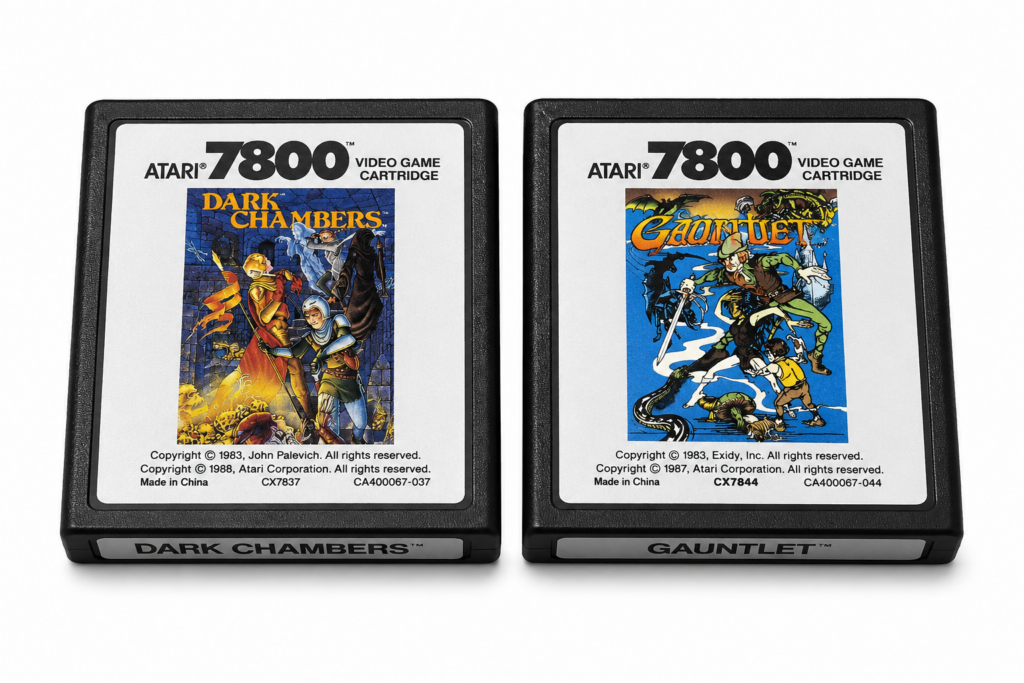
Notable Game
- Galaga
- Food Fight
- Pole Position II
- Xevious
- Joust
- Ms. Pac-Man
