
Release Information
- Released: 1989
- Manufacturer: Atari
- Type: Handheld game console
Atari Lynx Game System
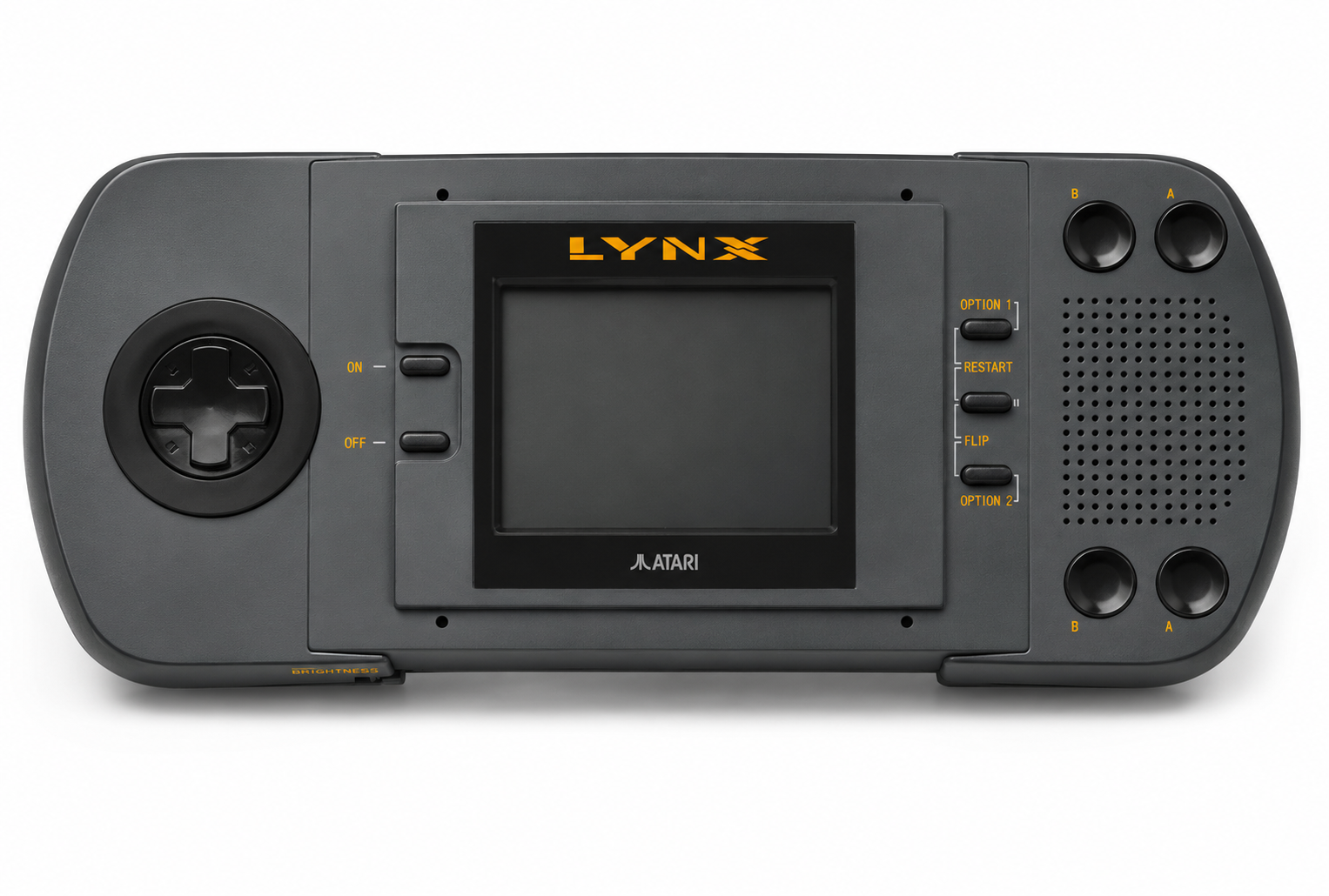
The Atari Lynx was one of the most technologically advanced handheld gaming systems of its era and represented Atari’s ambitious attempt to compete in the rapidly growing portable gaming market. Released in 1989, the Lynx stood out immediately because of its large full-color backlit screen, advanced graphics capabilities, and innovative design features that were years ahead of many competing handheld systems. At a time when most portable gaming devices still relied on monochrome displays, the Atari Lynx delivered colorful arcade-style experiences in the palm of a player’s hands.
Originally developed by Epyx under the codename “Handy,” the system was later licensed and released by Atari as the Atari Lynx. The handheld featured a sleek, futuristic black design with curved grips and a wide landscape orientation that made it comfortable to hold during gameplay. One of the Lynx’s most unusual features was its reversible control layout, allowing both left-handed and right-handed players to rotate the system and configure the controls to suit their preference — a remarkably forward-thinking accessibility feature for its time.
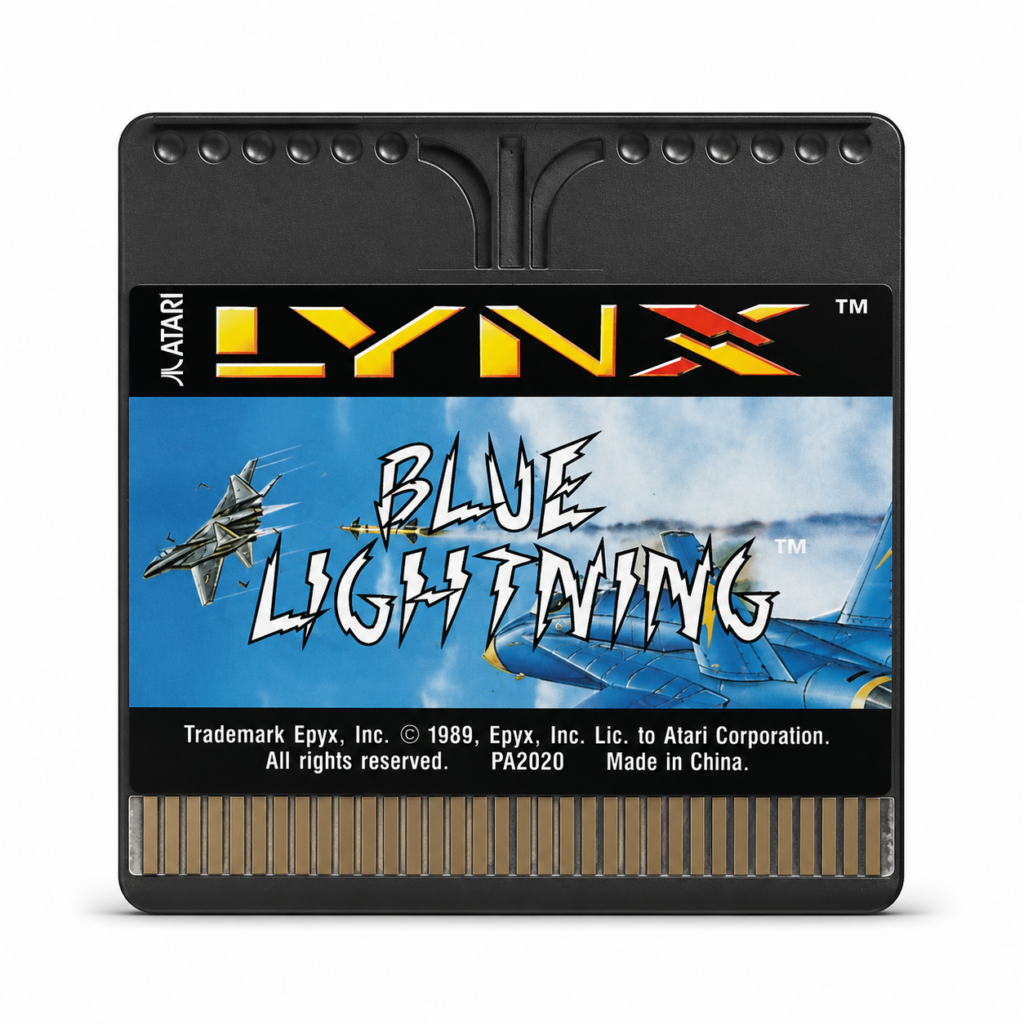
Technically, the Atari Lynx was extremely impressive. The system supported hardware scaling, sprite manipulation, advanced color graphics, and smooth animation that rivaled many home consoles and arcade machines of the late 1980s. Games such as California Games, Blue Lightning, Chip’s Challenge, Electrocop, and Gauntlet: The Third Encounter showcased the Lynx’s ability to deliver fast-paced, colorful gameplay on a portable device. The system also supported multiplayer gaming through a ComLynx cable, allowing several handhelds to connect together for competitive play.
Despite its technological strengths, the Lynx faced major challenges in the marketplace. The system competed directly against the massively successful Game Boy from Nintendo, which benefited from lower cost, longer battery life, and stronger third-party software support. The Lynx’s color backlit screen, while visually impressive, consumed batteries quickly, becoming one of the system’s most commonly discussed weaknesses. Even so, many players considered the Lynx technologically superior to its competitors at the time.
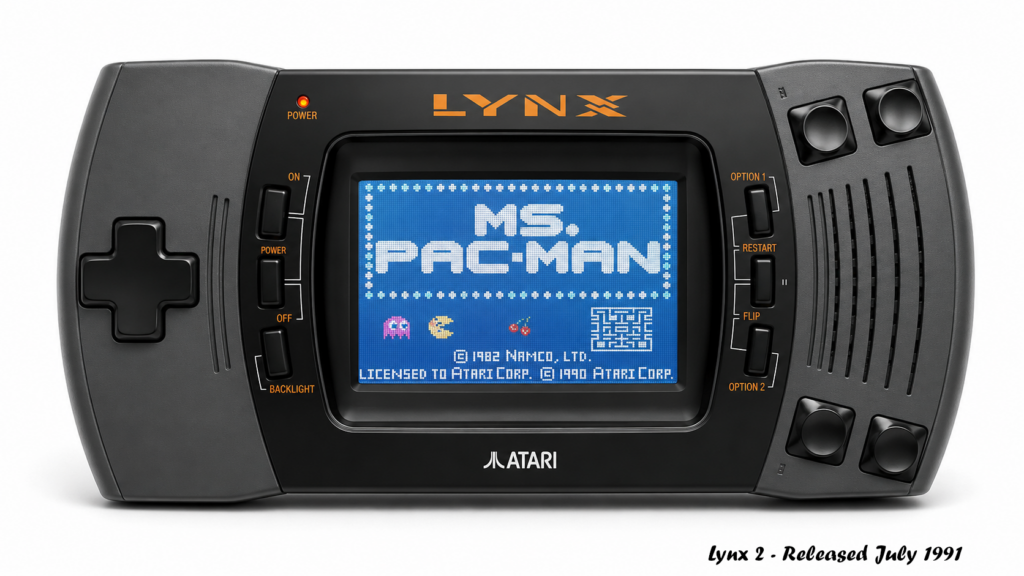
The Atari Lynx was later revised into the smaller and lighter Lynx II model, which improved battery life and portability while maintaining compatibility with the original game library. Although the Lynx never achieved the commercial success Atari had hoped for, it developed a dedicated fan base and remains highly respected among retro gaming enthusiasts today.
Today, the Atari Lynx is remembered as one of the most innovative handheld systems of the late 1980s and early 1990s. Its advanced technology, ambitious design, and unique game library helped establish it as a major milestone in portable gaming history. For collectors and Atari fans, the Lynx represents Atari’s determination to continue pushing gaming technology forward during one of the most competitive periods in the industry’s history.
CPU
- 65SC02 processor
- Clock Speed: 4 MHz
Graphics
- Custom graphics hardware
- Resolution: 160 × 102
- Support for up to 4,096 colors
- Up to 16 colors displayed simultaneously per sprite
- Hardware sprite scaling and stretching
Sound
- 4-channel stereo sound
- Digital audio capabilities
Power
- 6 AA batteries
- External AC adapter support
Memory
- RAM: 64 KB
Display
- 3.5-inch backlit color LCD screen
- Landscape orientation
- Reversible display support for left-handed or right-handed play
Media Format
- ROM cartridge-based games
Controls
- Directional pad
- Two action buttons
- Option buttons
- Pause button
Physical Design
- Curved ergonomic handheld design
- Large landscape layout
- Available in Lynx I and Lynx II revisions
Multiplayer
- ComLynx multiplayer cable support
- Up to 8 systems linked together (supported games only)
Notable Features
One of the first handhelds with a color backlit screen
- Advanced graphics capabilities for its era
- Reversible controls for left-handed and right-handed players
- Supported multiplayer portable gaming
- Considered technologically ahead of many competitors at launch
Notable Games
- California Games
- Blue Lightning
- Chip’s Challenge
- Electrocop
- Gauntlet: The Third Encounter
