
Release Information
- Released: 1982
- Manufacturer: Atari
- Type: Cartridge-based home video game console
The Atari 5200 Console
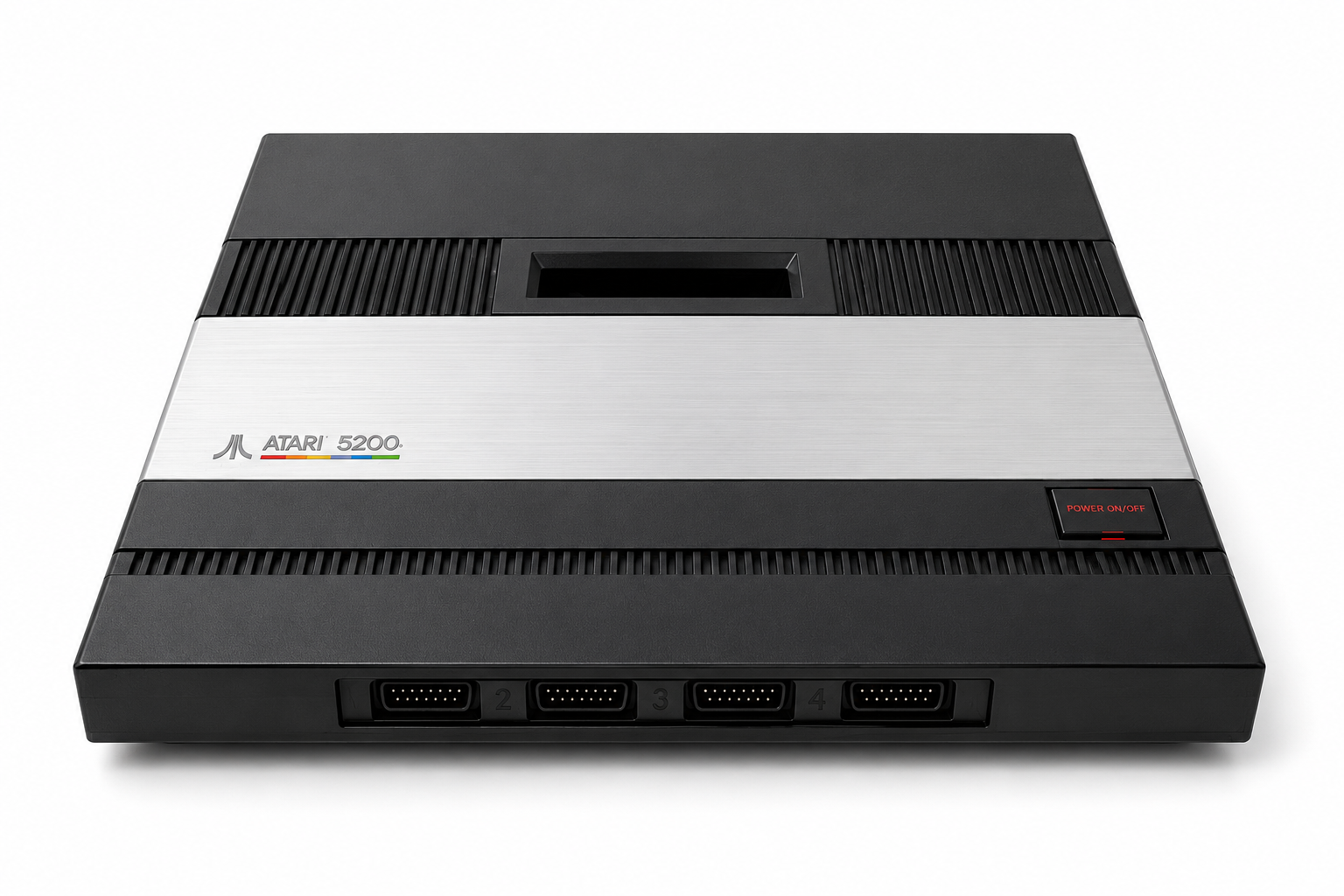
The Atari 5200 was Atari’s ambitious attempt to create a next-generation successor to the hugely successful Atari 2600. Released in 1982, the Atari 5200 featured dramatically improved graphics, sound, and gameplay capabilities compared to its predecessor and was designed to deliver a more arcade-like experience in the home. Based largely on the technology found in Atari’s 8-bit computer line, the 5200 represented a major leap forward in gaming hardware during the early 1980s and demonstrated Atari’s desire to remain at the forefront of the rapidly growing video game industry.
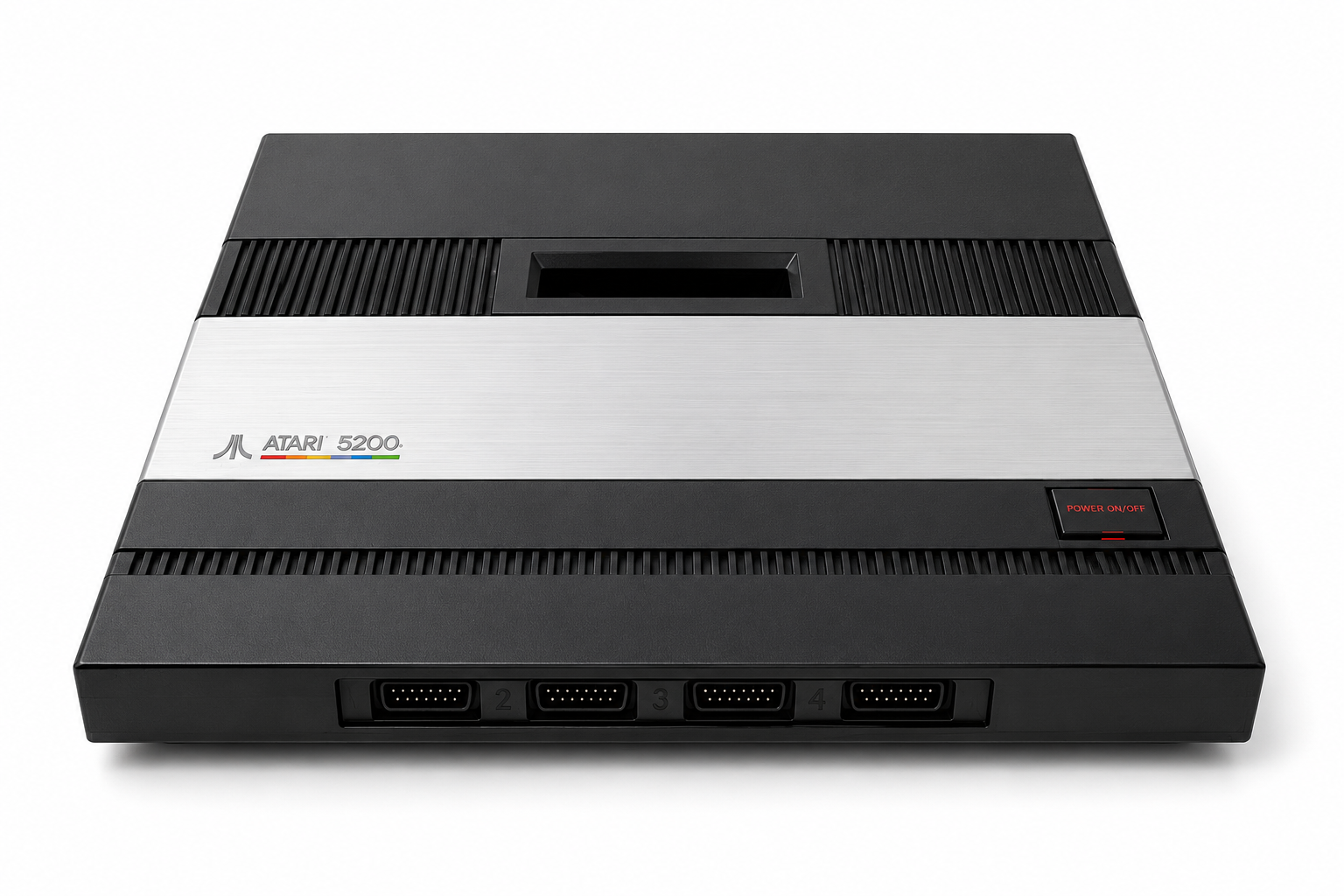
One of the most striking aspects of the Atari 5200 was its futuristic design. The console featured a large black chassis with storage compartments for controllers and a sleek, angular appearance that reflected the styling trends of early 1980s electronics. Atari marketed the system as a premium gaming platform capable of delivering advanced arcade-quality experiences that went far beyond what earlier consoles could offer.
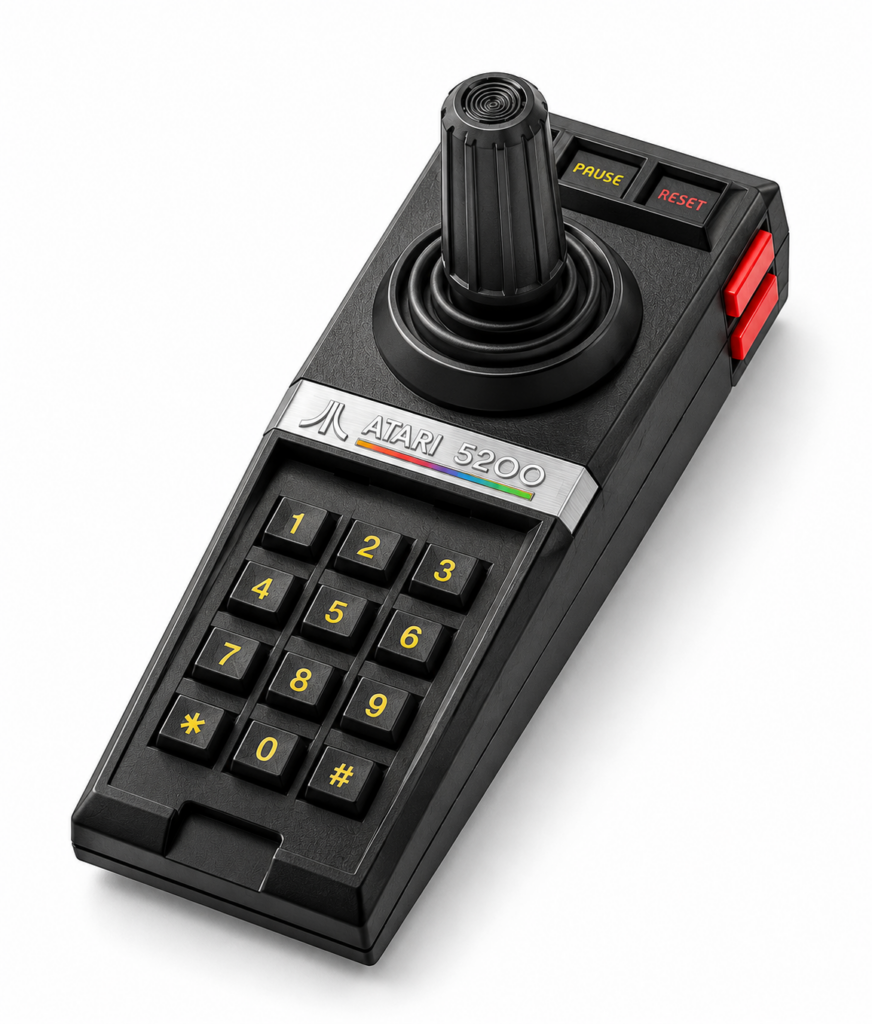
The Atari 5200 became especially well known for its unique analog controller design. Unlike the simple digital joysticks used with the Atari 2600, the 5200 controllers featured 360-degree analog movement, a numeric keypad, start/pause/reset buttons, and side-mounted fire buttons. While innovative for the time, the controllers also became somewhat controversial because of their complex design and reliability issues. Even so, the controller remains one of the most recognizable and distinctive aspects of the Atari 5200 experience.
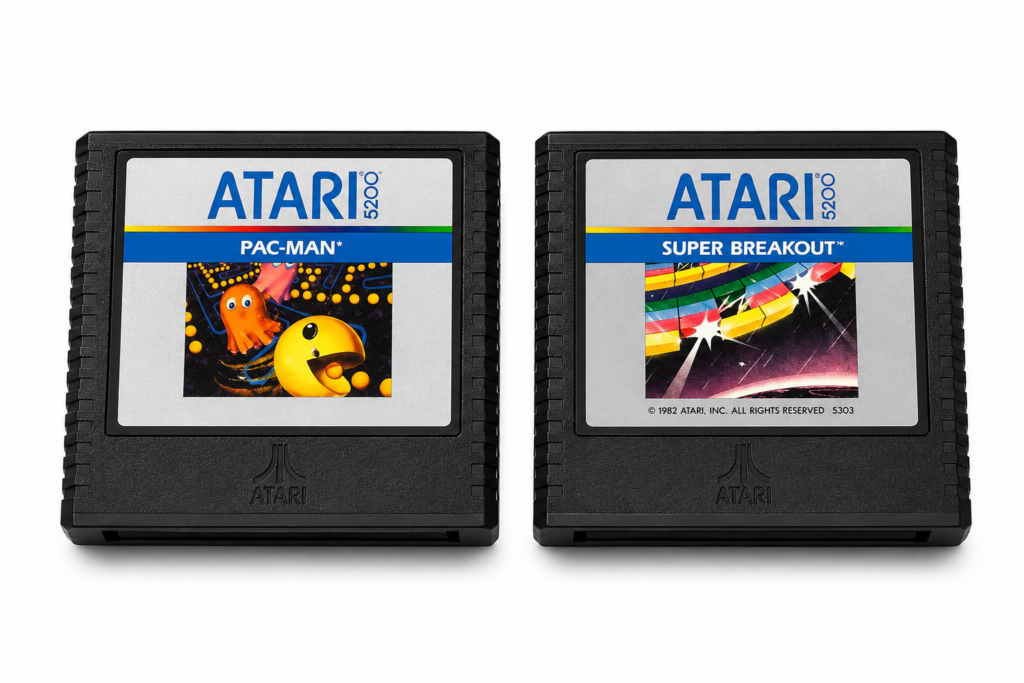
Technically, the Atari 5200 was extremely impressive for its era. The system used hardware closely related to Atari’s successful 8-bit computers, allowing it to produce colorful graphics, smooth animation, and advanced sound effects that rivaled many arcade machines of the period. Games such as Super Breakout, Pac-Man, Defender, Star Raiders, Missile Command, and Centipede showcased the console’s capabilities and helped establish the 5200 as one of the most technologically advanced home gaming systems available during the early 1980s.
Despite its impressive hardware, the Atari 5200 faced several challenges. The system lacked backward compatibility with Atari 2600 cartridges at launch, which disappointed some consumers who had already invested heavily in Atari’s earlier gaming library. Competition in the gaming industry was also increasing rapidly, and the video game crash of 1983 would significantly impact Atari and the entire home gaming market. Even so, the Atari 5200 remains an important part of Atari’s history and is highly respected among collectors and retro gaming enthusiasts today.
The Atari 5200 represented a transitional moment in video game history — a bridge between the simpler cartridge systems of the late 1970s and the increasingly sophisticated home gaming technology that would define the 1980s and beyond. Although its commercial lifespan was relatively short, the console demonstrated Atari’s willingness to experiment with advanced gaming technology and remains one of the company’s most memorable systems.
CPU
- MOS Technology 6502C
- Clock Speed: Approximately 1.79 MHz
Graphics
- ANTIC graphics processor
- GTIA graphics chip
- Resolution up to 320 × 192
- Support for multiple colors and hardware sprites
Sound
- POKEY sound chip
- Four-channel audio support
Memory
- RAM: 16 KB
Media Format
- ROM cartridge-based game system
- Front-loading cartridge slot
Controllers
- Analog joystick controllers
- Numeric keypad
- Start, Pause, and Reset buttons
- Side-mounted fire buttons
Output
- RF television output
- Compatible with CRT televisions
Physical Design
- Large black console housing
- Controller storage compartments
- Futuristic angular design
Notable Features
Based on Atari 8-bit computer technology
- Advanced graphics and sound for its era
- One of the first home consoles with analog controllers
- Designed to deliver arcade-style experiences at home
- Became one of Atari’s most recognizable second-generation consoles
Notable Games
- Super Breakout
- Pac-man
- Centipede
- Missle Command
- Star Raiders
- Defender
