
The Atari 16/32-bit computer family represented one of the most ambitious and important chapters in Atari’s history. Released throughout the mid-1980s and early 1990s, these systems combined powerful Motorola processors, graphical user interfaces, MIDI music support, and affordable pricing into machines that became popular with gamers, musicians, programmers, artists, educators, and business users around the world. While Atari’s earlier 8-bit computers introduced many people to home computing, the Atari ST and its successors pushed the company into the rapidly evolving world of professional and creative computing.
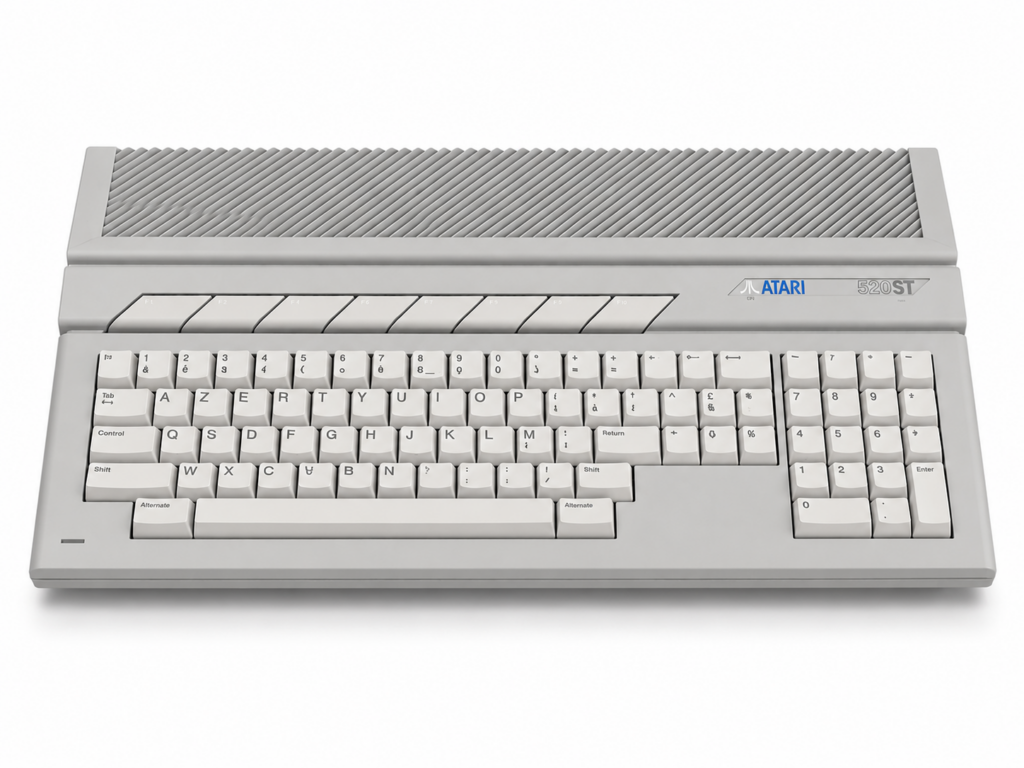
The story began in 1985 with the release of the Atari 520ST. Powered by the Motorola 68000 processor running at 8 MHz, the 520ST was one of the first affordable 16/32-bit home computers available to consumers. The “520” referred to the system’s 512 KB of RAM, which was impressive for a consumer computer at the time. The ST also introduced Atari’s graphical GEM operating environment, which used windows, icons, menus, and a mouse-driven interface that felt modern and highly approachable.
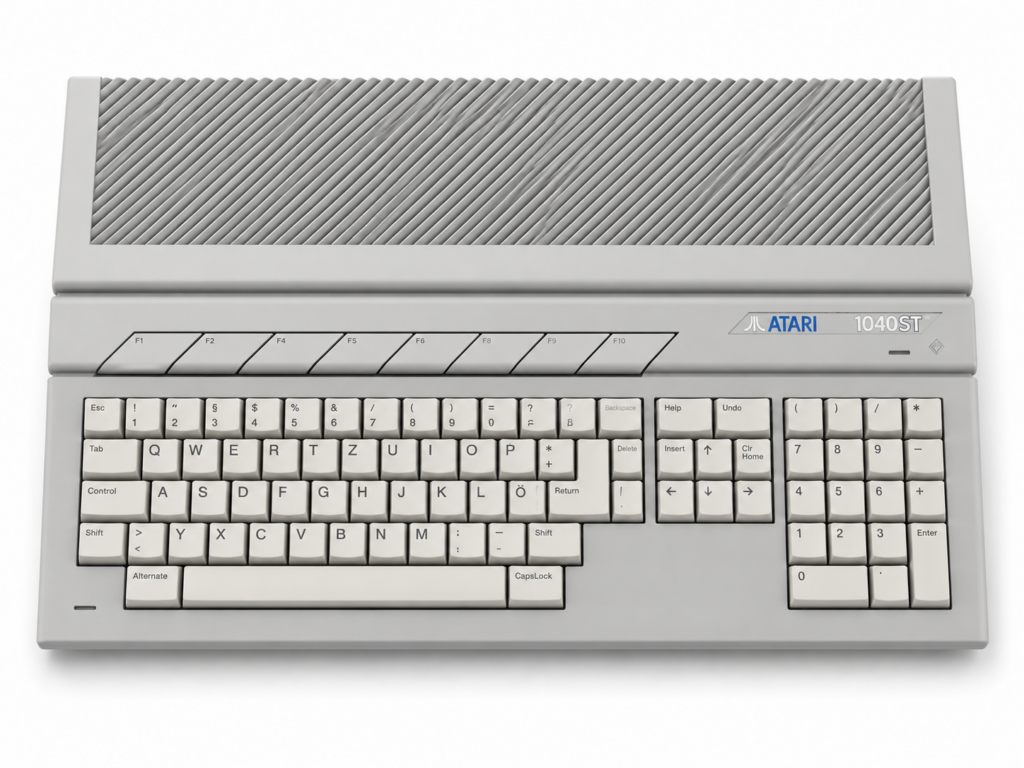
One of the Atari ST’s most revolutionary features was the inclusion of built-in MIDI ports. These ports allowed musicians to connect synthesizers, keyboards, and other music equipment directly to the computer without requiring expensive expansion hardware. This feature quickly made the Atari ST a favorite in professional music studios and among hobbyist musicians. Even decades later, many musicians still remember the ST as one of the most important music production computers ever created.
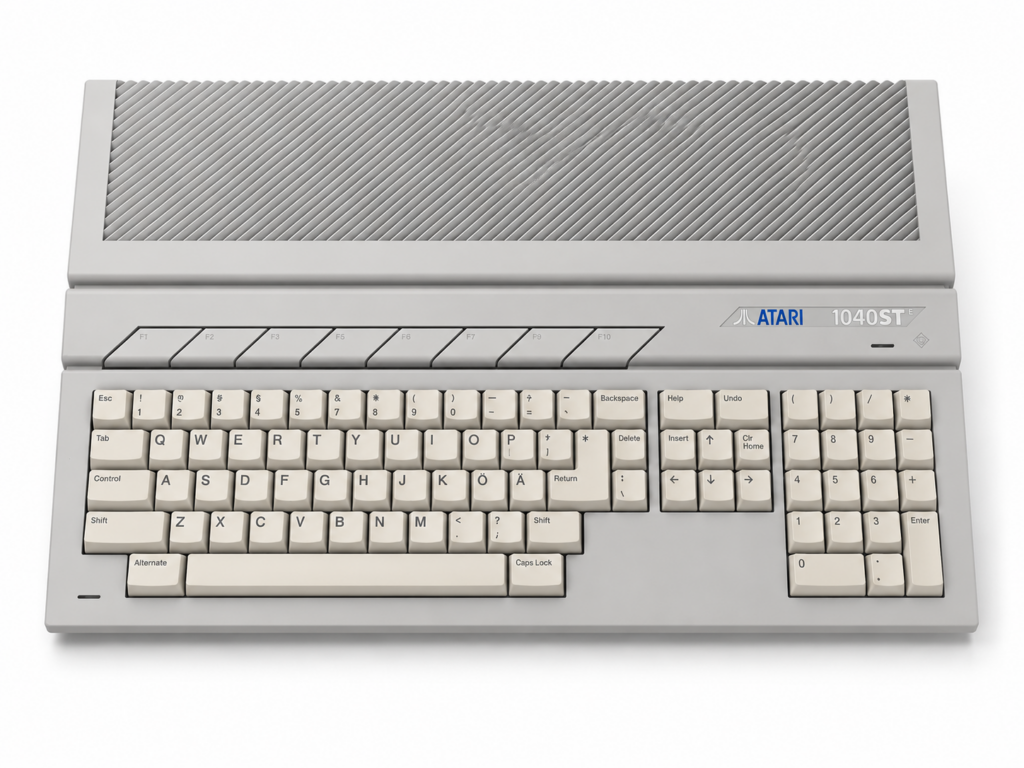
Shortly after the 520ST, Atari released the Atari 1040ST, which became one of the company’s most successful computers. The 1040ST increased memory to 1 MB of RAM and was one of the first personal computers to ship with one megabyte of memory at a relatively affordable price. The system also integrated the floppy disk drive into the main case, giving it a cleaner and more professional appearance. For many users, the 1040ST became the definitive Atari ST system of the late 1980s.
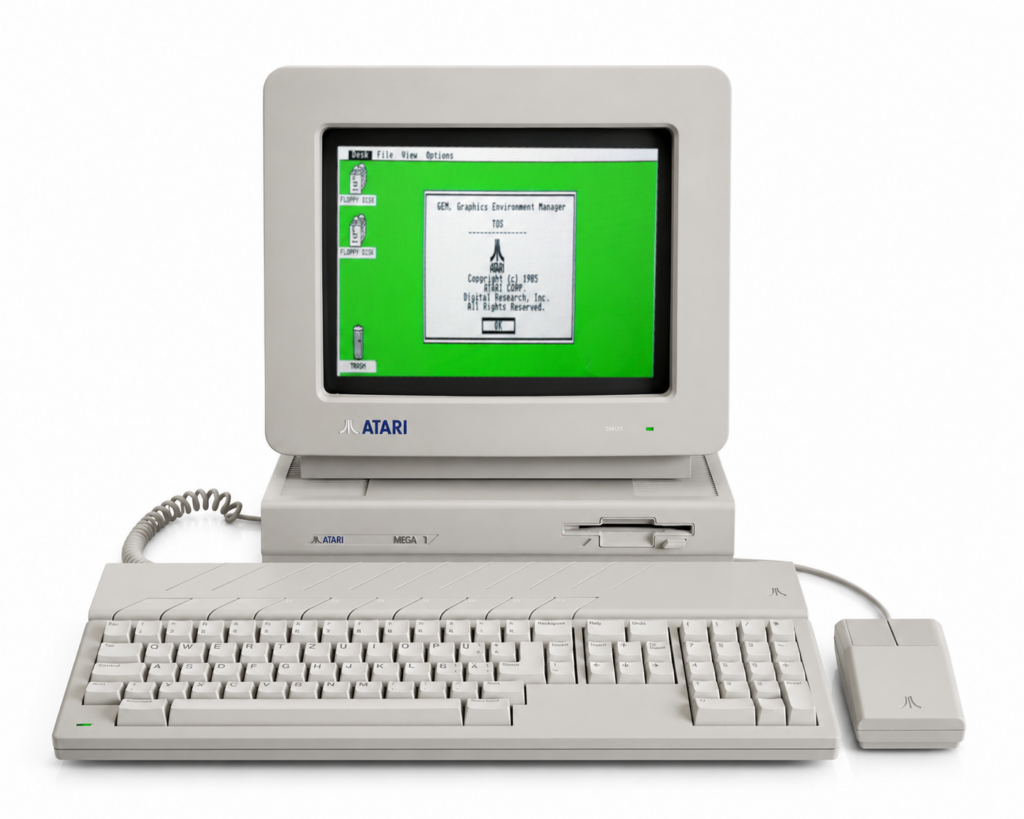
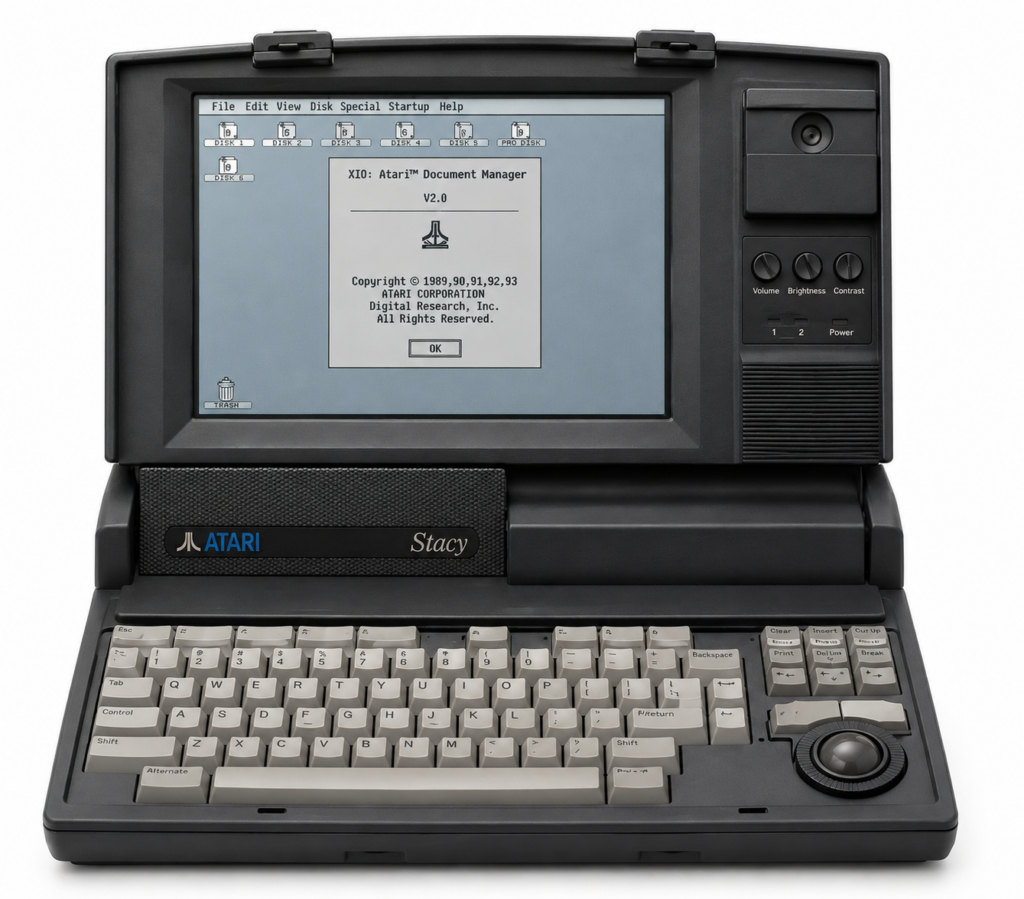
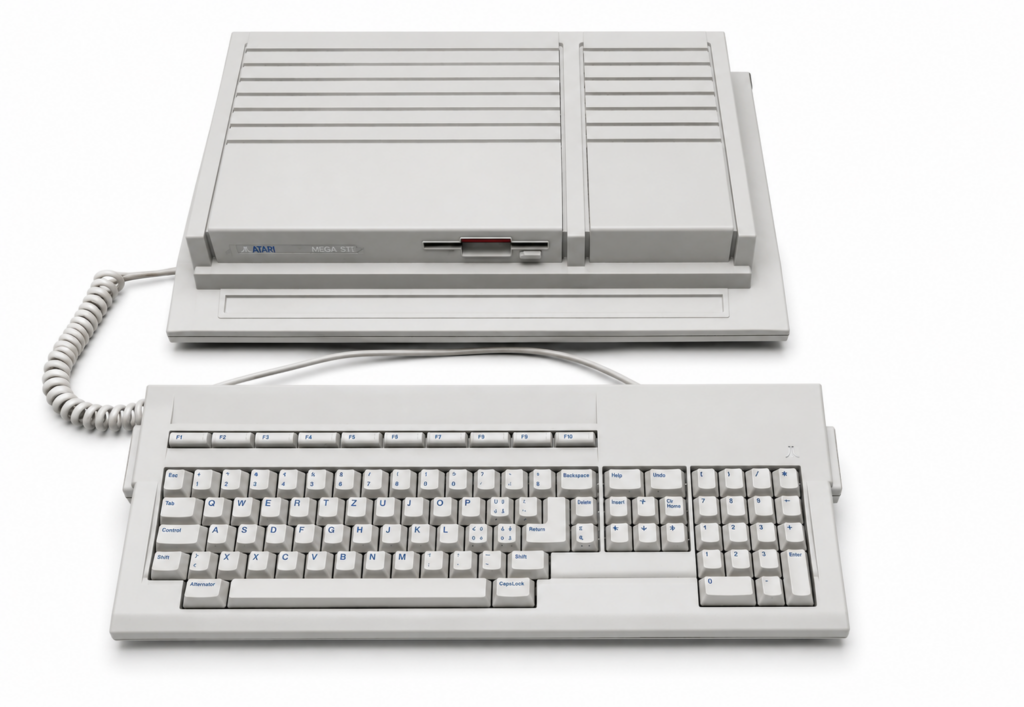
As the platform matured, Atari introduced enhanced versions such as the Atari Mega ST series. The Mega ST featured a redesigned low-profile desktop case with a separate keyboard, expanded memory options, and improved expandability aimed at business and professional users. These systems became especially popular in desktop publishing, music production, and graphic design environments where Atari’s affordability and strong software library offered compelling alternatives to more expensive workstations.
Atari later refined the ST platform further with the release of the Atari STE models. The STE, or “ST Enhanced,” added improved graphics capabilities, enhanced sound hardware, hardware scrolling, a blitter chip for faster graphics performance, and support for stereo audio. These upgrades made the STE particularly attractive to gamers and multimedia enthusiasts, helping Atari compete with newer home computers and gaming systems emerging during the late 1980s.

In 1990, Atari introduced the powerful Atari TT030. The TT030 represented Atari’s move into higher-end workstation computing and was aimed at professional users who required greater performance for business, development, graphics, and engineering applications. Featuring the Motorola 68030 processor, higher resolutions, faster storage options, and improved multitasking capabilities, the TT030 became Atari’s most advanced professional workstation to date. While more expensive than earlier ST systems, the TT demonstrated Atari’s continued ambition to compete in serious computing markets.
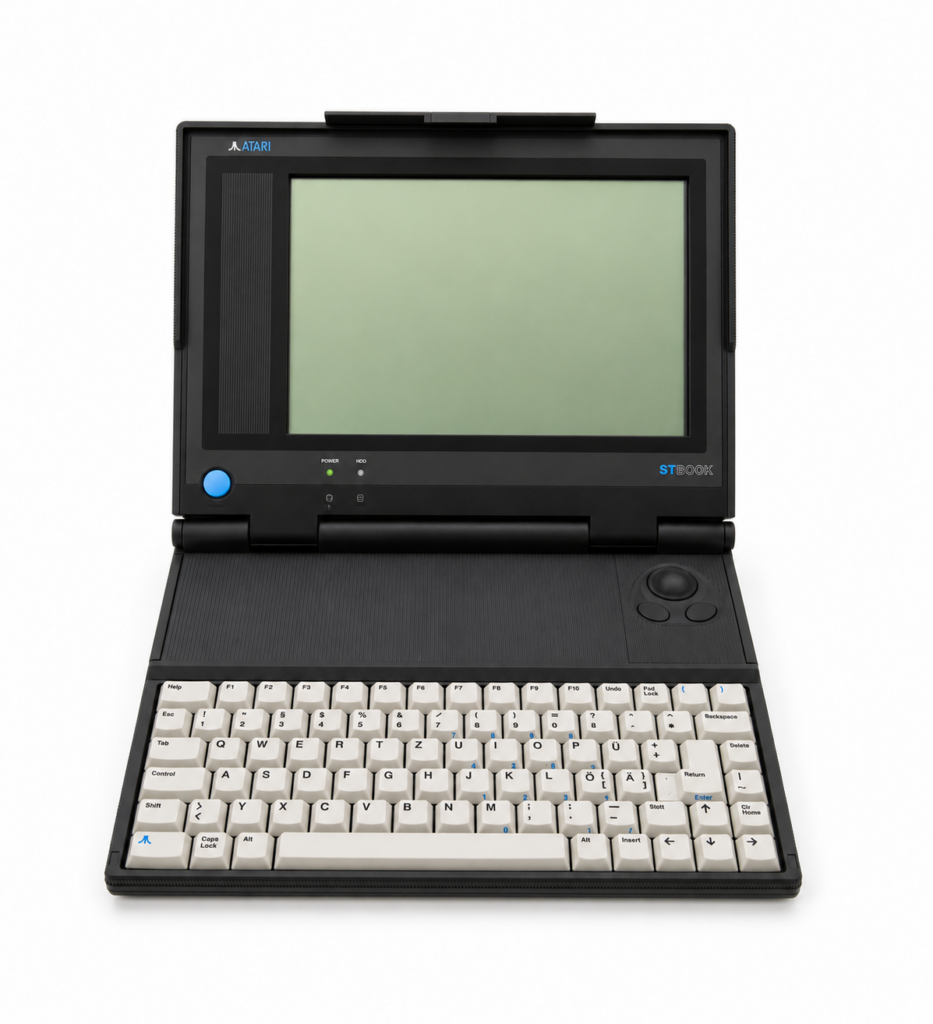
The Atari ST Book was Atari’s sleek and innovative notebook computer released in 1991, combining the power and compatibility of the Atari ST platform with a lightweight portable design. Unlike the much larger Atari Stacy portable computer, the ST Book was designed for true mobility, featuring a slim clamshell case, low power consumption, and impressive battery life for its era. Despite its compact size, the system retained many classic Atari ST features including built-in MIDI ports, making it especially popular among musicians and mobile music producers. Today, the ST Book is remembered as one of Atari’s most unique and collectible computers, representing the company’s final major step into portable computing.
The final and most advanced major member of Atari’s computer family arrived in 1992 with the release of the Atari Falcon 030. The Falcon combined the Motorola 68030 processor with powerful new multimedia capabilities, including advanced digital audio features and a dedicated DSP (Digital Signal Processor). This allowed the Falcon to perform real-time audio processing and multimedia tasks that were extremely advanced for a home computer of the early 1990s.

The Falcon became especially popular among musicians, audio producers, and members of the demo scene because of its impressive sound capabilities and flexible multimedia architecture. The system supported true stereo audio recording and playback, expanded graphics modes, and advanced multitasking environments. Although the Falcon had a relatively short commercial lifespan, it remains one of the most respected and admired Atari computers ever created.
Throughout the lifespan of Atari’s 16/32-bit systems, the company built a reputation for delivering powerful technology at affordable prices. The ST family in particular developed passionate communities across Europe and North America, where users embraced the systems for gaming, music production, programming, telecommunications, desktop publishing, and creative experimentation.
The Atari ST line also became famous for its gaming capabilities. Thousands of games were released for the platform, many featuring arcade-quality graphics, smooth animation, and sophisticated music. The systems became particularly successful in Europe, where the Atari ST competed directly against the Amiga 500 and other popular home computers of the era.
Even decades later, Atari’s 16/32-bit computers continue to enjoy a strong following among collectors, musicians, programmers, and retro computing enthusiasts. Modern hobbyists continue developing new software, hardware upgrades, networking solutions, storage devices, and even entirely new operating system enhancements for these classic machines.
Today, the Atari ST, TT, and Falcon families remain important milestones in computer history. They represented a unique blend of affordability, innovation, and creativity that helped shape the worlds of home computing, digital music production, gaming, and multimedia development during a transformative period in technology history.
