
Release Information
- Released: 1991
- Manufacturer: Atari
- Type: Enhanced 16/32-bit workstation computer
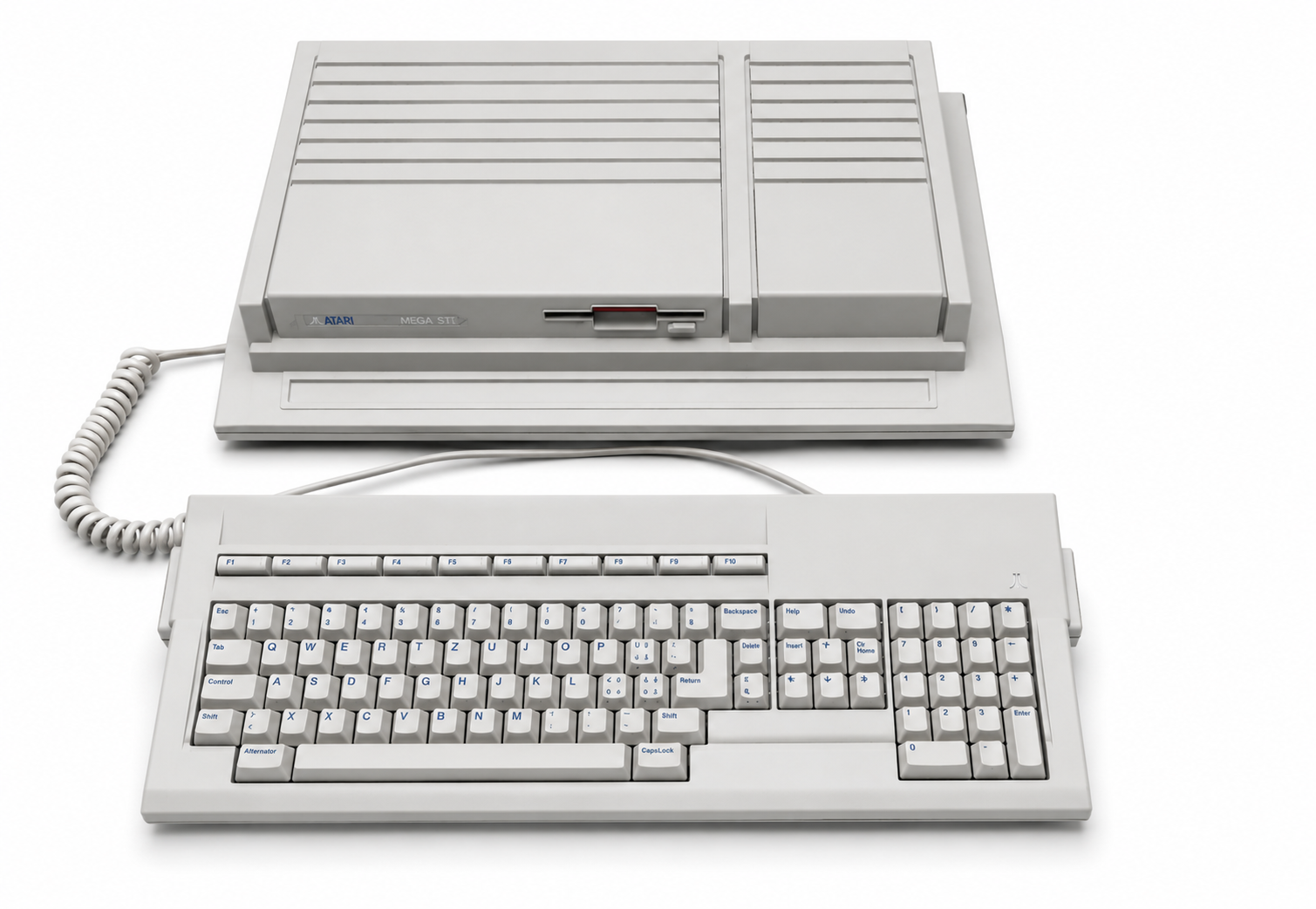
The Atari Mega STE Computer
The Atari Mega STE was one of the final and most refined computers in Atari’s legendary ST computer family. Released in 1991, the Mega STE combined the familiar compatibility and reliability of the Atari ST platform with a variety of important performance upgrades, improved expansion capabilities, enhanced networking support, and a more professional workstation-oriented design. Positioned between the earlier Mega ST systems and the high-end Atari TT030, the Mega STE became a highly respected machine among musicians, programmers, desktop publishers, and advanced Atari enthusiasts.
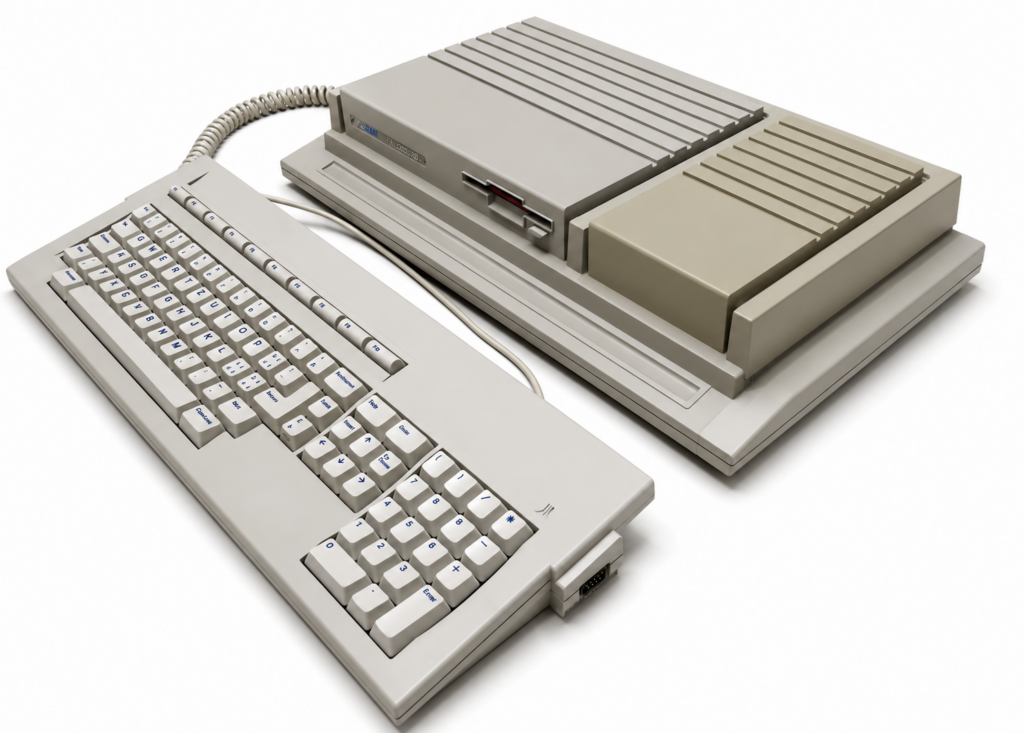
Visually, the Mega STE retained the low-profile desktop case style introduced with the earlier Mega series but modernized the design with a cleaner and more refined appearance. The system featured a separate detachable keyboard, internal floppy disk drive, and room for internal hard drives, giving it a professional workstation feel similar to business computers of the early 1990s. Atari intended the Mega STE to serve both advanced home users and serious professional environments.
At the heart of the Mega STE was the Motorola 68000 processor, but unlike earlier ST systems, the Mega STE could operate at either 8 MHz or 16 MHz using a software-selectable speed switch. This effectively doubled performance in many applications while still allowing compatibility with older software that depended on the original ST timing. The improved speed made the Mega STE significantly more capable for desktop publishing, music sequencing, graphics work, and software development.
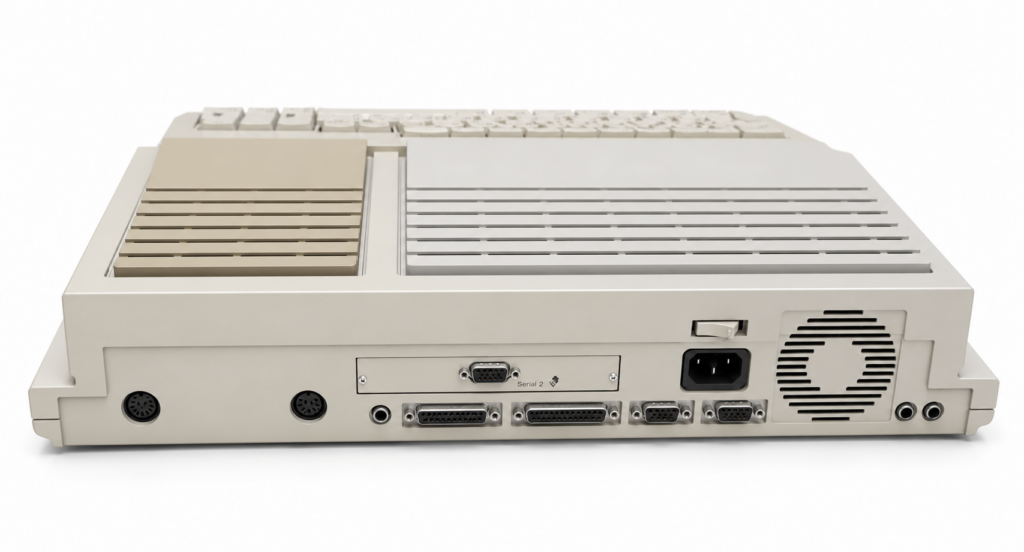
The Mega STE also introduced several important hardware improvements inherited from Atari’s more advanced workstation systems. These included a built-in SCSI hard drive interface, improved serial communications hardware, enhanced memory expansion capabilities, and support for Ethernet-style networking through Atari’s LAN ports. These additions helped position the Mega STE as a more modern and expandable professional computer platform.
Like all Atari ST family systems, the Mega STE retained built-in MIDI ports, which continued to make Atari computers extremely popular in music production studios around the world. Musicians appreciated the Mega STE’s faster performance combined with the stable MIDI timing and sequencing reliability that Atari systems had become famous for during the late 1980s and early 1990s.
The Mega STE also benefited from improved graphics performance and support for Atari’s enhanced blitter hardware, allowing smoother graphics operations and better desktop responsiveness. The system remained compatible with much of the existing Atari ST software library while also taking advantage of newer multitasking environments such as MultiTOS.
Although the Mega STE was technically impressive, it arrived during a period when the computer market was rapidly shifting toward IBM-compatible PCs and more powerful Macintosh systems. Atari’s limited marketing and shrinking market presence made it difficult for the Mega STE to achieve mainstream commercial success. Even so, the computer developed a loyal following among power users who appreciated its balance of performance, compatibility, expandability, and affordability.
Today, the Atari Mega STE is remembered as one of the most polished and professional ST systems ever released. It represented the culmination of years of Atari ST development and remains highly respected among retro computing enthusiasts, musicians, programmers, and collectors who view it as one of the finest Atari workstations ever produced.
CPU
- Motorola 68000
- Clock Speed:
- 16 MHz accelerated mode
- 8 MHz compatibility mode
Graphics
- Atari STE graphics hardware
- Enhanced blitter support
- Color resolutions:
- 320 × 200 (16 colors)
- 640 × 200 (4 colors)
- Monochrome resolution:
- 640 × 400
Sound
- Yamaha YM2149 sound chip
- DMA stereo sound support
- Built-in MIDI ports
Memory
- RAM: 2 MB or 4 MB configurations
- Expandable memory support
Storage Support
- Built-in 3.5-inch floppy disk drive
- Internal SCSI hard drive support
- External SCSI device support
Operating System
- Atari TOS operating system
- MultiTOS multitasking support
- GEM graphical user interface
Ports & Expansion
- Built-in MIDI In/Out ports
- SCSI interface
- Serial and parallel ports
- LAN networking port
- Mouse and joystick ports
- Expansion bus support
Input Device
- Separate full-size keyboard
- Atari mouse support
Physical Design
- Low-profile workstation desktop case
- Separate keyboard design
- Internal hard drive bay
- Professional gray industrial styling
Notable Features
Switchable 8 MHz / 16 MHz CPU modes
- Built-in SCSI support
- Enhanced networking capabilities
- DMA stereo sound support
- One of the most advanced Atari ST systems
Notable Facts
- The Atari Mega STE allowed users to switch between 8 MHz and 16 MHz CPU speeds for software compatibility.
- The Mega STE borrowed several advanced hardware concepts from Atari’s TT030 workstation line.
- Some Mega STE systems included internal SCSI hard drives at a time when hard drives were still considered premium upgrades.
