
Release Information
- Released: 1989
- Manufacturer: Atari
- Type: Portable 16/32-bit computer
The Atari Stacy Computer
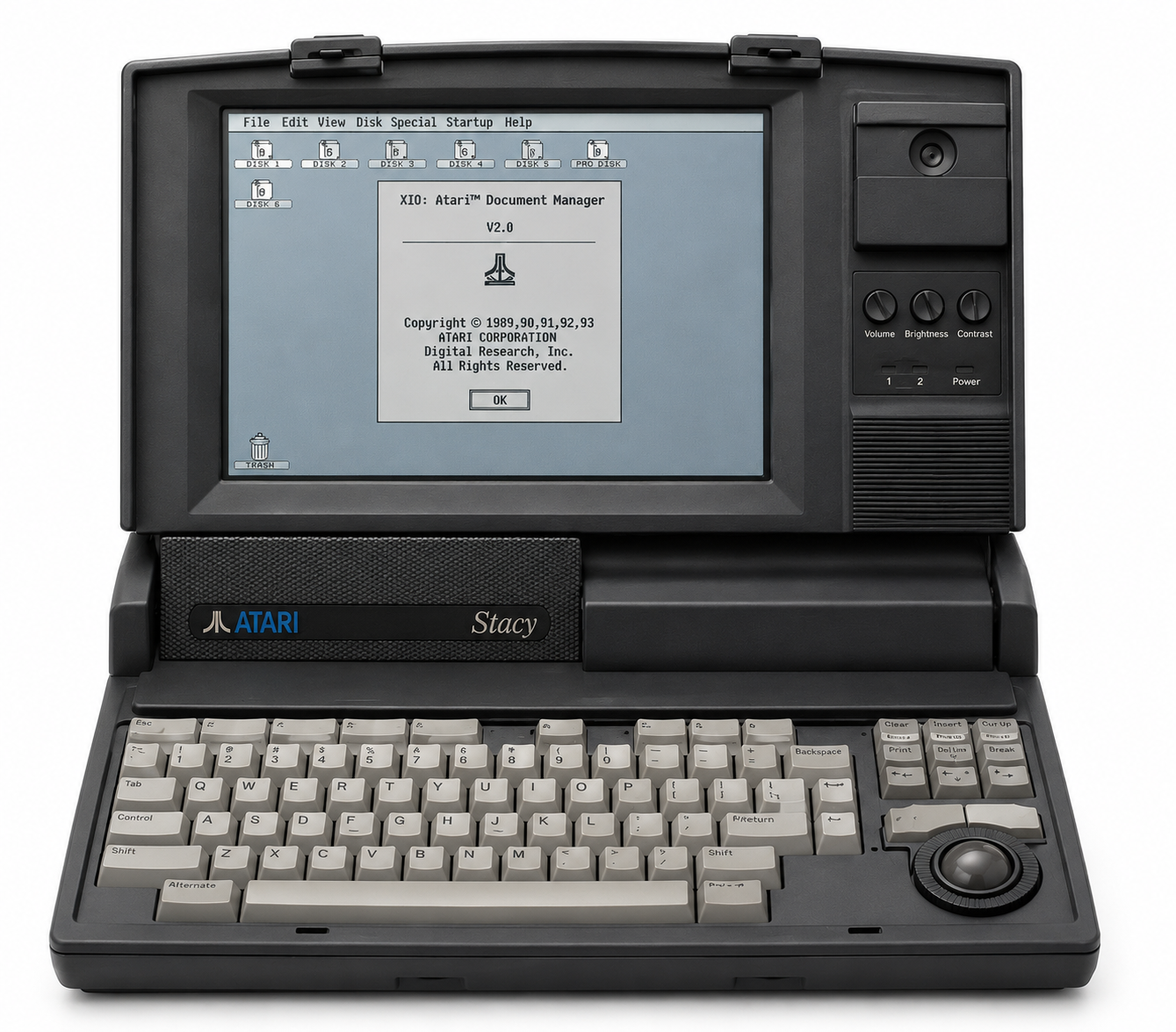
The Atari Stacy was Atari’s ambitious attempt to bring the power of the Atari ST computer line into a portable form factor. Released in 1989, the Stacy combined the capabilities of a full Atari ST workstation with an integrated screen, keyboard, floppy drive, and battery-powered operation, making it one of the earliest true portable 16/32-bit computers produced by Atari. Although large and heavy by modern standards, the Stacy represented an impressive engineering achievement during a time when portable computing was still in its early stages.
The Atari Stacy was based heavily on the Atari ST platform and retained much of the same internal hardware and software compatibility found in desktop ST systems. Powered by the Motorola 68000 processor running at 8 MHz, the Stacy could run a large library of Atari ST software including games, music sequencing applications, programming tools, productivity software, and desktop publishing programs. For Atari users who wanted portability without sacrificing compatibility, the Stacy offered a unique solution.
One of the Stacy’s most important strengths was its continued inclusion of built-in MIDI ports. Like other Atari ST computers, the Stacy became especially popular among musicians and composers because it could connect directly to synthesizers, drum machines, and studio equipment without requiring additional hardware. Portable MIDI sequencing was relatively uncommon during the late 1980s, making the Stacy highly attractive to musicians who needed a transportable studio workstation.
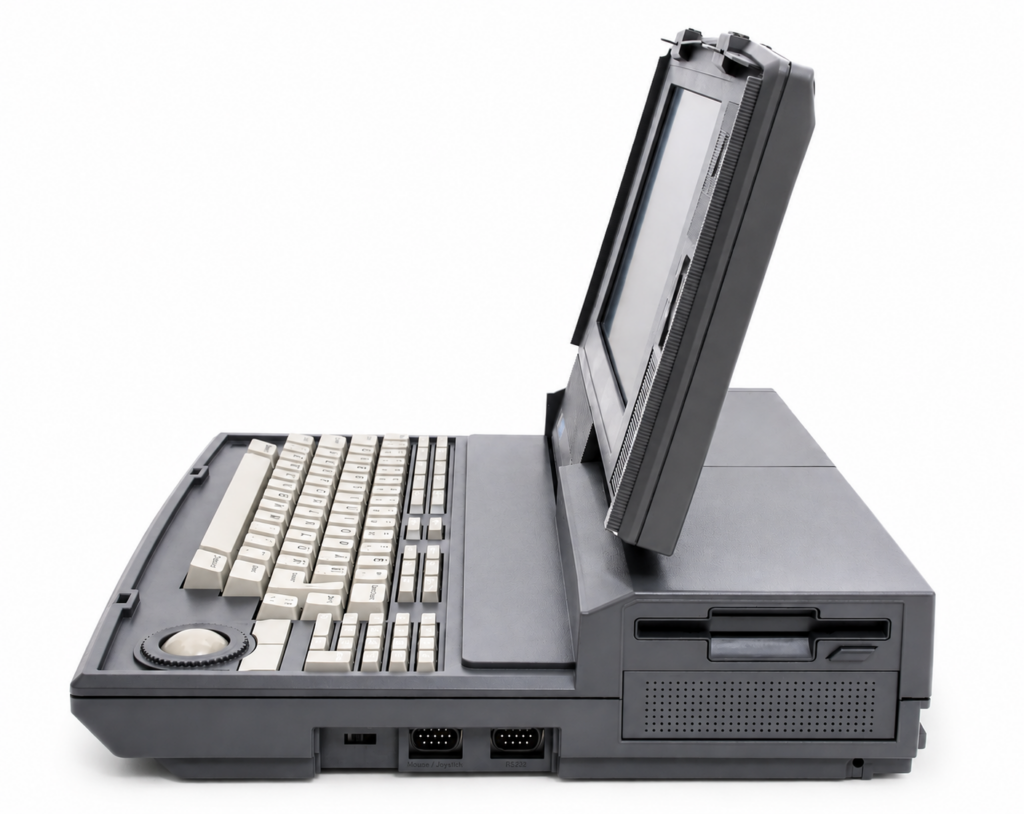
The system featured a built-in monochrome LCD display, integrated keyboard, internal floppy disk drive, and optional internal hard drive configurations. Its rugged clamshell design gave the Stacy a professional appearance and helped protect the screen and keyboard during transport. While technically portable, the computer was considerably larger and heavier than later laptops, reflecting the limitations of portable computer technology during the era.
One of the Stacy’s biggest challenges was battery life. The original system used multiple large batteries that provided relatively short operating times while also adding significant weight. Many users eventually operated the Stacy primarily using AC power rather than relying on batteries for extended portable use. Even so, the system represented a major step forward in portable Atari computing.
Graphically and functionally, the Stacy remained extremely capable for its time. The system supported Atari’s GEM graphical user interface and could connect to external monitors and peripherals just like desktop ST systems. This flexibility allowed users to use the Stacy both as a portable computer and as a fully functional desktop workstation when needed.
The Atari Stacy developed a loyal following among musicians, programmers, business users, and traveling professionals who appreciated the ability to take Atari ST software on the road. Its strong software compatibility and MIDI capabilities made it particularly valuable in music production environments during the late 1980s and early 1990s.
Today, the Atari Stacy is remembered as one of the most unique and ambitious systems in Atari’s computer history. It demonstrated Atari’s willingness to experiment with portable computing long before lightweight modern laptops became common, and it remains highly collectible among retro computing enthusiasts and Atari fans.
CPU
- Motorola 68000
- Clock Speed: 8 MHz
Graphics
- Atari ST graphics hardware
- Color resolutions:
- 320 × 200 (16 colors)
- 640 × 200 (4 colors)
- Monochrome resolution:
- 640 × 400
Display
- Built-in monochrome LCD screen
- External monitor support
Sound
- Yamaha YM2149 sound chip
- Three-channel sound support
Memory
- RAM: 1 MB or 4 MB configurations
Storage Support
- Built-in 3.5-inch floppy disk drive
- Optional internal hard drive support
- External storage peripheral support
Operating System
- Atari TOS operating system
- GEM graphical user interface
Ports & Expansion
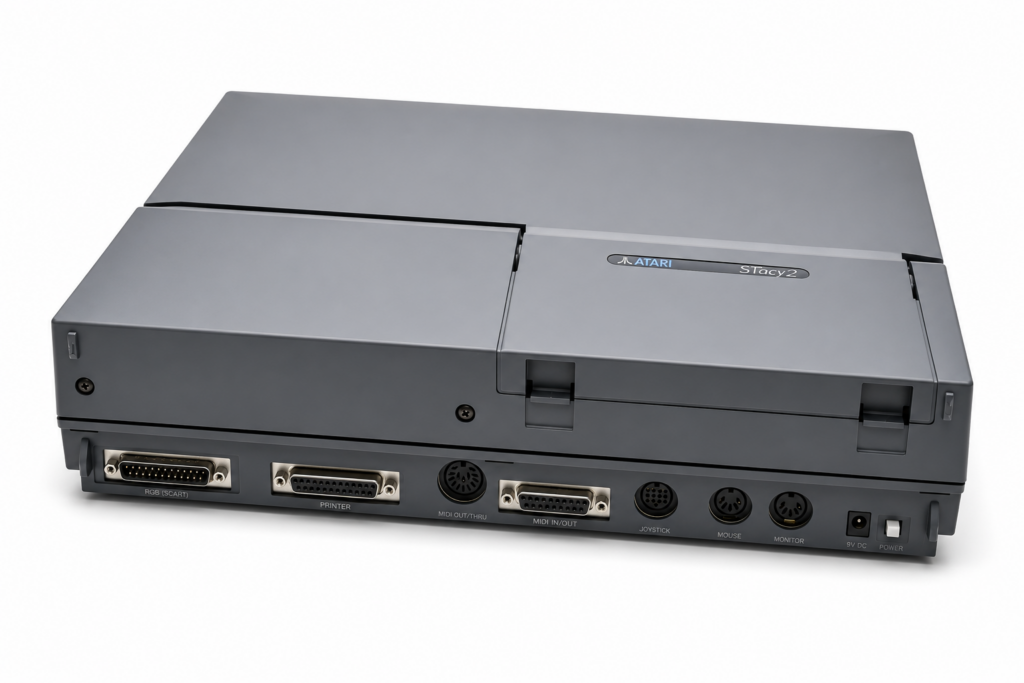
- Built-in MIDI In/Out ports
- Serial and parallel ports
- Mouse and joystick ports
- External monitor support
- External floppy and hard drive support
Input Devices
- Integrated full-travel keyboard
- Integrated track-ball
- Atari ST mouse support
- Joystick support
Power
- AC adapter support
- Internal battery operation
Notable Features
- Portable Atari ST-compatible computer
- Built-in MIDI support
- Strong compatibility with Atari ST software
- Optional internal hard drive
- One of Atari’s earliest portable systems
Physical Design
- Portable clamshell-style case
- Integrated display and keyboard
- Rugged transportable design
- Dark gray industrial styling
Notable Facts
- The Atari Stacy was nicknamed the “luggable” because of its large size and heavy weight compared to modern laptops.
- Early Stacy battery packs were so heavy that many users preferred running the system almost entirely on AC power.
- Some Atari Stacy models included internal hard drives at a time when portable hard drives were still relatively uncommon.
