
Release Information
- Released: 1987
- Manufacturer: Atari
- Type: 16/32-bit professional computer
The Atari Mega ST Computer
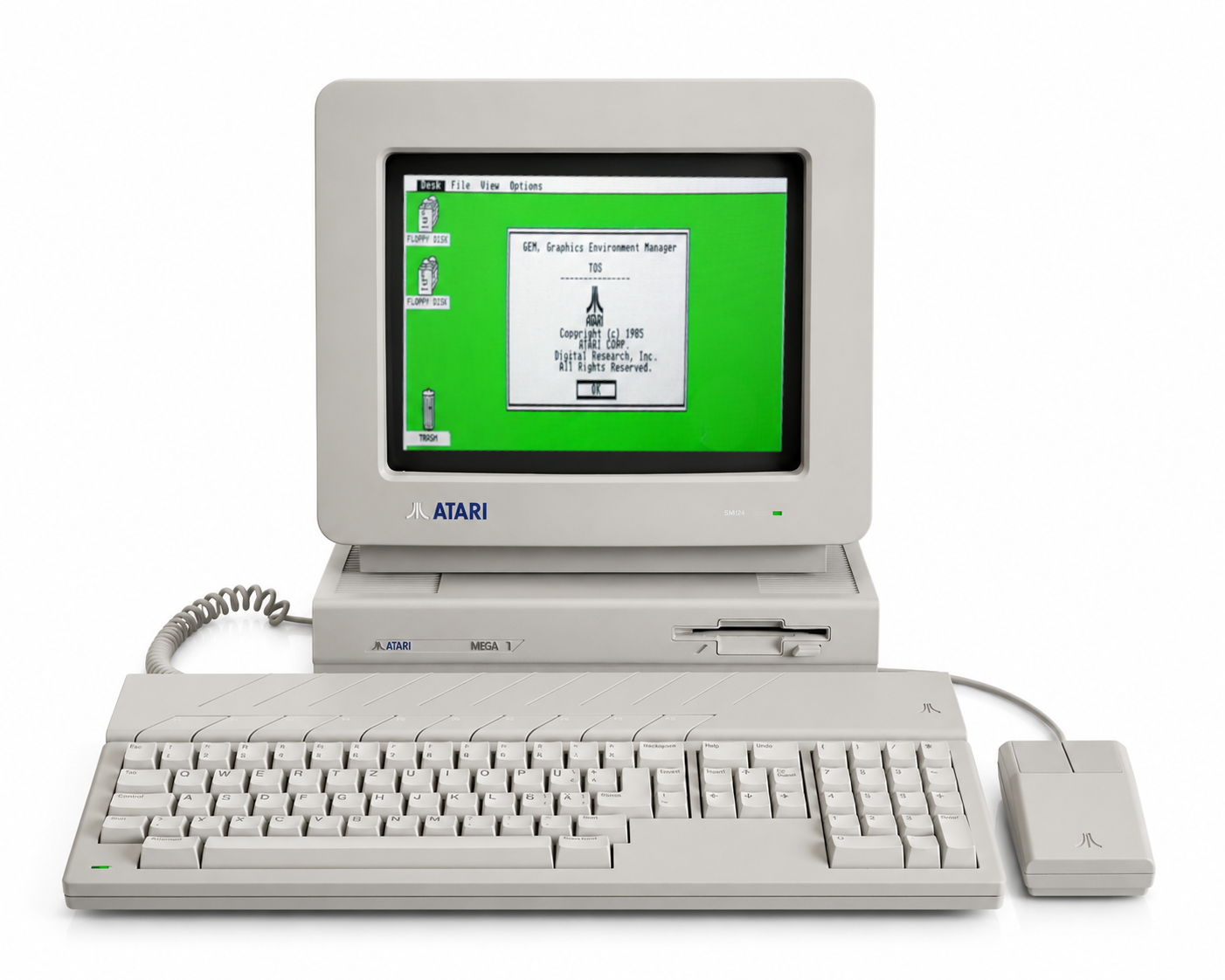
The Atari Mega 1 was Atari’s first major attempt to position the ST computer line as a serious professional workstation for business users, musicians, desktop publishers, and advanced home computing enthusiasts. Released in 1987 as part of the Atari Mega ST family, the Mega 1 combined the proven power of the Atari ST platform with a redesigned desktop form factor, expanded memory, improved expandability, and a much more professional appearance.
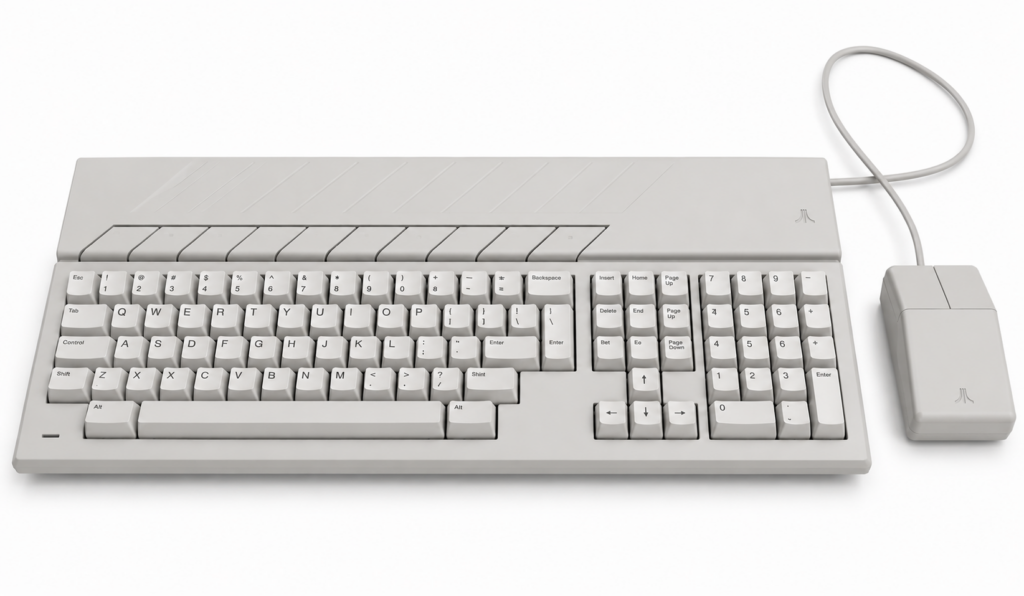
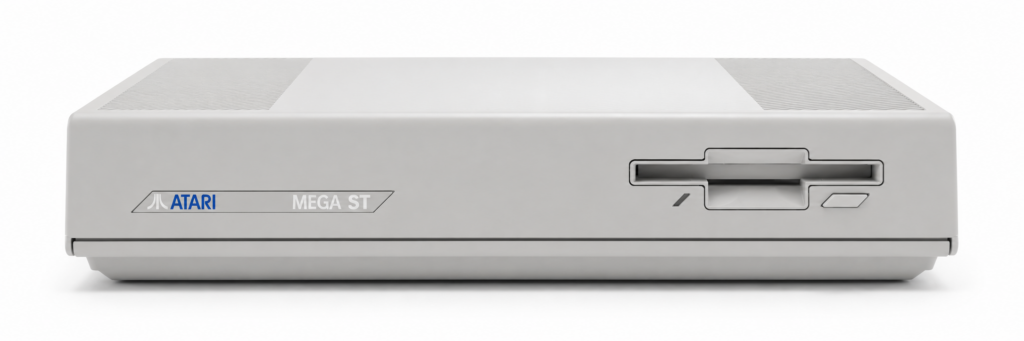
Unlike the earlier Atari 520ST and 1040ST systems, which integrated the keyboard and computer into a single wedge-shaped case, the Atari Mega 1 separated the keyboard from the main system unit. This gave the computer a more workstation-like design similar to business-oriented desktop computers of the era. The sleek low-profile desktop case, detachable keyboard, and optional laser printer support helped position the Mega series as a more serious productivity and creative platform.
Internally, the Mega 1 used the Motorola 68000 processor running at 8 MHz — the same CPU architecture that powered earlier ST systems — but added improved expansion capabilities and refined system design. The Mega 1 shipped with 1 MB of RAM and supported additional memory expansion for more advanced applications. Atari also included a blitter expansion socket, allowing users to install a graphics acceleration chip that improved performance in graphics-intensive applications and games.
One of the Atari Mega 1’s most important strengths was its continued inclusion of built-in MIDI ports. The Atari ST family had already become legendary in music production circles because of its accurate MIDI timing and affordable sequencing capabilities. The Mega 1 extended this reputation into more professional studio environments where musicians and audio producers valued the system’s reliability and strong software ecosystem.
The Mega 1 also became highly popular in desktop publishing and graphic design environments. The high-resolution monochrome display mode combined with GEM’s graphical user interface allowed users to work comfortably with word processors, page layout software, drawing applications, and publishing tools. Atari’s affordability gave many small businesses and creative professionals access to advanced computing power at a much lower cost than competing workstation systems.
Another major improvement introduced with the Mega series was the addition of a real-time clock and internal expansion bus support. These additions made the Mega 1 much more suitable for professional applications that required accurate file timestamps, networking, and advanced hardware expansion. The system’s clean internal layout also made upgrades and modifications easier for hobbyists and technicians.
The Atari Mega 1 became especially popular in Europe, where Atari’s ST computers developed large and loyal user communities. Musicians, demo scene programmers, graphic artists, and desktop publishing users all embraced the system because of its balance between affordability and performance. Even decades later, many retro enthusiasts continue to admire the Mega 1 for its elegant design and professional workstation feel.
Today, the Atari Mega 1 is remembered as one of Atari’s most refined and professional ST computers. It represented Atari’s effort to move beyond home gaming and hobby computing into more advanced creative and business-oriented markets while still maintaining the accessibility and innovation that defined the Atari ST platform.
CPU
- Motorola 68000
- Clock Speed: 8 MHz
Graphics
- Atari ST graphics hardware
- Color resolutions:
- 320 × 200 (16 colors)
- 640 × 200 (4 colors)
- Monochrome resolution:
- 640 × 400
Sound
- Yamaha YM2149 sound chip
- Three-channel sound support
Memory
- RAM: 1 MB
- Expandable memory support
Storage Support
- Built-in 3.5-inch floppy disk drive
- External hard drive support
- External floppy drive support
Operating System
- Atari TOS operating system
- GEM graphical user interface
Ports & Expansion
- Built-in MIDI In/Out ports
- Serial and parallel ports
- Mouse and joystick ports
- Monitor output support
- Expansion bus support
- Blitter expansion socket
Input Devices
- Detachable full-travel keyboard
- Atari ST mouse
- Joystick support
Physical Design
- Separate desktop computer unit
- Low-profile workstation-style case
- Light gray professional industrial design
Notable Features
Professional workstation-oriented ST system
- Separate keyboard and desktop case design
- Real-time clock support
- Enhanced expansion capabilities
- Popular for music production and desktop publishing
Notable Facts
- The Atari Mega 1 was one of the first Atari ST systems designed specifically with business and professional users in mind.
- Many Mega 1 systems shipped without the optional blitter chip installed, allowing users to upgrade later for faster graphics performance.
- The Mega series introduced a battery-backed real-time clock to the Atari ST family.
