
Release Information
- Released: 1991
- Manufacturer: Atari
- Type: Portable ST-compatible notebook computer
The Atari ST Book Portable Computer
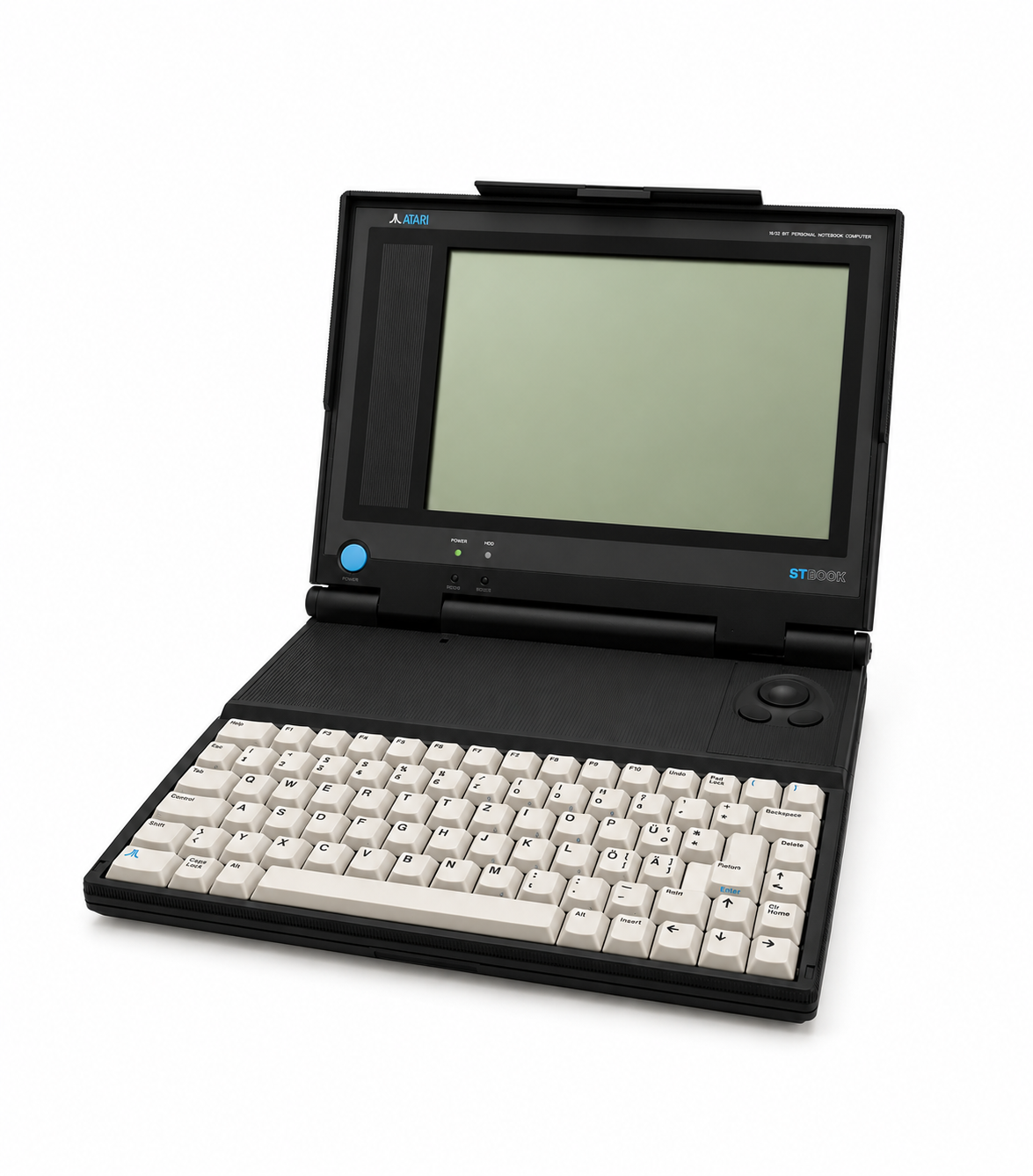
The Atari ST Book was Atari’s final portable computer and one of the most unique systems ever released in the Atari ST family. Introduced in 1991, the ST Book was designed as a lightweight, battery-powered notebook computer that retained compatibility with much of the Atari ST software ecosystem while dramatically improving portability compared to the much larger Atari Stacy portable computer. With its slim clamshell design, low power consumption, and strong MIDI capabilities, the ST Book represented Atari’s ambitious attempt to enter the growing notebook computer market of the early 1990s.
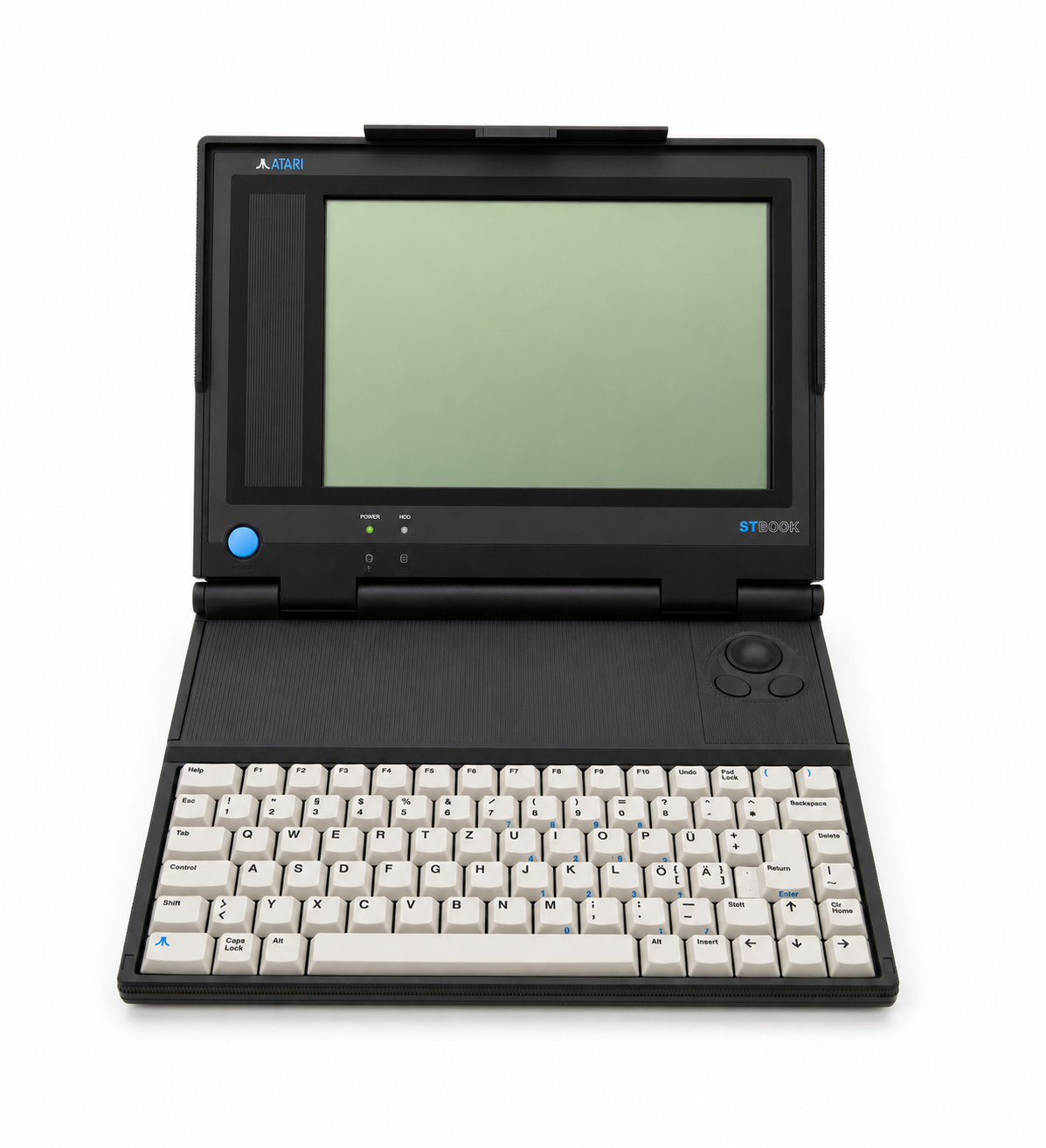
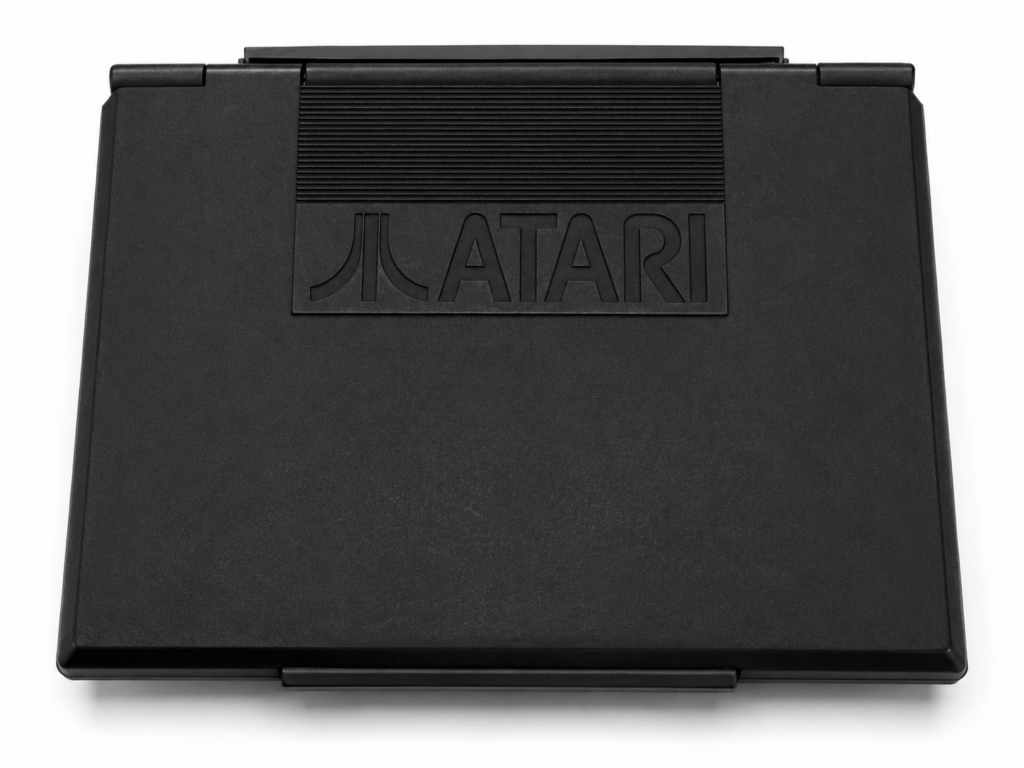
Visually, the Atari ST Book looked surprisingly modern for its time. The system featured a sleek dark-gray notebook-style case with a flip-up monochrome LCD display and integrated keyboard. Unlike the bulky Atari Stacy, the ST Book was much thinner and lighter, making it far more practical for travel and mobile use. Its clean industrial design gave it a professional appearance that aligned well with the rapidly evolving portable computer market.
Internally, the ST Book was based on the Atari STE architecture and used the Motorola 68000 processor running at 8 MHz. The computer maintained compatibility with much of the Atari ST software library, including productivity applications, programming tools, MIDI sequencing software, and many games. Atari also included the familiar TOS operating system and GEM graphical user interface, allowing longtime Atari users to transition easily to the portable platform.
One of the ST Book’s most important strengths was its extremely low power consumption. Atari designed the system to operate efficiently on battery power, using energy-saving hardware and a monochrome passive-matrix LCD display to extend battery life. Unlike many portable computers of the era, the ST Book could operate for relatively long periods without requiring constant access to AC power.
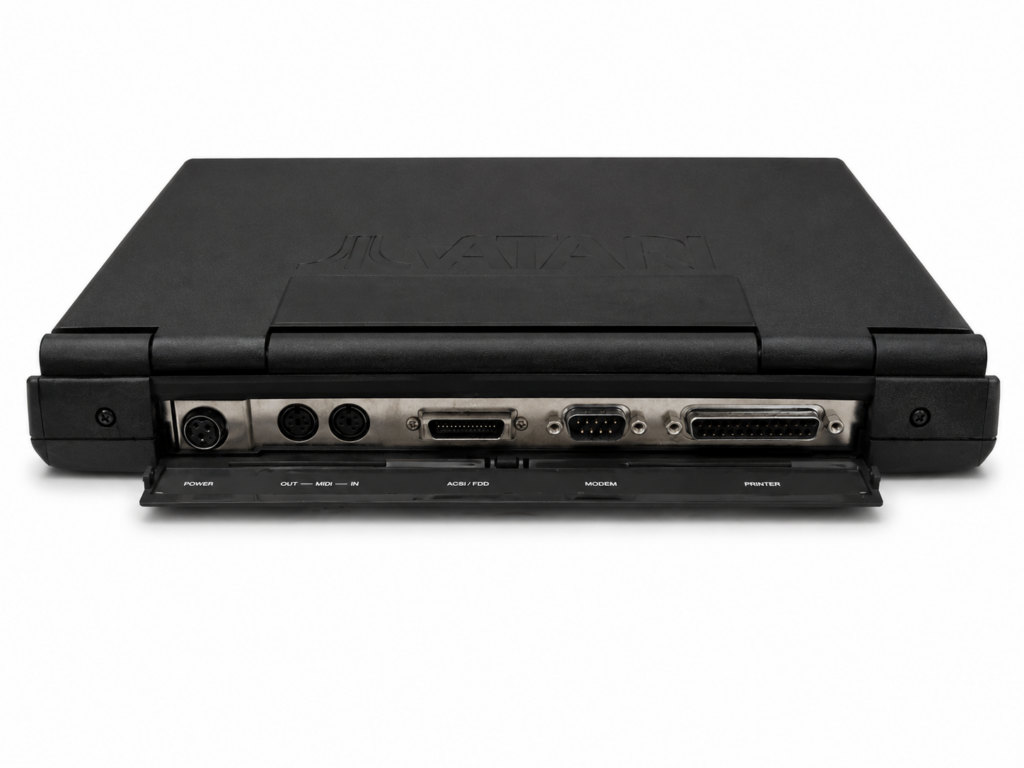
The ST Book also retained Atari’s legendary built-in MIDI ports, making it highly attractive to musicians and composers who wanted a truly portable MIDI sequencing workstation. Combined with the system’s lightweight design and strong software compatibility, this made the ST Book especially appealing in mobile music production environments.
To save space and reduce weight, the ST Book omitted an internal floppy disk drive — a highly unusual decision for the early 1990s. Instead, software and data were typically transferred using external floppy drives, RAM cards, or serial connections. The computer also included solid-state storage options that helped reduce power consumption and improve portability.
Despite its innovative design, the Atari ST Book had a relatively limited commercial release and was produced in small numbers. By the early 1990s, Atari was facing intense competition from IBM-compatible laptops and Apple portable systems, and the company’s shrinking market presence made it difficult for the ST Book to achieve widespread success. Even so, the machine developed a strong reputation among Atari enthusiasts for its portability, battery efficiency, and elegant design.
Today, the Atari ST Book is considered one of the rarest and most collectible Atari computers ever released. Its combination of portability, MIDI support, and unique engineering make it one of the most fascinating chapters in Atari’s computer history and an important milestone in the evolution of portable computing.port helped secure its place as one of the defining home computers of the 1980s.
CPU
- Motorola 68000
- Clock Speed: 8 MHz
Graphics
- Atari STE-compatible graphics hardware
- Monochrome LCD display support
- External monitor support
Sound
- Atari STE audio hardware
- DMA stereo sound support
- Built-in MIDI ports
Memory
- RAM: 1 MB or 4 MB configurations
Storage Support
- Solid-state storage support
- External floppy disk drive support
- PCMCIA-compatible memory card support
Operating System
- Atari TOS operating system
- GEM graphical user interface
Ports & Expansion
- Built-in MIDI In/Out ports
- Serial and parallel ports
- External floppy drive support
- PCMCIA card slot
- External monitor support
Input Device
- Integrated keyboard
- Built-in trackball-style pointing device
Power
- Rechargeable battery operation
- AC adapter support
- Low-power hardware design
Physical Design
- Lightweight clamshell notebook design
- Dark-gray portable case
- Thin and compact form factor
Notable Features
One of Atari’s lightest portable computers
- Extremely low power consumption
- Built-in MIDI support
- STE-compatible multimedia hardware
- Rare and highly collectible system
- Built-in monochrome passive-matrix LCD screen
- VGA monitor output support
Notable Facts
- The Atari ST Book did not include an internal floppy disk drive in order to reduce weight and improve battery life.
- The ST Book was one of the earliest notebook computers to include PCMCIA memory card support.
- The ST Book consumed so little power that it could run significantly longer on battery power than many competing laptops of the era.
- Because of its limited production numbers, the Atari ST Book is now considered one of the rarest commercially released Atari computers.
