
The Atari 8-bit computer family remains one of the most influential and respected lines of home computers ever created. Introduced during the late 1970s and expanded throughout the 1980s, Atari’s 8-bit systems successfully blended gaming, education, programming, creativity, and home productivity into machines that were both powerful and approachable. At a time when personal computing was still new and unfamiliar to most households, Atari computers helped introduce an entire generation to the possibilities of digital technology.

What made the Atari 8-bit family especially important was its combination of advanced custom hardware and user-friendly design. Atari engineers drew heavily from the company’s experience in arcade gaming technology, creating computers that delivered colorful graphics, smooth animation, and sophisticated sound capabilities far beyond what many competing systems could offer at the time. Whether used for gaming, learning BASIC programming, composing music, connecting to bulletin board systems, or experimenting with educational software, Atari 8-bit systems became versatile tools for creativity and exploration.

The Atari 8-bit journey officially began in 1979 with the release of the Atari 400 and Atari 800. These two systems shared the same core internal technology but targeted different types of users. The Atari 400 was designed as a lower-cost entry-level computer intended primarily for education and family use. It featured a pressure-sensitive membrane keyboard and a more compact design. In contrast, the Atari 800 offered a full-travel keyboard, more internal expansion capability, and additional cartridge slots, making it more appealing to enthusiasts and serious computer users.

Both systems were revolutionary for their time. Powered by the MOS Technology 6502 processor and Atari’s advanced ANTIC, GTIA, and POKEY custom chips, the Atari 400 and 800 produced graphics and sound that rivaled many arcade machines. Games appeared colorful and smooth, while music and sound effects were far more sophisticated than those found on many competing home computers. These systems quickly developed reputations as outstanding gaming machines, but they were also highly capable computers used for education, programming, telecommunications, and productivity.
The Atari 800 in particular became one of the most expandable home computers of its era. Users could connect cassette recorders, floppy disk drives, printers, modems, and a wide variety of accessories. Atari also released educational software, programming tools, and productivity applications that helped position the platform as more than just a gaming device. For many young users, Atari computers became their first exposure to programming through Atari BASIC, inspiring future careers in software development and technology.

In 1983, Atari introduced a major redesign of the platform with the release of the Atari 1200XL. The 1200XL featured a sleek, low-profile case design with a more professional appearance and an improved keyboard. The system included new function keys, enhanced styling, and quieter operation that reflected the growing maturity of the personal computer market. Although the 1200XL suffered from some compatibility issues with earlier software and peripherals, many collectors today consider it one of the most visually attractive Atari computers ever produced.

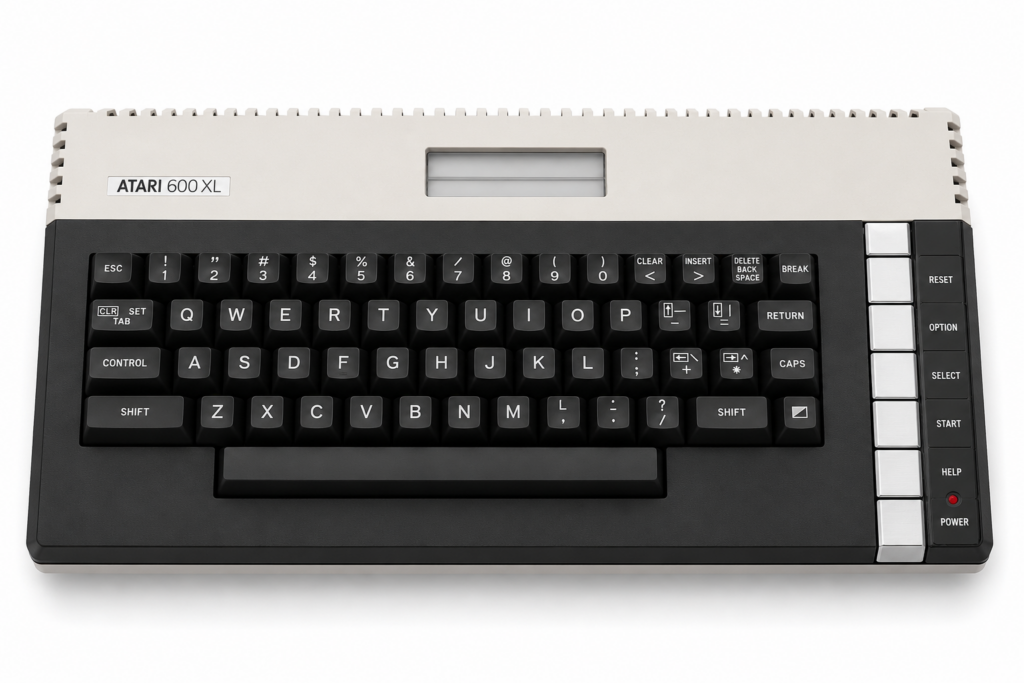
Atari quickly refined the XL line with the introduction of the Atari 600XL and the enormously successful Atari 800XL. The 600XL served as a more affordable entry-level model, while the 800XL became the flagship Atari home computer for much of the mid-1980s. The 800XL offered 64 KB of RAM, improved operating system ROMs, better compatibility with existing software, and excellent expansion options. It struck a near-perfect balance between price, performance, and usability, becoming one of Atari’s best-selling and most beloved systems.

The Atari 800XL also benefited from a rapidly growing software ecosystem. Thousands of games, educational programs, utilities, productivity tools, telecommunications packages, and programming applications became available for the platform. Atari computers became popular not only in homes, but also in schools and computer clubs where users shared programs, magazines, tips, and hardware modifications. The Atari community developed a reputation for creativity and experimentation that continues even today.

As competition in the computer industry intensified during the mid-1980s, Atari updated the platform again with the XE series. The Atari 65XE introduced a more modern beige-and-gray design that visually matched Atari’s newer hardware products. Internally similar to the 800XL, the 65XE maintained strong compatibility with Atari’s large existing software library while presenting a cleaner and more contemporary appearance.
Atari then released the Atari 130XE, which expanded the platform even further by increasing memory to 128 KB. This made the 130XE the most powerful officially released Atari 8-bit computer in terms of standard RAM configuration. The extra memory allowed certain advanced software and games to take advantage of larger programs and more sophisticated features, helping extend the life of the Atari 8-bit platform well into the later years of the 1980s.
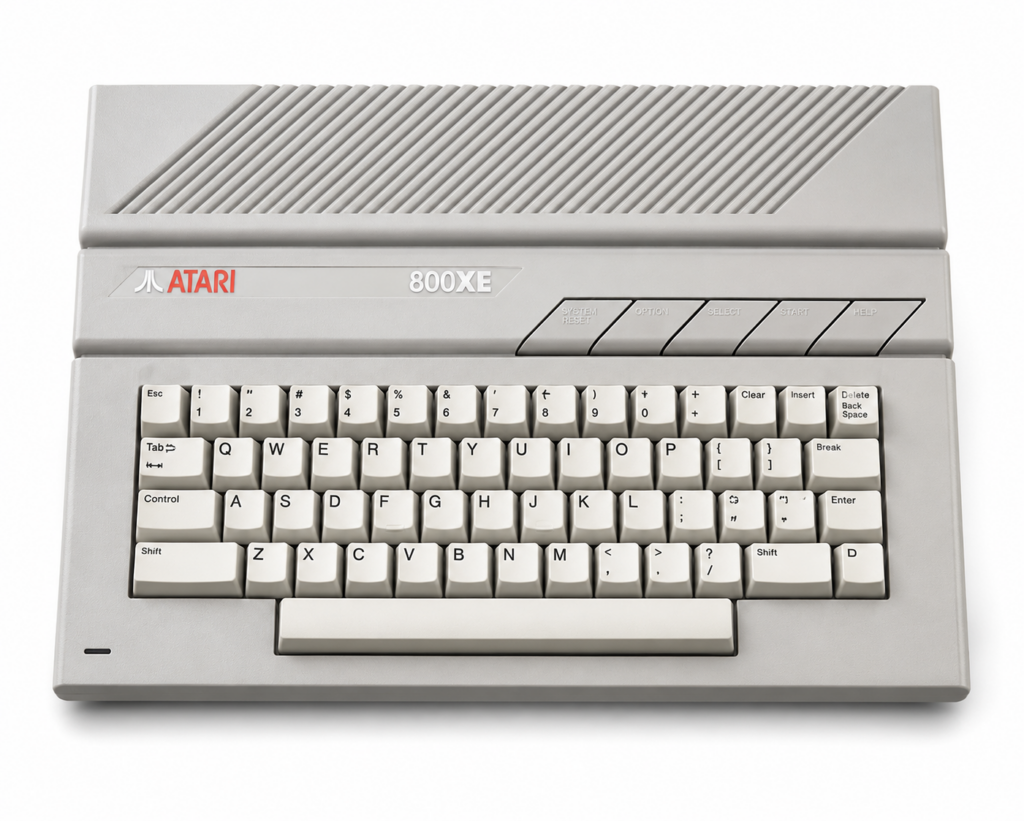
Another member of the XE family was the Atari 800XE, which was released primarily in European markets. The 800XE continued Atari’s XE styling and maintained compatibility with the broader Atari 8-bit ecosystem. Although less common in North America, the system became an important part of Atari’s continued international presence during the late 1980s.
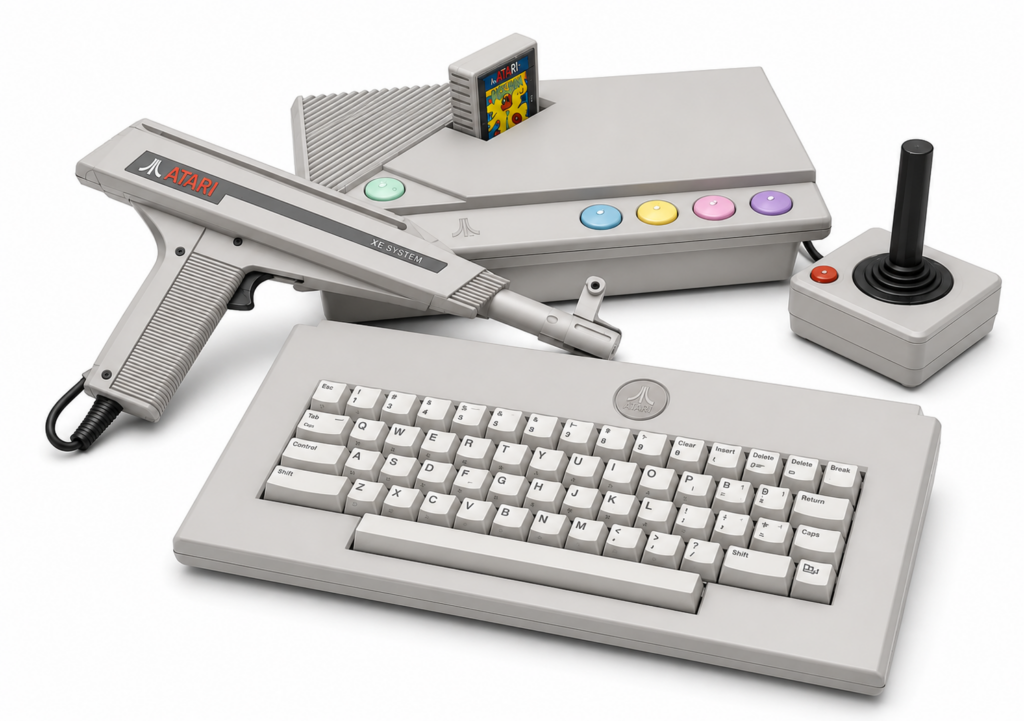
One of the most unusual and fascinating systems in the Atari 8-bit family was the Atari XE Game System, commonly known as the XEGS. Released in 1987, the XEGS blurred the line between game console and home computer. Atari marketed it primarily as a gaming system, complete with cartridge-based games and accessories such as the XG-1 light gun. However, when paired with an optional keyboard and peripherals, the XEGS transformed into a fully functional Atari 8-bit computer capable of running educational software, productivity applications, and programming tools.
The XEGS represented Atari’s attempt to merge the home gaming and personal computing markets into a single affordable platform. Although it arrived during a time when Nintendo and Sega were dominating the gaming industry, the system remains highly respected among Atari fans because of its flexibility and strong connection to the Atari 8-bit legacy.
What truly set the Atari 8-bit computers apart was the creativity they inspired. These machines encouraged users to explore programming, digital art, music creation, hardware modification, telecommunications, and gaming in ways that felt accessible and exciting. Countless programmers, artists, musicians, and technology enthusiasts trace their beginnings back to an Atari keyboard and joystick sitting beside a television or computer monitor during the 1980s.
Even decades later, the Atari 8-bit community remains active and passionate. Enthusiasts continue to develop new games, hardware upgrades, storage solutions, operating system enhancements, and modern accessories for these classic systems. Online communities, retro computing conventions, and preservation projects continue to celebrate the enduring legacy of Atari’s 8-bit computers.
Today, the Atari 8-bit family stands as one of the defining achievements of the early home computing era. These systems were far more than simple gaming machines — they were gateways into creativity, experimentation, learning, and technological discovery. Their influence can still be seen throughout modern computing and gaming culture, and their legacy continues to inspire retro enthusiasts around the world.
