
Release Information
- Released: 1985
- Manufacturer: Atari
- Type: 8-bit home computer
The Atari 130XE Home Computer
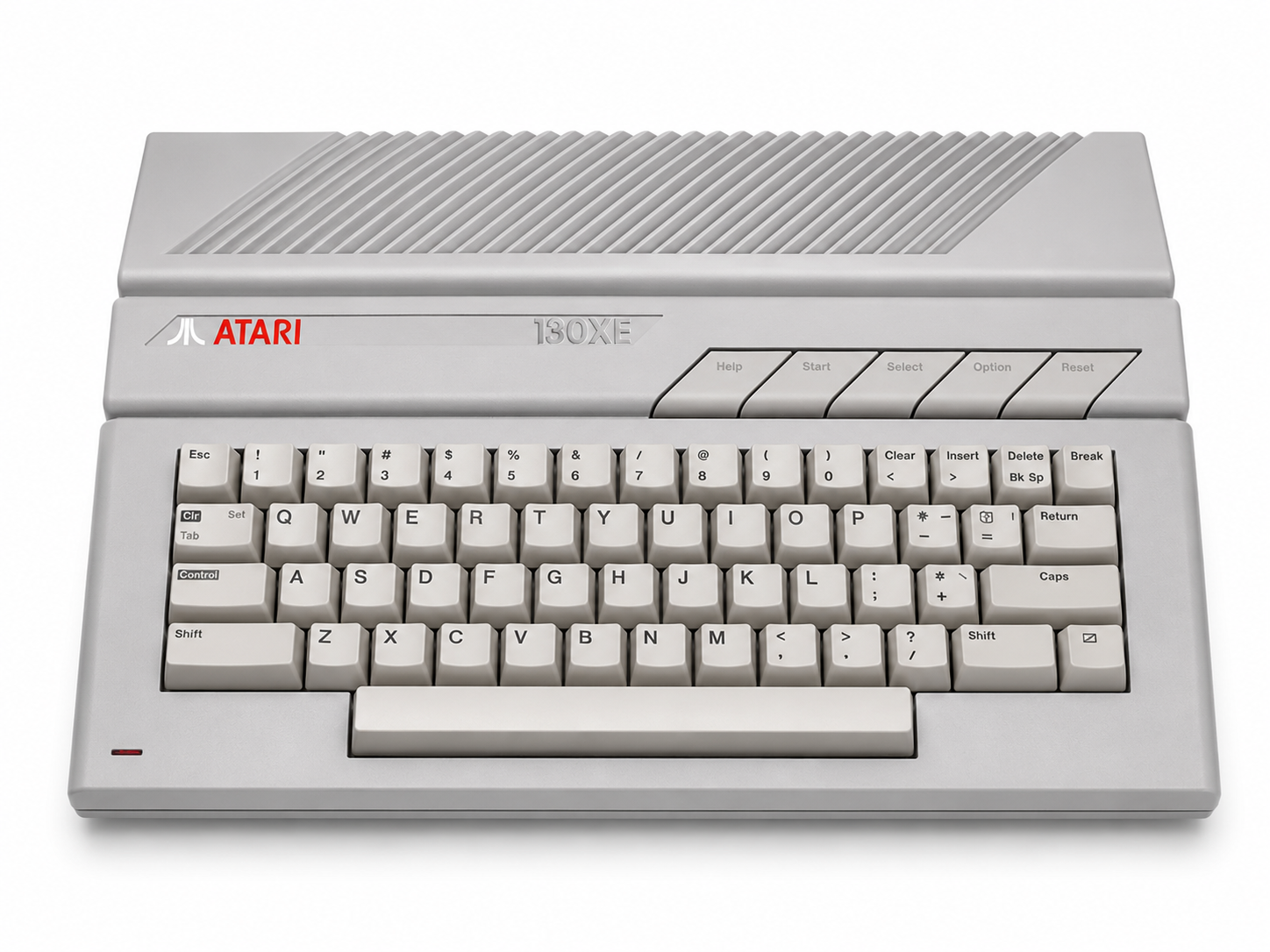
The Atari 130XE was the most advanced officially released home computer in Atari’s 8-bit computer family and represented the final major evolution of Atari’s legendary 8-bit platform. Released in 1985 as part of the XE series, the 130XE built upon the success of earlier Atari computers such as the 800XL and 65XE while introducing expanded memory and improved hardware refinements that extended the lifespan of the Atari 8-bit ecosystem well into the late 1980s.
Visually, the Atari 130XE featured the same sleek beige-and-gray industrial design used throughout Atari’s XE computer line. The system included a compact desktop layout, full-travel keyboard, and a clean modern appearance that reflected the styling trends of mid-1980s home electronics. Although externally similar to the Atari 65XE, the 130XE contained one major improvement that made it especially attractive to advanced users and enthusiasts: expanded memory.
The Atari 130XE shipped with 128 KB of RAM, making it the highest-capacity standard memory configuration ever officially released in an Atari 8-bit home computer. This expanded memory allowed compatible software to take advantage of additional storage space for larger programs, RAM disks, advanced graphics applications, and more sophisticated games. While not all software used the extra memory, the 130XE became highly valued among power users who wanted to push the Atari platform beyond its original limitations.
Internally, the Atari 130XE retained the same powerful custom chipset architecture that had made Atari computers famous since 1979. The system used the MOS Technology 6502 processor along with Atari’s ANTIC graphics chip, GTIA graphics hardware, and POKEY sound chip. Together, these components continued to provide colorful graphics, smooth scrolling, hardware sprites, and rich four-channel audio that remained highly competitive among 8-bit home computers.
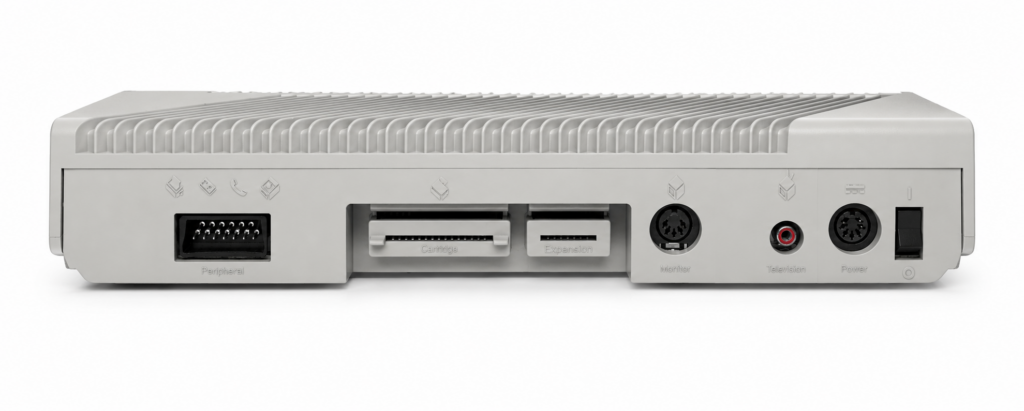
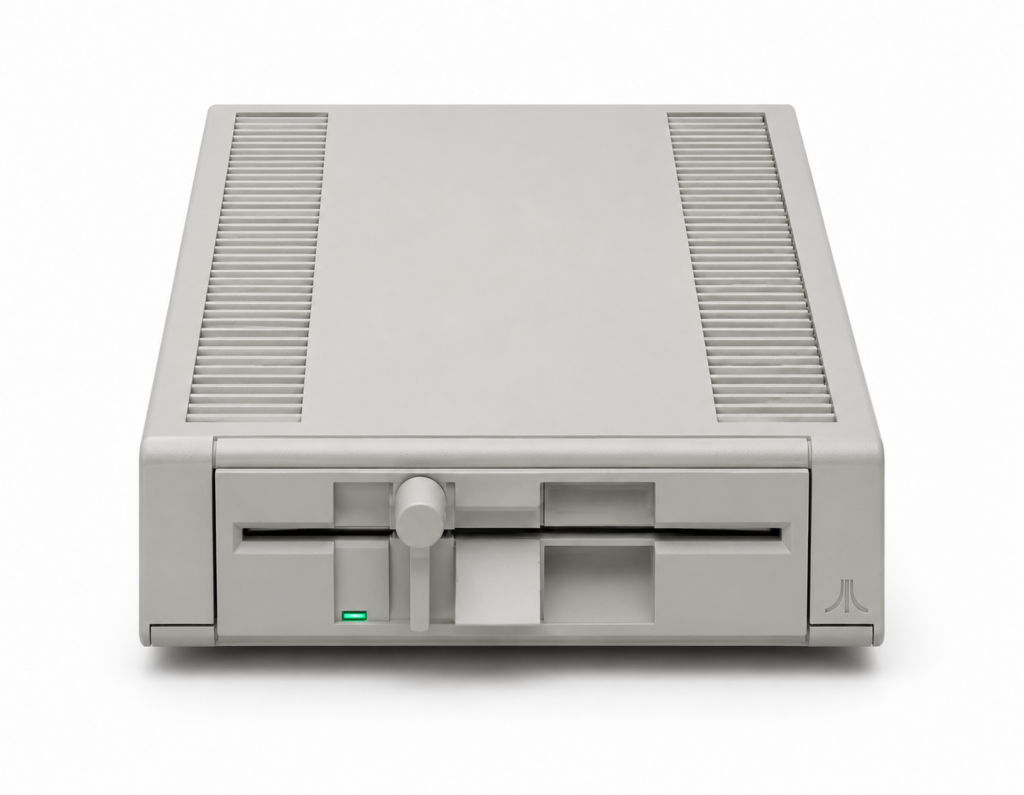
Like earlier Atari systems, the 130XE supported a wide range of peripherals through Atari’s reliable SIO (Serial Input/Output) interface. Users could connect floppy disk drives, cassette systems, printers, modems, plotters, and various other accessories that transformed the system into a flexible platform for gaming, education, productivity, programming, and telecommunications. Atari BASIC remained built directly into ROM, allowing users to immediately begin learning programming and software development.
The Atari 130XE also benefited from Atari’s enormous existing software ecosystem. Thousands of games, educational titles, utilities, programming tools, and creative applications were already available for Atari 8-bit computers by the time the 130XE arrived. The computer maintained strong compatibility with earlier Atari software while also supporting newer programs designed to take advantage of the expanded memory configuration.
The system became particularly popular in Europe, where Atari’s 8-bit computers maintained a loyal following long after many competing 8-bit systems had begun to decline. In some regions, the Atari 130XE remained in active use well into the 1990s among gamers, hobbyists, programmers, and demo scene enthusiasts.
Today, the Atari 130XE is remembered as the ultimate expression of Atari’s classic 8-bit computer platform. Its expanded memory, strong compatibility, advanced multimedia hardware, and elegant XE styling helped solidify its reputation as one of the finest 8-bit home computers ever produced.
CPU
- MOS Technology 6502C
- Clock Speed: Approximately 1.79 MHz
Graphics
- NTIC graphics processor
- GTIA graphics chip
- Resolution up to 320 × 192
- Hardware sprite support
- Advanced color graphics modes
Sound
- POKEY sound chip
- Four-channel audio support
Memory
- RAM: 128 KB
Storage Support
- Cartridge support
- Cassette tape support
- Floppy disk drive support
Keyboard
- Full-travel keyboard
- XE-style layout
Expansion & Ports
- SIO peripheral interface
- Printer support
- Modem support
- Joystick controller ports
- Cartridge slot
Output
- RF television output
- Composite monitor support
Operating Systems
- Atari XE operating system ROM
- Atari BASIC built into ROM
Physical Design
- Gray XE-style case
- Compact desktop design S
- treamlined industrial styling
Notable Features
Largest standard RAM configuration in an official Atari 8-bit computer
- Strong compatibility with Atari 8-bit software
- Expanded memory banking support
- Popular among advanced users and hobbyists
- One of the final major Atari 8-bit systems
Notable Facts
- The Atari 130XE used bank-switched memory to access its full 128 KB of RAM despite the limitations of the 8-bit architecture.
- Some Atari software developers created special “130XE enhanced” programs that specifically used the computer’s expanded memory.
- Atari originally planned even more advanced XE systems that were never commercially released.
