
Atari console accessories played a major role in expanding the gaming experience far beyond the basic console itself. From the iconic CX40 joystick and paddle controllers of the Atari 2600 era to advanced accessories like trackballs, keypad controllers, light guns, and driving controllers, Atari continually experimented with new ways for players to interact with games. Later systems such as the Atari Lynx and Atari Jaguar introduced multiplayer cables, CD-ROM add-ons, memory cartridges, and enhanced controllers that pushed Atari hardware even further. These accessories helped define the Atari experience and demonstrated the company’s willingness to innovate, experiment, and expand the possibilities of home gaming throughout the 1970s, 1980s, and 1990s.
Early Pong Era
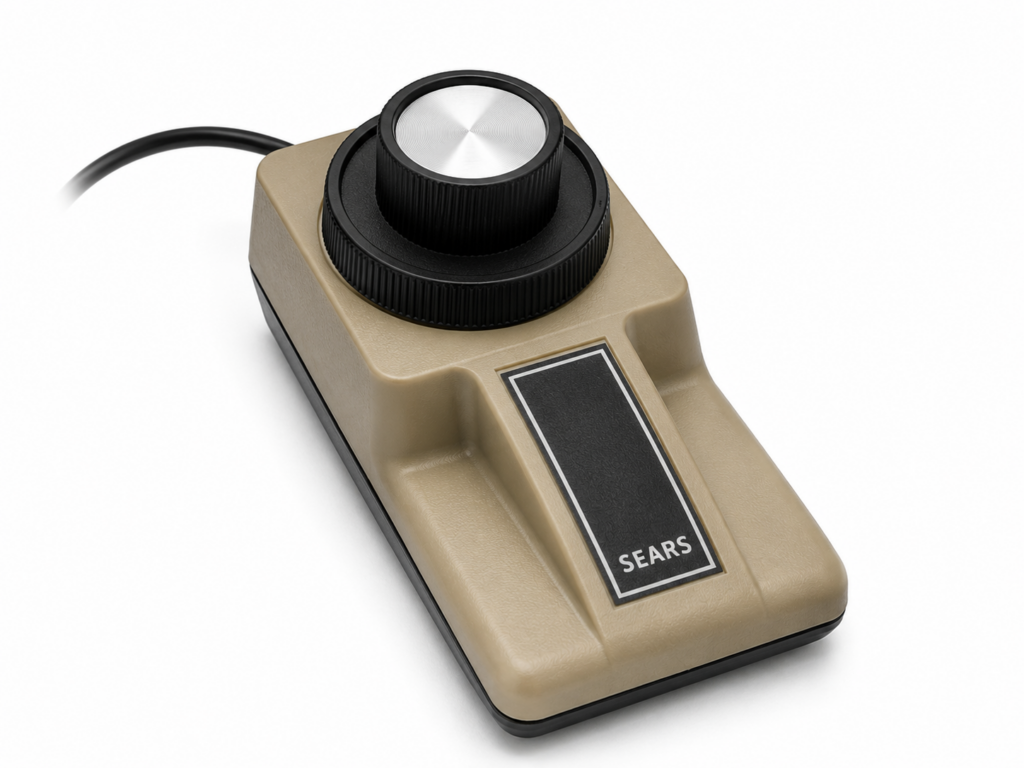
Dedicated Pong Controller
The controllers used with the Atari Pong were simple but highly influential paddle-style controllers that helped define the early home video game experience of the 1970s. Built directly into many Atari Pong units, these controllers featured rotating knobs that allowed players to smoothly move on-screen paddles up and down during gameplay. Their analog design provided precise control that perfectly matched the fast-paced action of Pong and other early ball-and-paddle games. Unlike later detachable joysticks, the Atari Pong controllers were integrated into the console itself, emphasizing the self-contained nature of early dedicated gaming systems. The satisfying feel of turning the paddle knobs while competing against friends or family became one of the most recognizable experiences of the first generation of home video gaming, helping establish Atari as a pioneer in interactive entertainment.
Atari 2600 Accessories
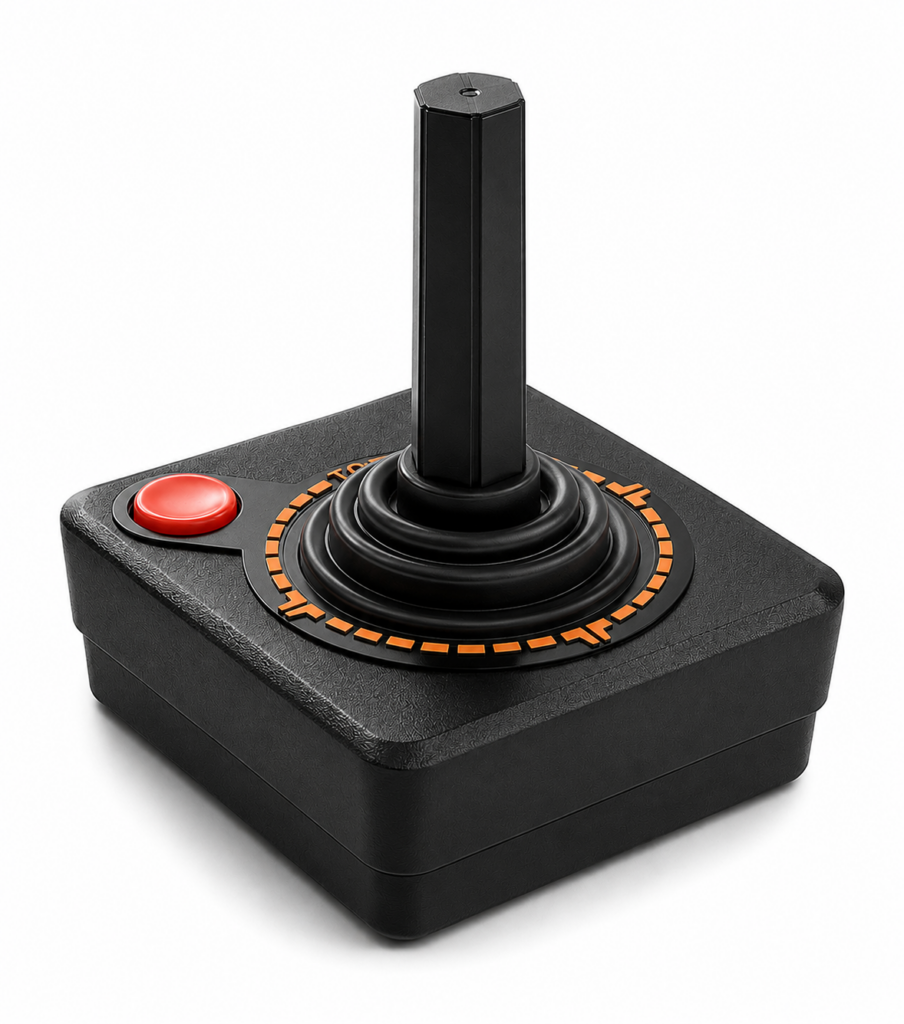
CX10 Joystick
The Atari CX10 Joystick was Atari’s original joystick controller for the Atari Video Computer System and helped establish the standard design for home video game controls in the late 1970s. Introduced before the more common Atari CX40 Joystick, the CX10 featured a distinctive internal leaf-spring mechanism that provided smooth directional movement and a responsive feel. Early versions of the controller were nicknamed the “Stickler” because of their somewhat delicate construction, which later led Atari to redesign the joystick into the more durable CX40 model. The CX10 used a simple one-button design with eight-direction movement, making it ideal for arcade-style games such as Combat, Asteroids, and Space Invaders. Despite its relatively short production life, the Atari CX10 remains an important piece of video game history and is highly valued by collectors as the first joystick controller released for the Atari 2600.
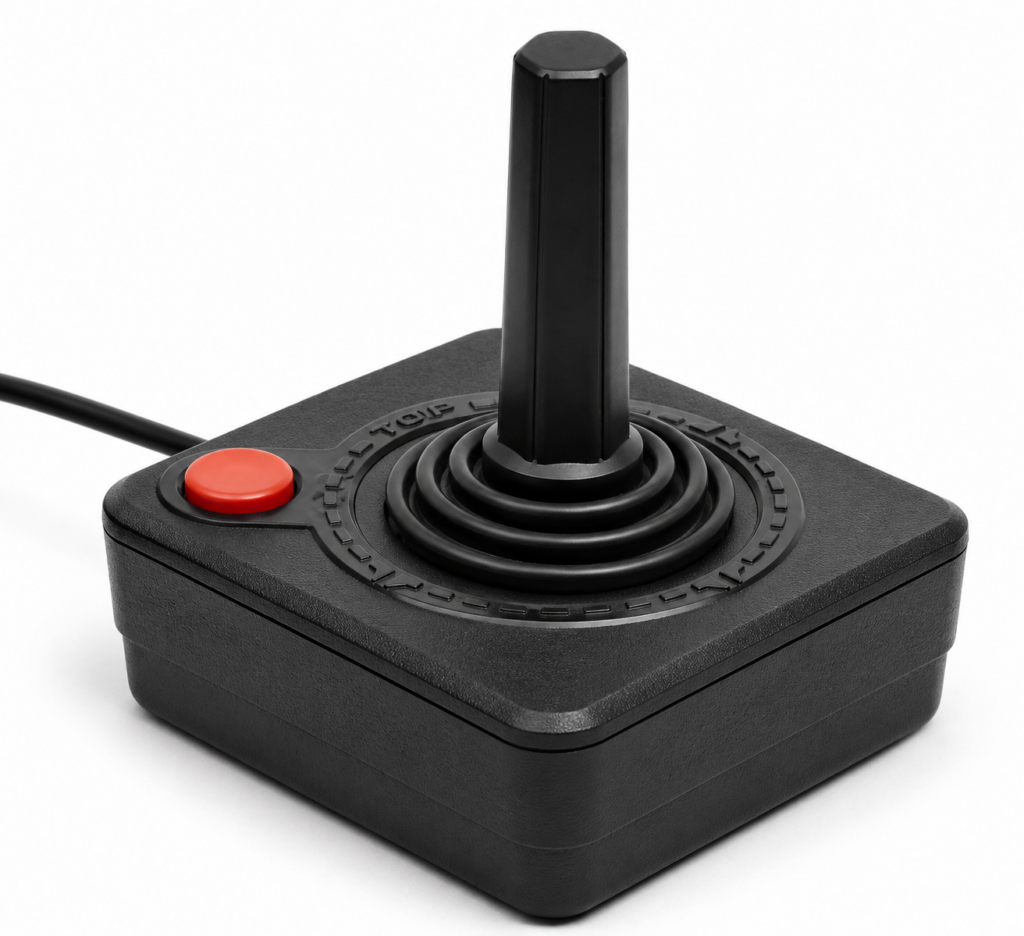
CX40 Joystick
he Atari CX40 Joystick is one of the most iconic video game controllers ever created and became closely associated with Atari’s home gaming and computer systems during the late 1970s and 1980s. Originally designed for the Atari Video Computer System, the CX40 featured a simple black rectangular base, a single red fire button, and an eight-direction digital joystick that was easy to understand and durable enough for countless hours of gameplay. The controller also worked with Atari’s 8-bit computer line, including the Atari 400 and Atari 800, helping standardize joystick controls across Atari’s products. Its straightforward design made it ideal for arcade-style games such as Pac-Man, Asteroids, and Space Invaders. Decades later, the Atari CX40 remains a symbol of the golden age of video gaming and is still recognized by retro gaming enthusiasts around the world.
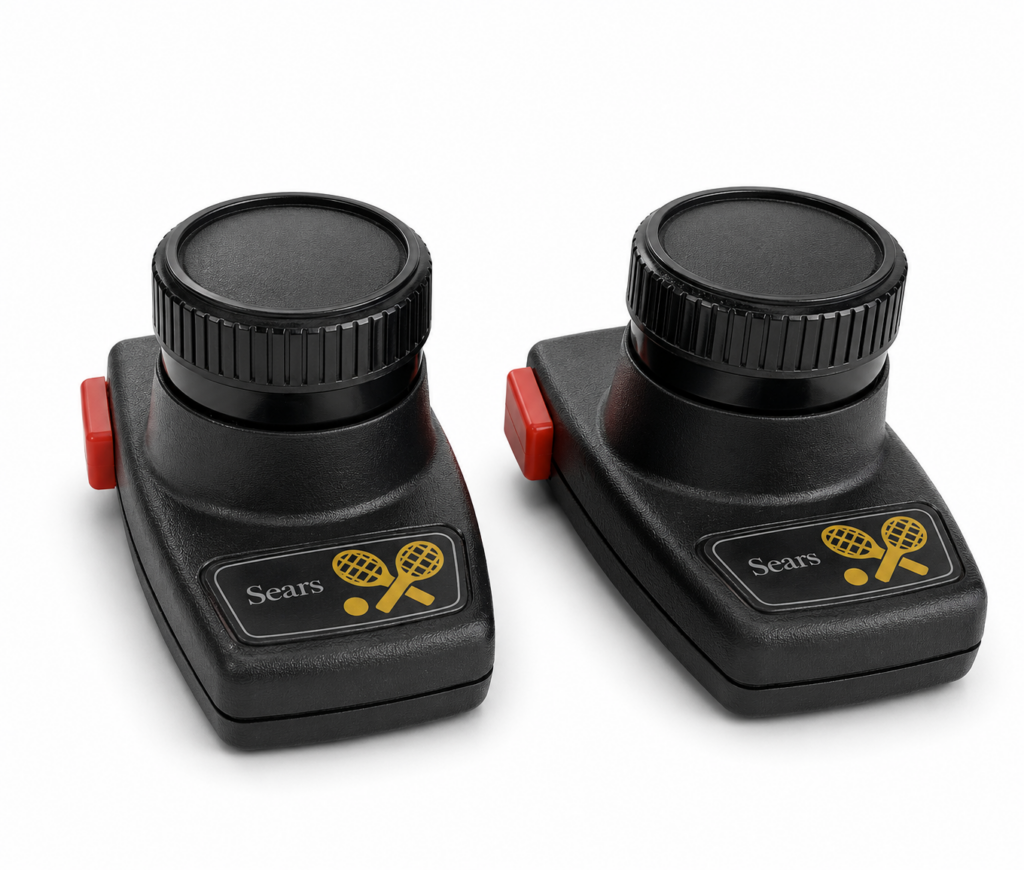
CX30 Paddle Controllers
The Atari Paddle Controllers were specialized game controllers designed to provide precise rotational input for arcade-style games on Atari systems. Best known for their use with the Atari Video Computer System, the paddle controllers featured a small rotating knob and a side-mounted fire button, making them perfect for games that required smooth analog movement, such as Pong, Breakout, and Kaboom!. Each unit typically included two connected paddles, allowing multiplayer gameplay from a single controller set. Atari’s paddle technology was also compatible with several Atari 8-bit computers, including the Atari 400 and Atari 800. Their simple but highly responsive design helped recreate the feel of classic arcade controls at home, and they remain a favorite among retro gaming enthusiasts for their accuracy and nostalgic appeal.
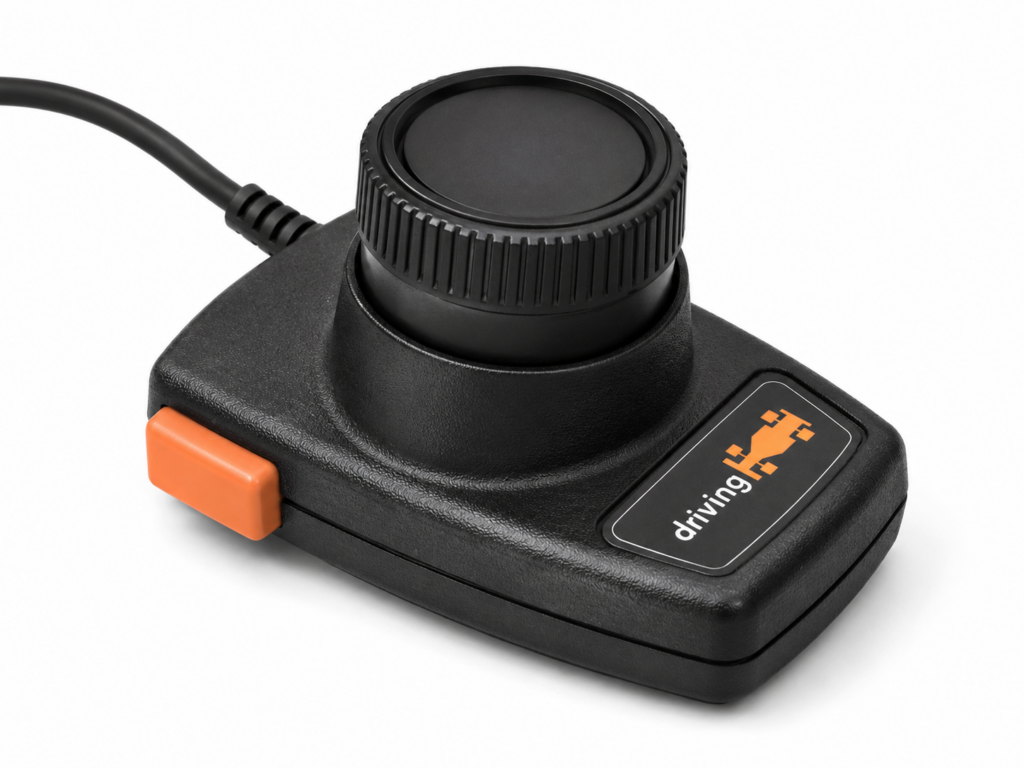
CX20 Driving Controller
The Atari Driving Controller was a specialized game controller created for driving and racing games on the Atari Video Computer System. Although it resembled Atari’s paddle controllers, the Driving Controller used a unique 360-degree rotary design that allowed for smooth continuous steering, making it ideal for games such as Indy 500. The controller featured a textured rotating wheel and a single action button positioned on the side, giving players a more immersive arcade-style racing experience at home. Unlike standard paddle controllers, the Driving Controller used a different signaling method that provided more precise rotational tracking for steering-based gameplay. Its distinctive design and specialized function made it one of Atari’s most innovative early controllers and helped demonstrate Atari’s efforts to create unique hardware experiences tailored to specific game genres.
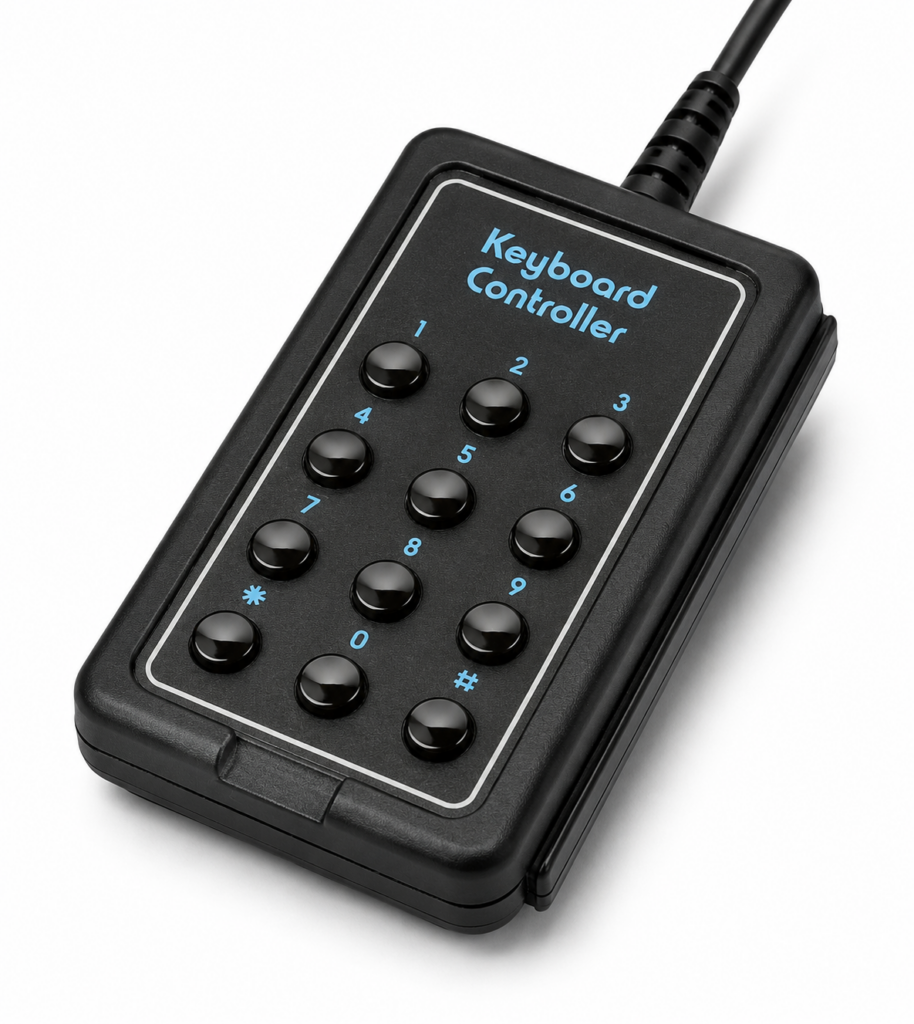
CX50 Keyboard Controller
The Atari Keyboard Controller was a unique accessory created for the Atari Video Computer System that expanded the system’s input options beyond traditional joysticks and paddles. The controller featured a 12-button keypad arranged in a telephone-style layout, along with side buttons for additional actions. It was primarily designed for more complex games and educational software that required numeric input or multiple command selections, including titles such as Star Raiders and various learning programs. The Keyboard Controller represented Atari’s attempt to push the 2600 beyond simple arcade gameplay by introducing more advanced interaction methods. Although only a small number of games supported it, the controller demonstrated Atari’s willingness to experiment with innovative input devices during the early years of home gaming.
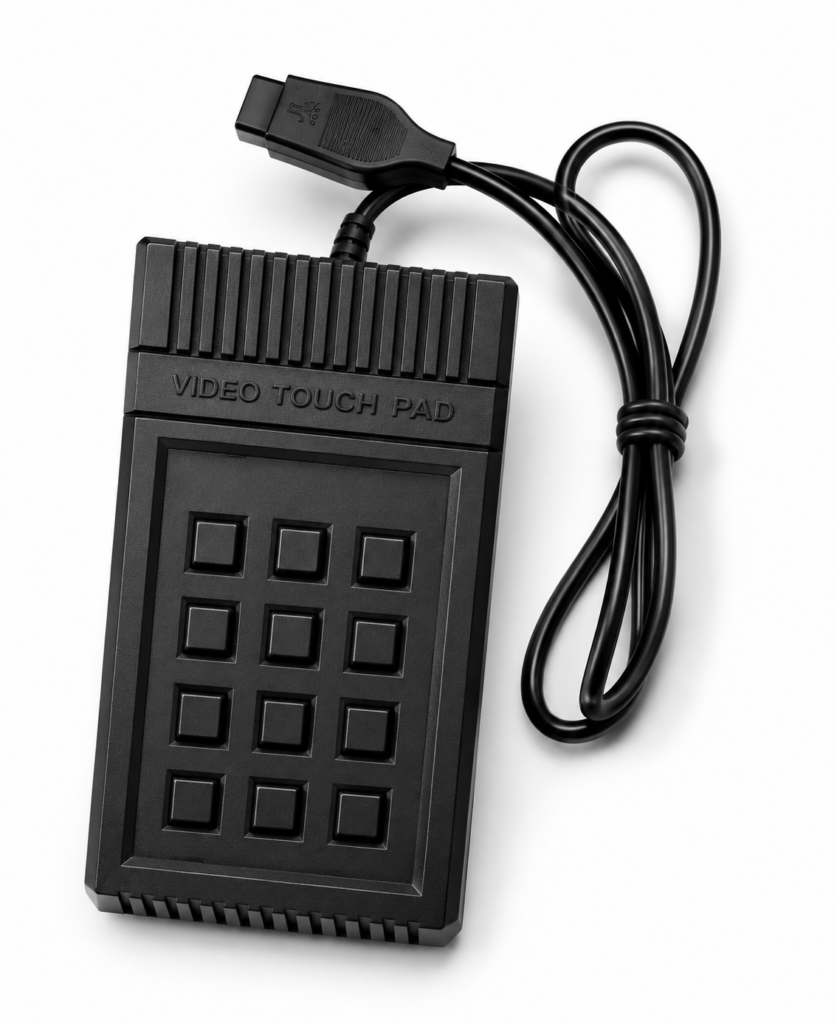
Video Touch Pad
The Atari Video Touch Pad was an unusual and futuristic accessory developed for the Atari Video Computer System during the early 1980s. Instead of using physical buttons or a joystick, the controller featured a flat membrane surface divided into a grid of touch-sensitive areas that players could press to enter commands or interact with compatible software. The Video Touch Pad was mainly used with educational programs, music applications, and specialized games that required more complex input than traditional Atari controllers could provide. Its sleek and minimalist design reflected Atari’s experimental approach to home gaming technology at the time. Although only a limited number of titles supported the accessory.
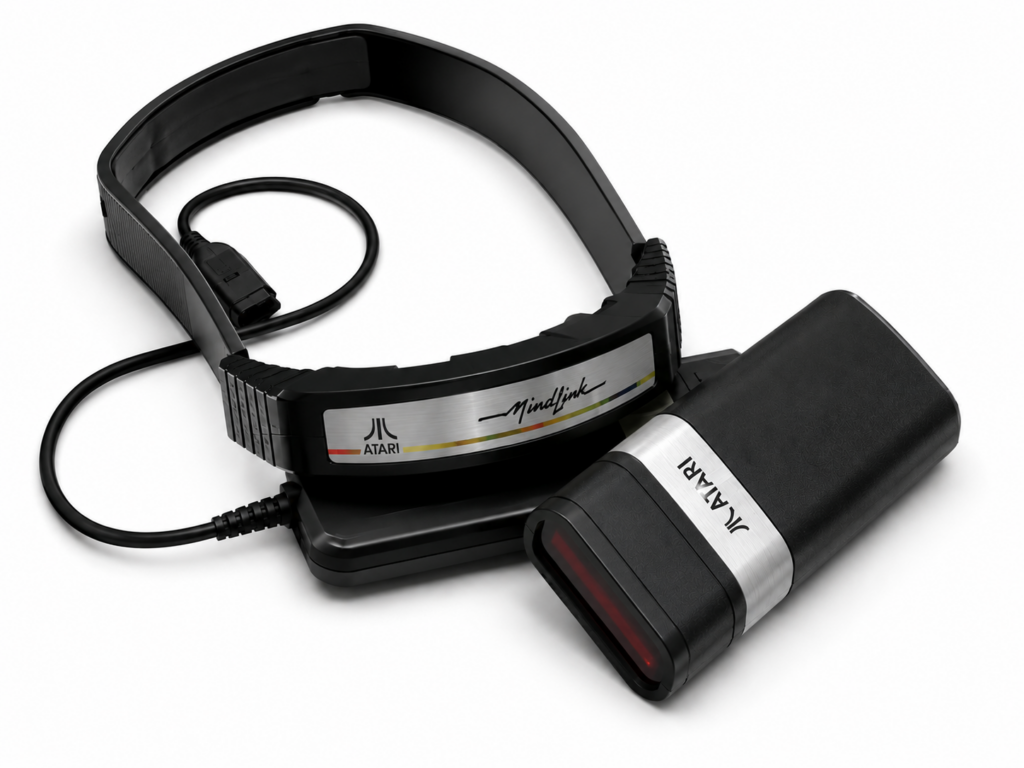
Mindlink Controller
The Atari Mindlink was one of the most unusual and ambitious controller concepts ever developed for the Atari Video Computer System. Designed in the early 1980s, the Mindlink was a headband-style controller that attempted to translate subtle forehead muscle movements into game controls, creating the illusion of “mind-controlled” gameplay. Players would wear the device around their head and move their eyebrows or facial muscles to control on-screen action. Although the technology was innovative and far ahead of its time, testers reportedly experienced discomfort and headaches after extended use, which contributed to the project being canceled before commercial release. Despite never reaching store shelves, the Atari Mindlink has become one of the most legendary unreleased Atari accessories and remains a fascinating example of Atari’s willingness to experiment with futuristic gaming technology.
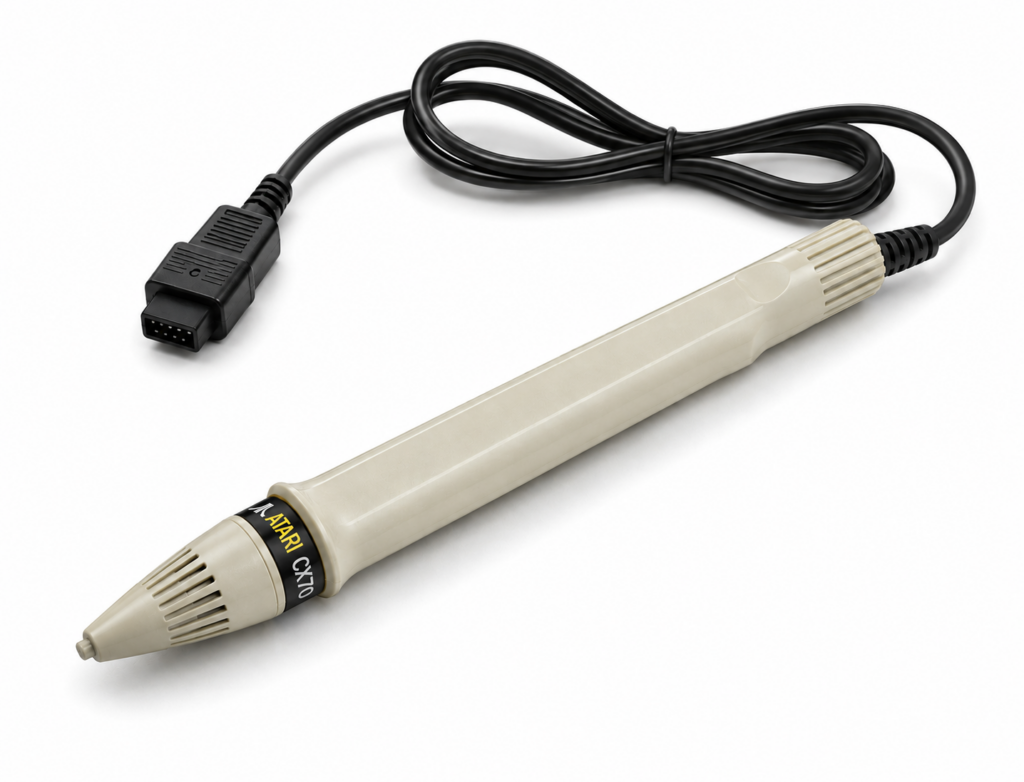
CX70 Light Pen
The Atari Light Pen was an innovative accessory that allowed users to interact directly with the screen of Atari’s 8-bit computers by drawing and selecting objects with a pen-shaped controller. Compatible with systems such as the Atari 400 and Atari 800, the light pen worked by detecting the scanning beam of a CRT television or monitor, enabling the computer to determine the pen’s position on the screen. This technology made it possible to create digital artwork, educational activities, and interactive programs in a way that felt futuristic for the early 1980s. Although limited by the display technology of the time and not widely adopted compared to joysticks or paddles, the Atari Light Pen demonstrated Atari’s interest in exploring creative and experimental forms of computer interaction long before touchscreens became common.
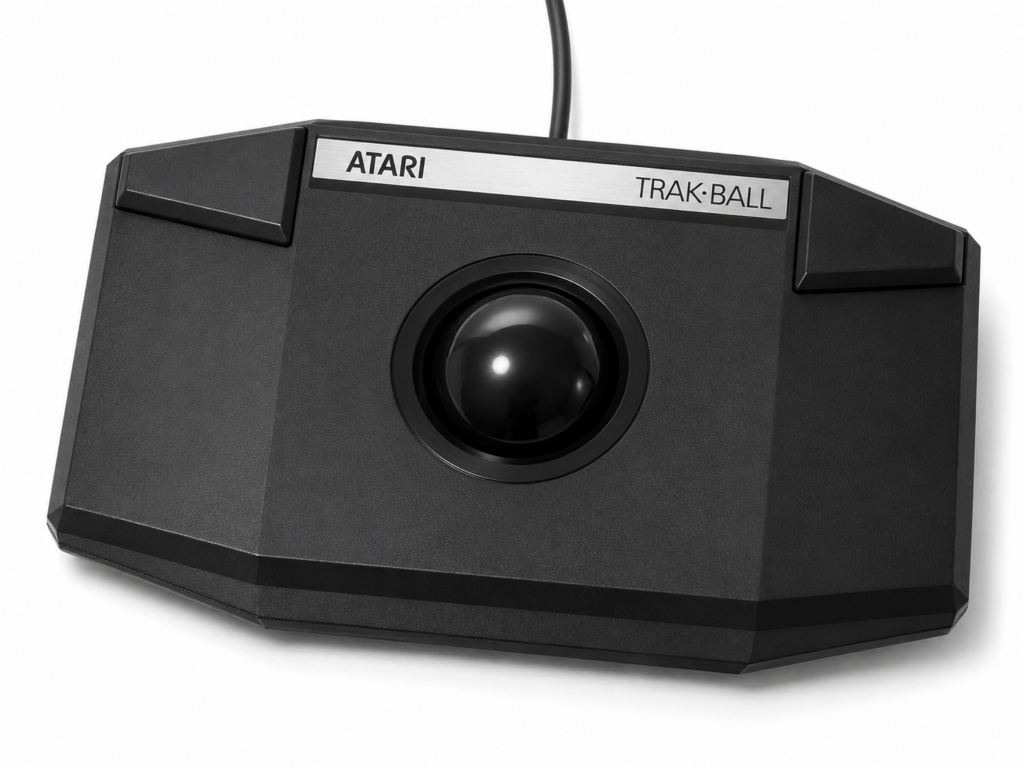
Trak-Ball Controller
The Atari Trackball Controllers were specialized controllers designed to bring arcade-style precision and smooth directional control to Atari gaming and computer systems. Unlike traditional joysticks, the trackball used a large rolling ball that users could spin rapidly in any direction, allowing for fast and highly accurate movement in games and graphics applications. Compatible with various Atari systems, including the Atari Video Computer System and Atari 8-bit computers such as the Atari 800XL, the trackball became especially popular for arcade conversions like Centipede and Missile Command. Its design closely resembled the controls found in real arcade cabinets, helping deliver a more authentic gaming experience at home. Although never as common as Atari’s joysticks or paddle controllers, Atari trackballs remain highly regarded among retro gaming enthusiasts for their unique feel and impressive level of control.
Expansion & Hardware
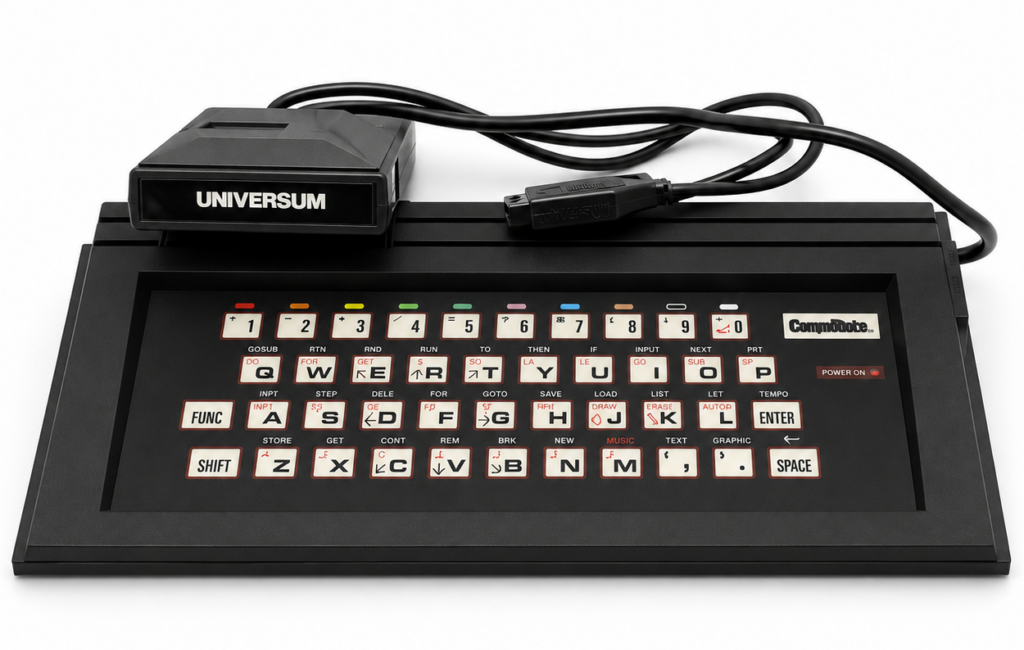
Compumate Keyboard add-on
The Compumate was a unique expansion accessory developed by Spectravideo that transformed the Atari Video Computer System into a basic home computer. Released in the early 1980s, the Compumate plugged directly into the Atari 2600 and included a full membrane-style keyboard along with software loaded from cassette tapes. The add-on provided simple word processing, music composition, drawing programs, and educational applications, allowing users to perform tasks beyond traditional gaming. Because the Atari 2600 had extremely limited hardware capabilities, the Compumate relied heavily on clever programming techniques to create a computer-like experience. Although it could not compete with dedicated home computers such as the Atari 400 or Commodore 64, the Compumate remains a fascinating example of attempts to expand video game consoles into affordable all-purpose family computing systems.
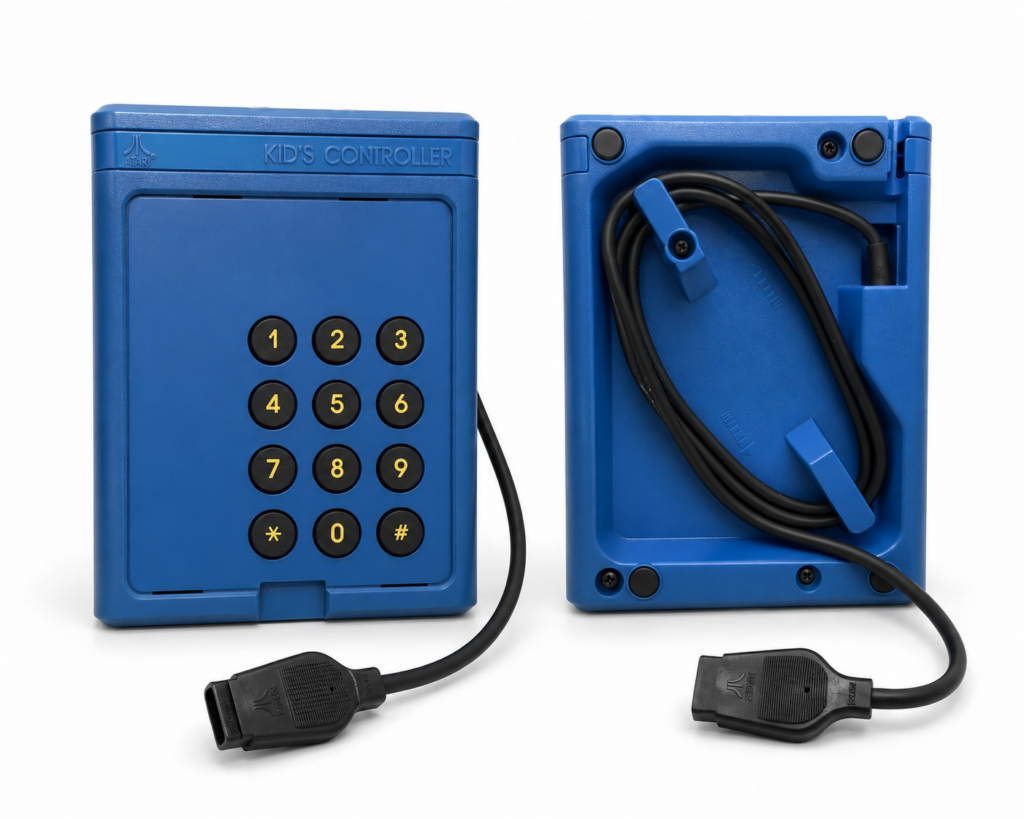
Kid’s Controller
The Atari Kids Controller was a child-friendly controller designed for the Atari Video Computer System to support educational software aimed at younger players. Unlike Atari’s traditional joysticks, the Kids Controller featured a colorful keypad-style layout with large, easy-to-press buttons that helped children interact with learning games more comfortably. It was primarily used with Atari’s educational titles that focused on subjects such as math, spelling, music, and problem-solving, encouraging learning through interactive play. The controller reflected Atari’s broader effort during the early 1980s to position the Atari 2600 not only as a gaming system, but also as an educational tool for families. Although only a limited number of programs supported it, the Atari Kids Controller remains an interesting example of Atari’s experimentation with alternative input devices and educational gaming concepts.
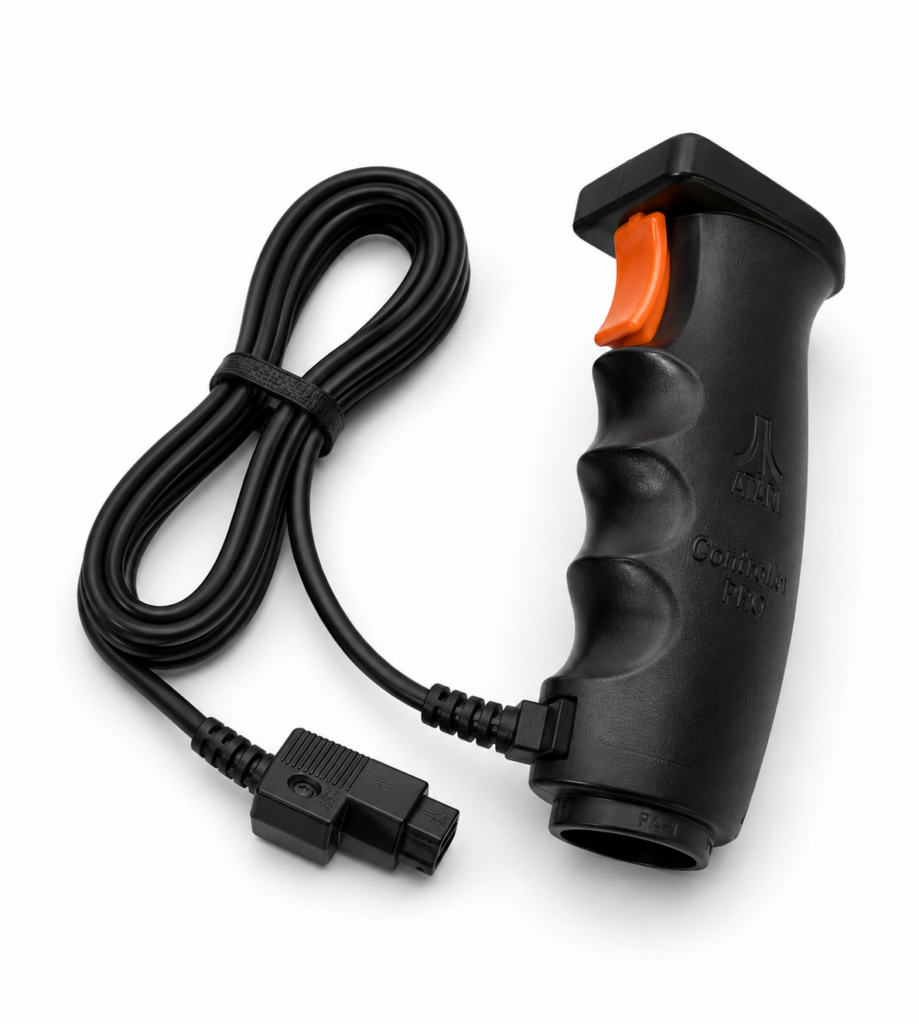
Booster Grip Controller add-on
The Booster Grip was a popular third-party enhancement for the Atari CX40 Joystick that transformed Atari’s standard controller into a more arcade-like experience. Manufactured by companies such as Wico, the Booster Grip attached directly to the Atari joystick and added a pistol-style hand grip along with a second trigger button positioned underneath the controller. Although the extra button typically duplicated the function of the original fire button, the new ergonomic design made gameplay feel more comfortable and immersive, especially during long gaming sessions. The accessory became especially popular with fast-paced action and shooting games on the Atari Video Computer System and Atari 8-bit computers. Today, the Booster Grip is remembered as one of the most iconic aftermarket accessories of the early home gaming era and remains highly collectible among retro gaming enthusiasts.
Storage & Utility Devices
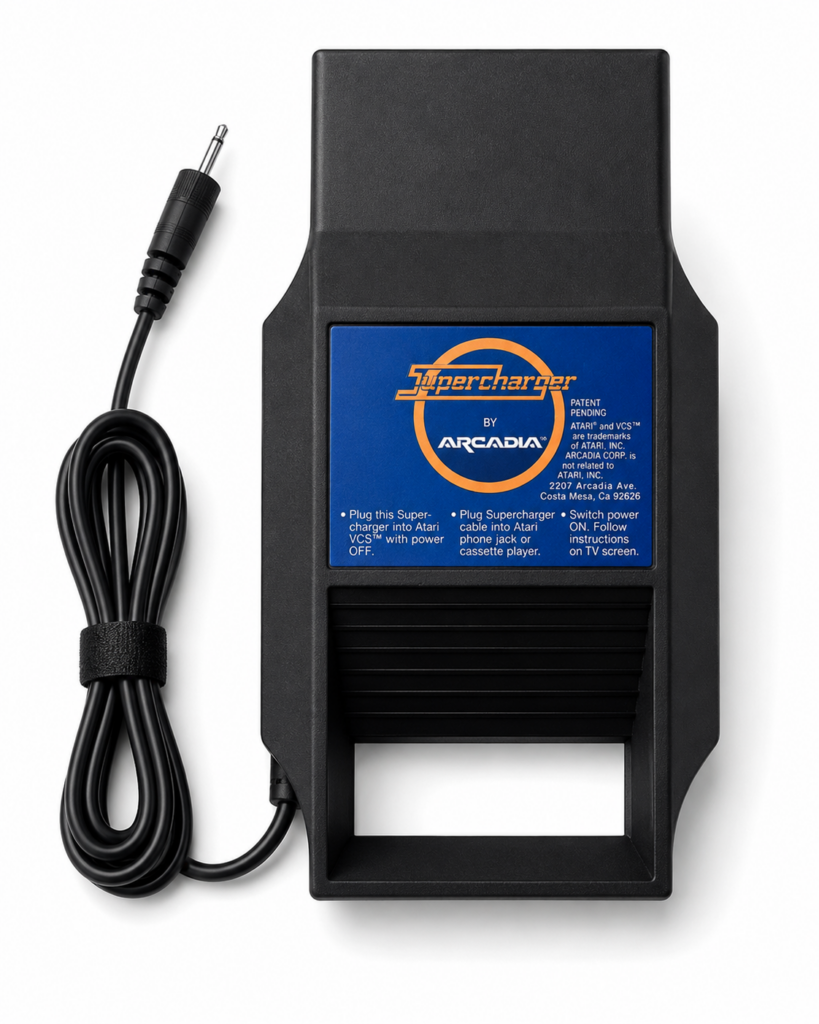
Atari 2600 Supercharger
The Starpath Supercharger was one of the most innovative accessories ever released for the Atari Video Computer System, dramatically expanding the console’s capabilities beyond standard cartridge limitations. Developed by Arcadia Corporation, later known as Starpath, the Supercharger plugged into the Atari 2600 cartridge slot and added additional RAM while loading games from standard audio cassette tapes. This allowed developers to create much larger and more advanced games featuring improved graphics, richer sound, and more complex gameplay than typical Atari 2600 cartridges could support. Players would connect a cassette player to the Supercharger and load games directly into memory, an approach that was highly unusual for a home console at the time. Although its commercial life was relatively short, the Supercharger became legendary among Atari enthusiasts because it demonstrated how much untapped potential still existed within the Atari 2600 hardware.
Atari 5200 Accessories
Controllers
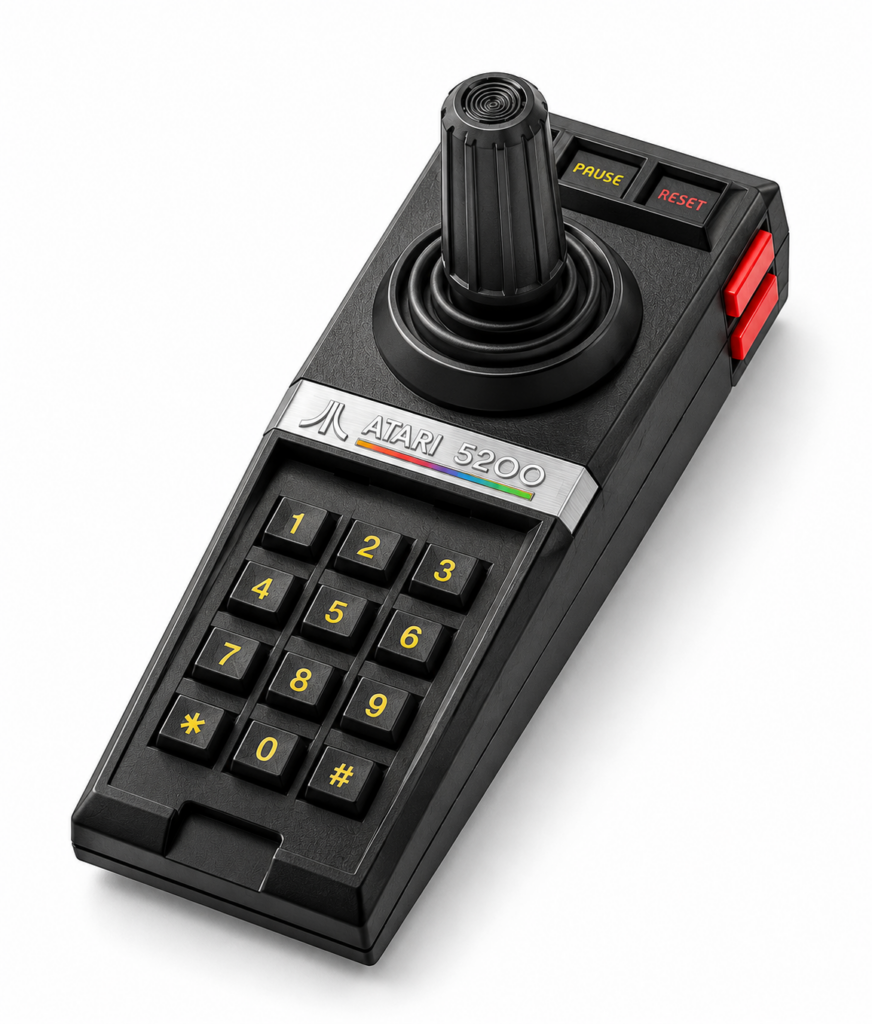
Analog Controller
The Atari 5200 Controller was one of the most advanced and distinctive game controllers of the early 1980s, designed specifically for the Atari 5200. Unlike the digital joysticks used with earlier Atari systems, the 5200 controller featured a true analog joystick capable of variable movement speeds, allowing for smoother and more precise control in games. It also included a numeric keypad, start/pause/reset buttons, and side-mounted fire buttons, giving developers more input options than most competing consoles of the era. The controller’s futuristic design reflected Atari’s attempt to create a premium arcade-style gaming experience at home. However, despite its innovative features, the controller became infamous for reliability problems and its lack of a self-centering joystick mechanism, which often made precise control difficult. Even with these shortcomings, the Atari 5200 controller remains one of the most recognizable and ambitious controller designs in classic gaming history.
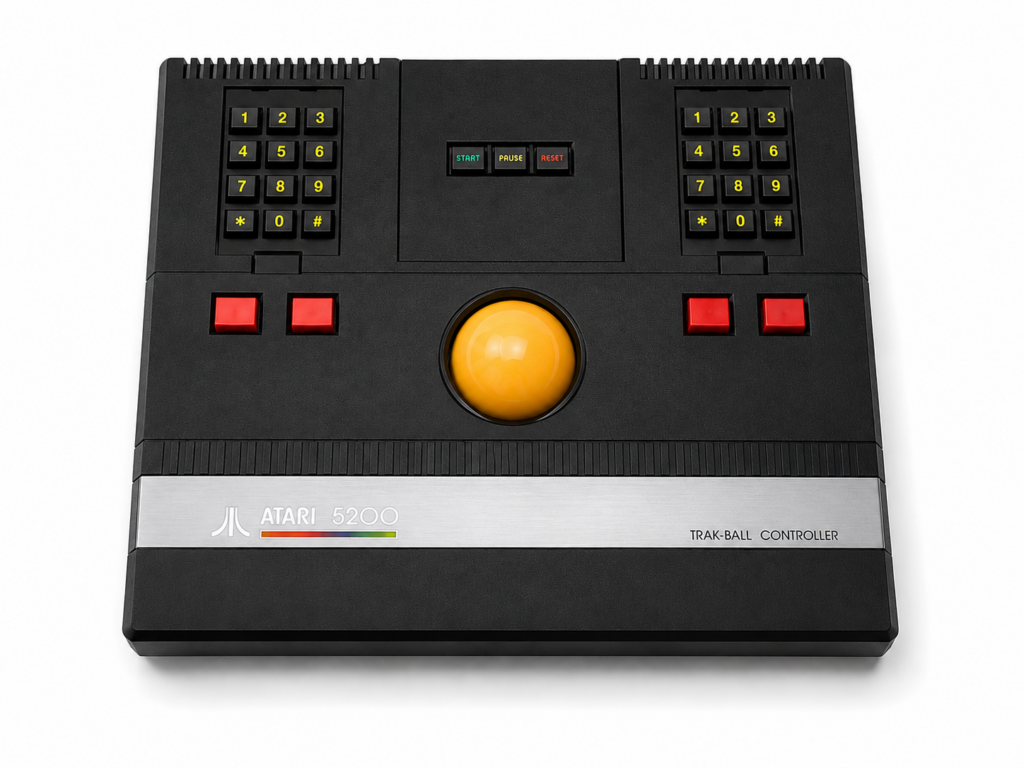
Trackball Controller
The Atari 5200 Trak-Ball Controller was a specialized controller developed for the Atari 5200 to deliver a more authentic arcade experience for certain games. Featuring a large central trackball along with programmable fire buttons and directional controls, the Trak-Ball allowed players to achieve fast, smooth, and highly precise movement that was difficult to replicate with standard joysticks. It was especially well suited for arcade-style titles such as Centipede, Missile Command, and Breakout, where rapid directional changes and accuracy were essential. The controller’s large size and futuristic design matched the advanced image Atari wanted for the 5200 system, emphasizing arcade-quality gameplay at home. Although it was not widely supported by many games, the Atari 5200 Trak-Ball became one of the most memorable and sought-after accessories for the console and remains highly prized by retro gaming collectors today.
Expansion Devices
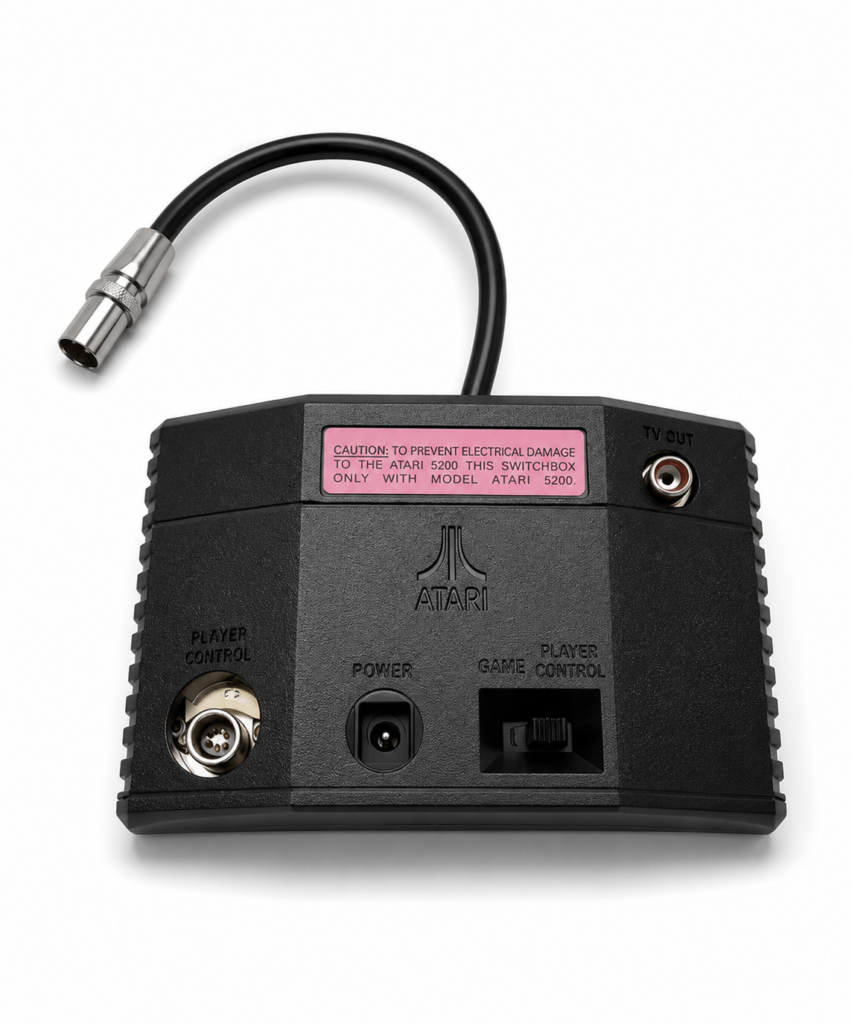
Atari 5200 Switch Box
The Atari 5200 Switch Box was an essential connection device used with the Atari 5200 to link the console to a television set during the early 1980s. Like many game systems of the era, the Atari 5200 relied on RF television signals rather than modern audio/video connections, and the switch box allowed users to toggle between normal television broadcasts and the console’s output. The unit connected to the TV’s antenna terminals and routed the 5200’s signal through the television on a selected channel, typically channel 2 or 3. Although simple in purpose, the switch box became a familiar part of the classic gaming setup experience, often requiring careful tuning and cable management to achieve a clear picture. Today, the Atari 5200 switch box is remembered as a small but necessary component of vintage home gaming technology before the widespread adoption of direct AV connections.
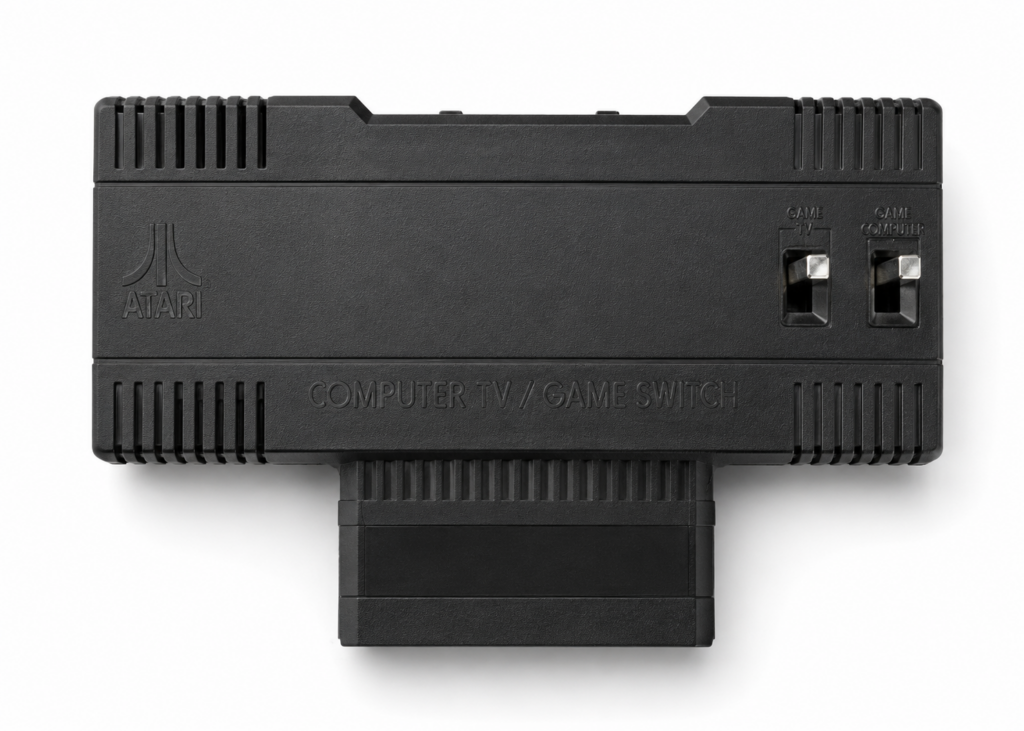
Atari 2600 Adapter for 5200
The Atari 2600 Adapter for Atari 5200 was a planned but unreleased accessory designed to allow the Atari 5200 to play cartridges from the hugely successful Atari Video Computer System. Atari recognized that backward compatibility could help ease the transition to the newer 5200 system by giving players access to the massive library of existing Atari 2600 games. Prototype versions of the adapter were reportedly developed, and the device would have connected externally to the 5200 while translating the older cartridge and controller functionality for use on the newer hardware. However, the adapter was never commercially released, likely due to technical complications and changing market conditions during the video game crash of the early 1980s. Despite its cancellation, the Atari 2600 Adapter remains an intriguing “what-if” product in Atari history and is highly discussed among collectors and retro gaming historians.
Atari 7800 Accessories
Controllers
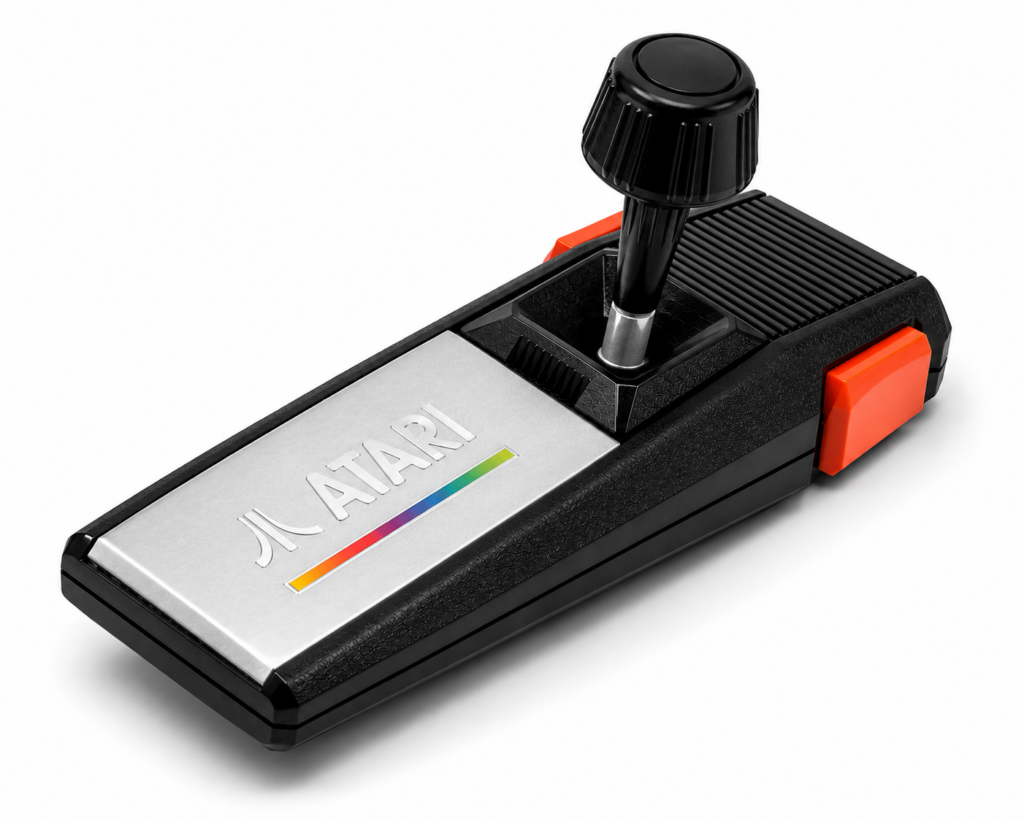
Atari Pro-line Joystick
The Atari 7800 Pro-Line Joystick was the standard controller released with the Atari 7800 ProSystem and represented a major departure from Atari’s earlier joystick designs. Instead of the classic single-stick format of the Atari CX40 Joystick, the Pro-Line controller featured a low-profile rectangular shape with a short digital joystick and two side-mounted action buttons for improved gameplay versatility. The controller was designed to support the more advanced arcade-style games available on the Atari 7800 while still maintaining backward compatibility with many Atari Video Computer System titles. Although some players criticized the stiff joystick movement and side-button placement, the Pro-Line controller gave the Atari 7800 a more modern and futuristic appearance compared to earlier Atari systems. Today, it remains an iconic symbol of Atari’s final major console push during the mid-1980s.
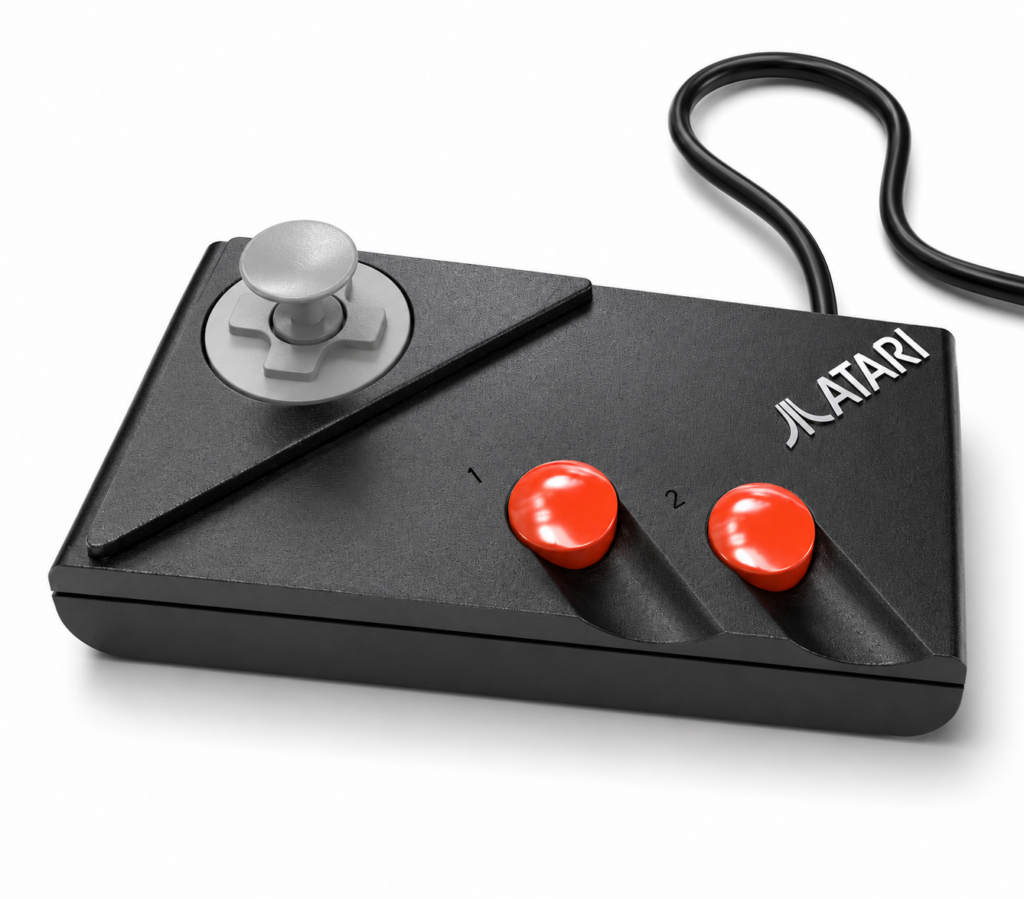
CX78 Gamepad Controllers
The Atari CX78 Gamepad was a later controller developed for the Atari 7800 ProSystem, offering a more comfortable and modern alternative to the original Pro-Line joystick controllers. Released primarily in European markets, the CX78 featured a compact handheld gamepad design with a directional pad and two front-facing action buttons, making it feel more similar to controllers used on competing late-1980s game systems. The improved ergonomic layout provided better comfort and control during extended gameplay sessions, especially for fast-paced arcade titles on the Atari 7800. The controller maintained compatibility with many Atari Video Computer System games as well, helping preserve the 7800’s strong backward compatibility features. Although not as widely distributed as Atari’s earlier joystick designs, the CX78 has become highly appreciated by retro gaming enthusiasts for its practicality and more user-friendly design.
Expansion
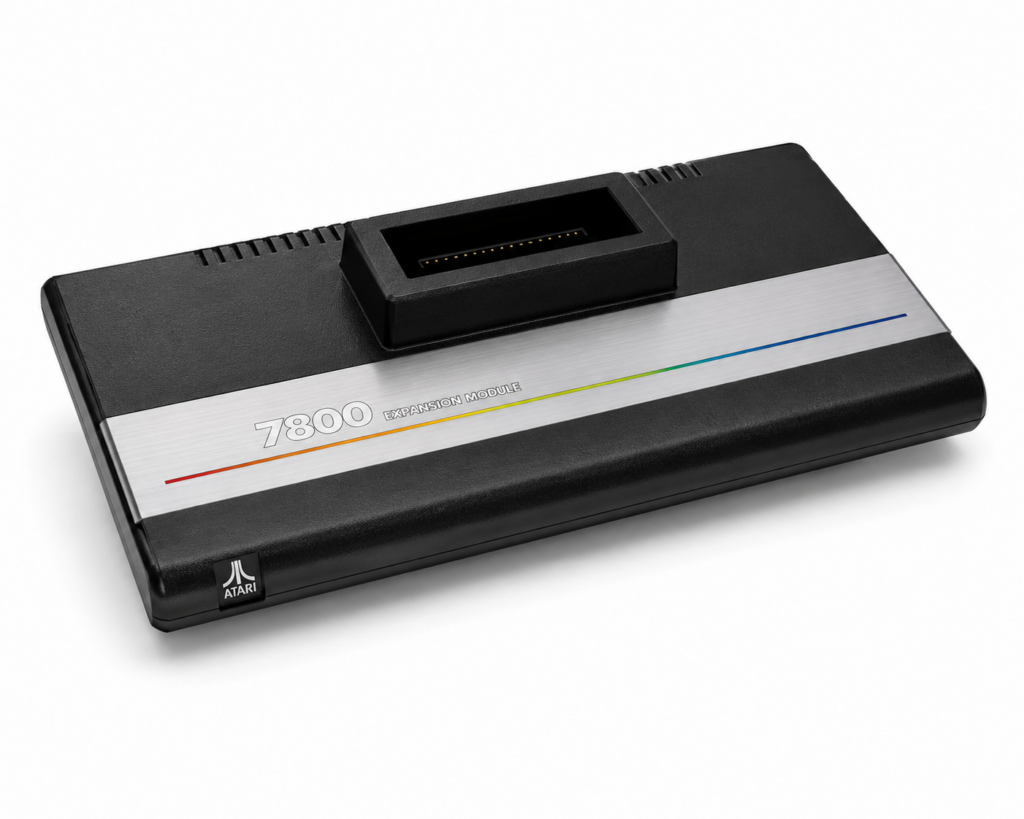
Atari XM Expansion Module
The Atari 7800 XM Expansion Module was a planned add-on for the Atari 7800 ProSystem that aimed to greatly expand the console’s capabilities and fulfill features originally intended for the system before release. The XM module was designed to add additional RAM, improved sound hardware, a parallel port, and compatibility with peripherals such as keyboards and disk drives, effectively transforming the Atari 7800 into a more versatile hybrid gaming and computing platform. Atari had originally planned many of these features for the 7800 itself, but they were removed to reduce manufacturing costs and speed up production. Although the official XM Expansion Module was never commercially released, prototypes and design concepts became legendary among Atari enthusiasts. Decades later, modern hobbyist groups developed unofficial versions of the XM module, keeping alive the vision of what Atari had originally hoped the 7800 could become.
Atari XEGS Accessories
Controllers & Gaming Devices
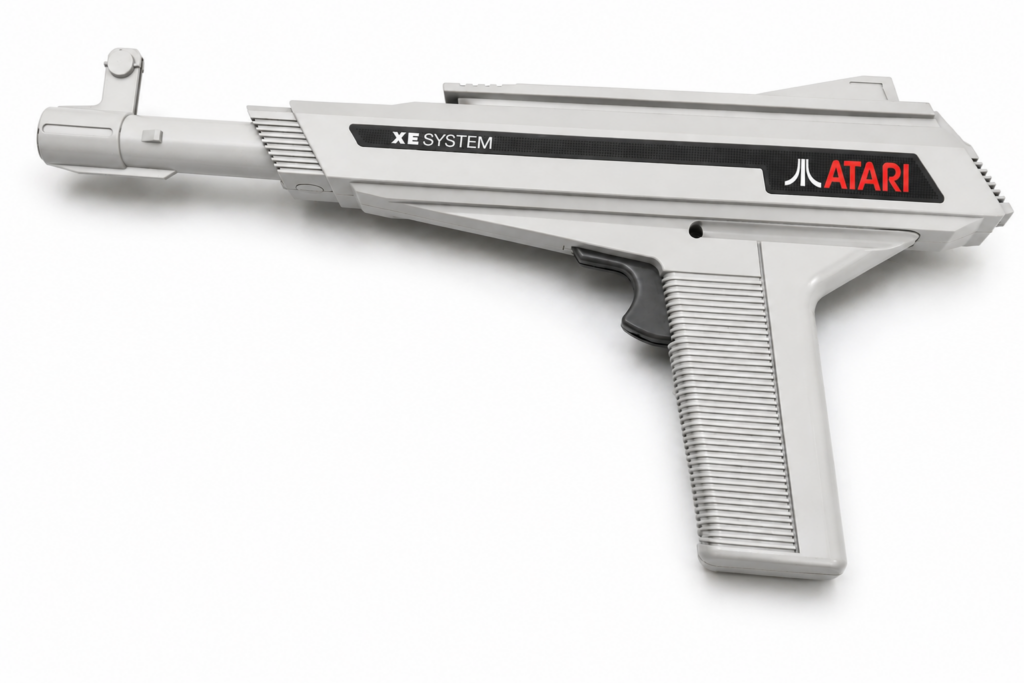
XG-1 Light Gun
The Atari XG-1 Light Gun was a futuristic-looking light gun accessory created for Atari’s XE Game System and compatible Atari 8-bit computers during the late 1980s. Styled to resemble a science-fiction blaster rather than a traditional firearm, the XG-1 used light-sensing technology to detect targets directly on a CRT television screen. It was designed primarily for shooting games such as Bug Hunt and Barnyard Blaster, giving players a more arcade-like and immersive gaming experience at home. The controller worked by detecting the rapid scanning beam of compatible CRT displays, allowing the computer or console to determine where the player was aiming. With its distinctive silver-and-gray appearance and space-age design, the Atari XG-1 Light Gun became one of the most memorable accessories of Atari’s later 8-bit era and remains a favorite collectible among retro gaming enthusiasts today.
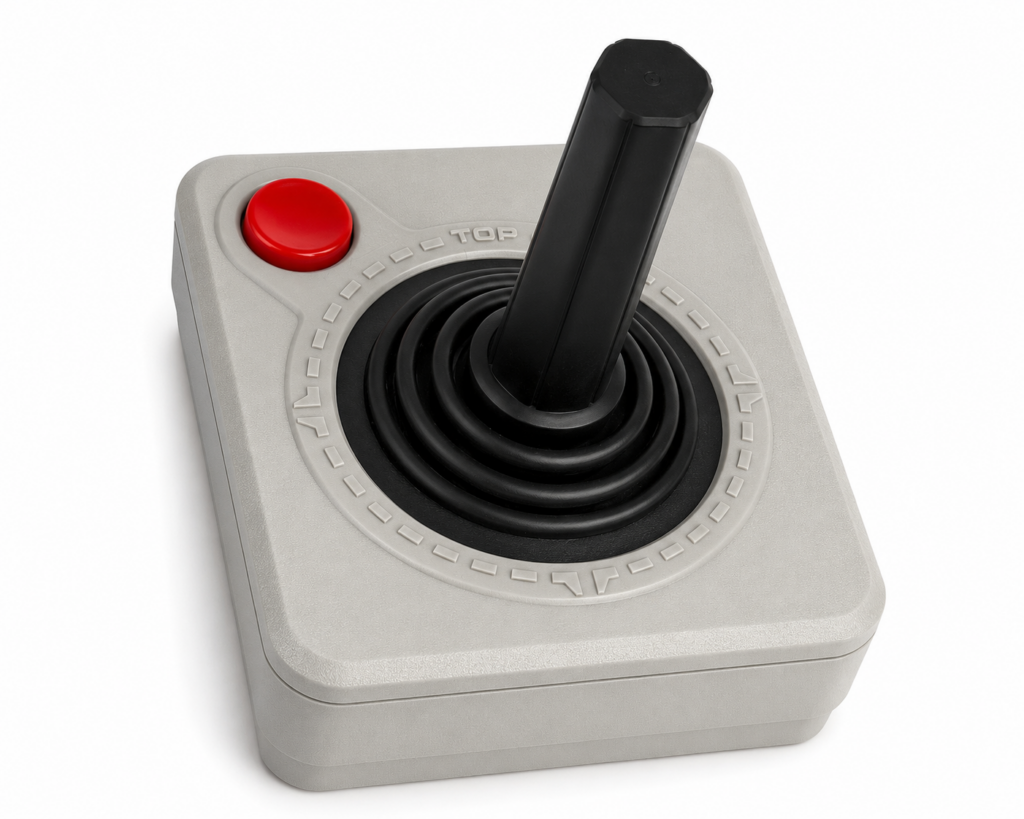
CX40 Joystick
The controllers designed for the Atari XE Game System combined the familiar feel of Atari’s classic joystick design with a more modern appearance inspired by late-1980s gaming hardware. The standard XE Game System controller featured a detachable joystick mounted on top of a rectangular gamepad-style base, allowing players to use it either as a traditional joystick or as a handheld directional controller. Styled in light gray tones to match the XE Game System console and computers like the Atari 65XE, the controller reflected Atari’s attempt to modernize its aging 8-bit platform for a new generation of gamers. Although some users found the design less durable than the legendary Atari CX40 Joystick, the XE controllers offered flexibility and a unique hybrid approach that stood out from competing game systems of the era. Today, they remain a recognizable symbol of Atari’s final push in the home console market.
Atari Lynx Accessories
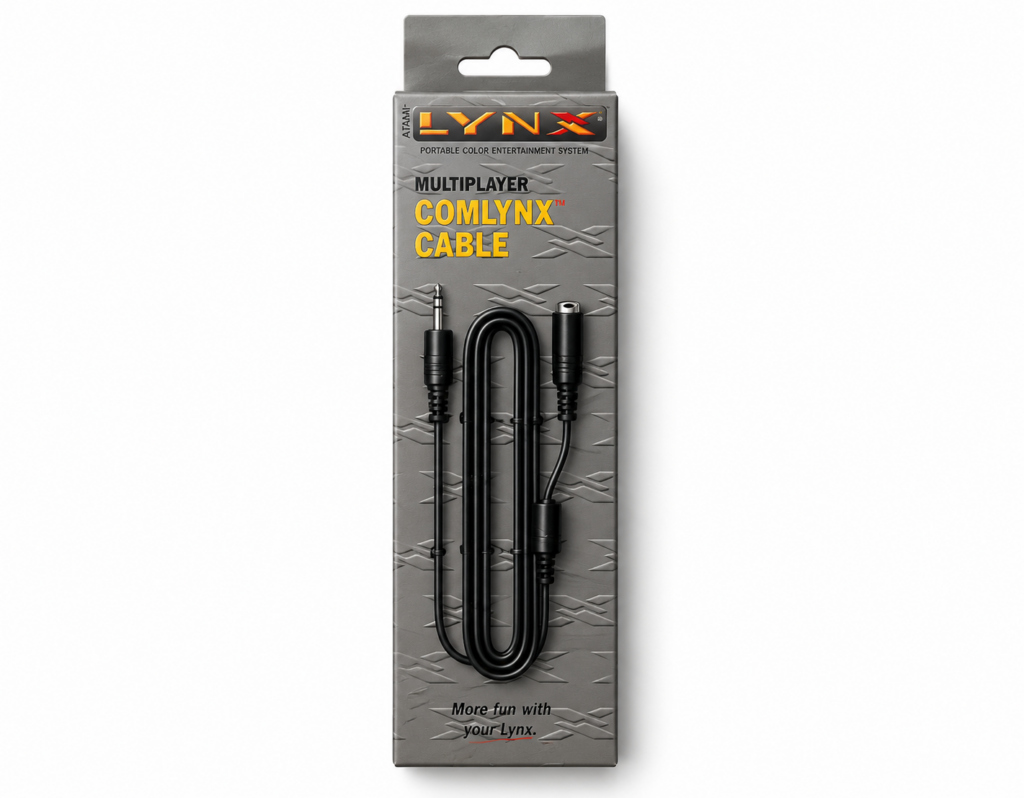
ComLynx Multiplayer Cable
The Atari Lynx ComLynx Cable was a groundbreaking accessory designed for the Atari Lynx that allowed multiple handheld systems to connect together for multiplayer gaming. Using the ComLynx cable system, players could link up to eight Atari Lynx consoles simultaneously in supported games, an impressive feature for a portable gaming device released in the late 1980s. This capability gave the Lynx a significant technological advantage over many competing handheld systems of the time, which often lacked built-in multiplayer support. Games such as Warbirds and California Games became especially popular for linked multiplayer sessions, creating a more social and competitive portable gaming experience. The ComLynx system demonstrated Atari’s forward-thinking approach to handheld gaming technology and remains one of the most innovative features associated with the Atari Lynx platform.
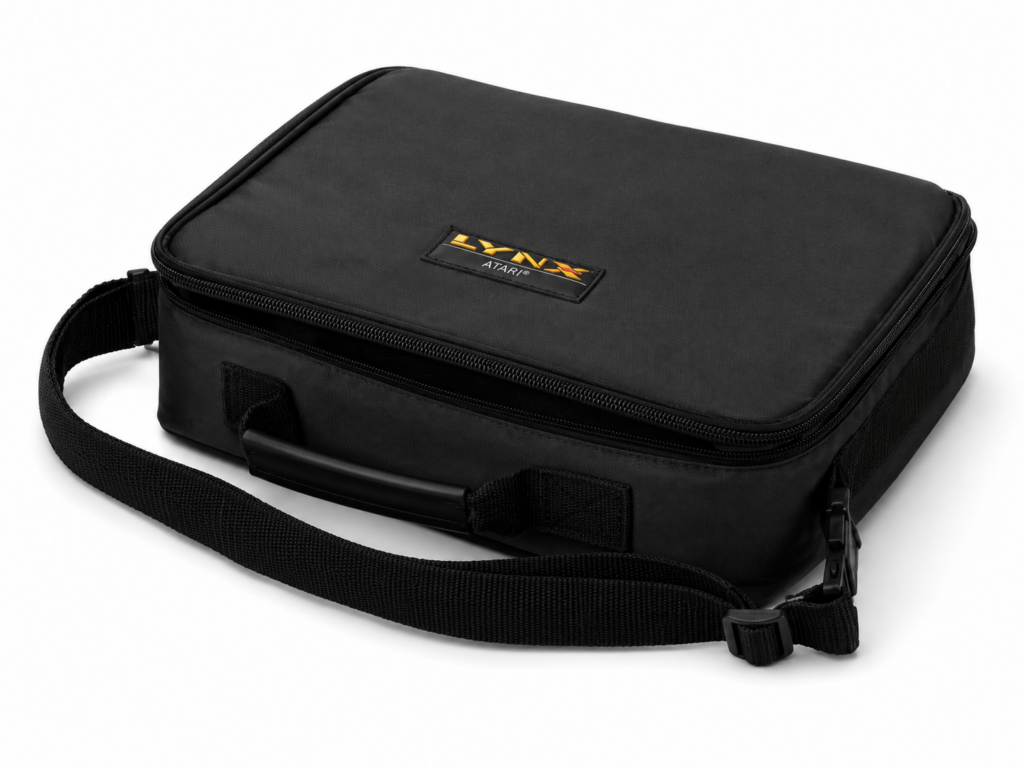
Carrying Case
The Atari Lynx Carrying Case was a practical and stylish accessory designed to help owners safely transport their Atari Lynx and its games while traveling. Built to accommodate the large size of the Lynx handheld system, the carrying case typically featured padded compartments for the console, game cartridges, batteries, and accessories such as the Atari Lynx ComLynx Cable. Many versions also included shoulder straps or carrying handles, emphasizing the portable nature of Atari’s color handheld gaming system. The case helped protect the Lynx’s screen and controls from damage during transport, which was especially important given the console’s relatively bulky design compared to other handheld systems of the era. Today, original Atari Lynx carrying cases are highly collectible and are often sought after by retro gaming enthusiasts looking to complete their Lynx hardware collection.
Atari Jaguar Accessories
Controllers
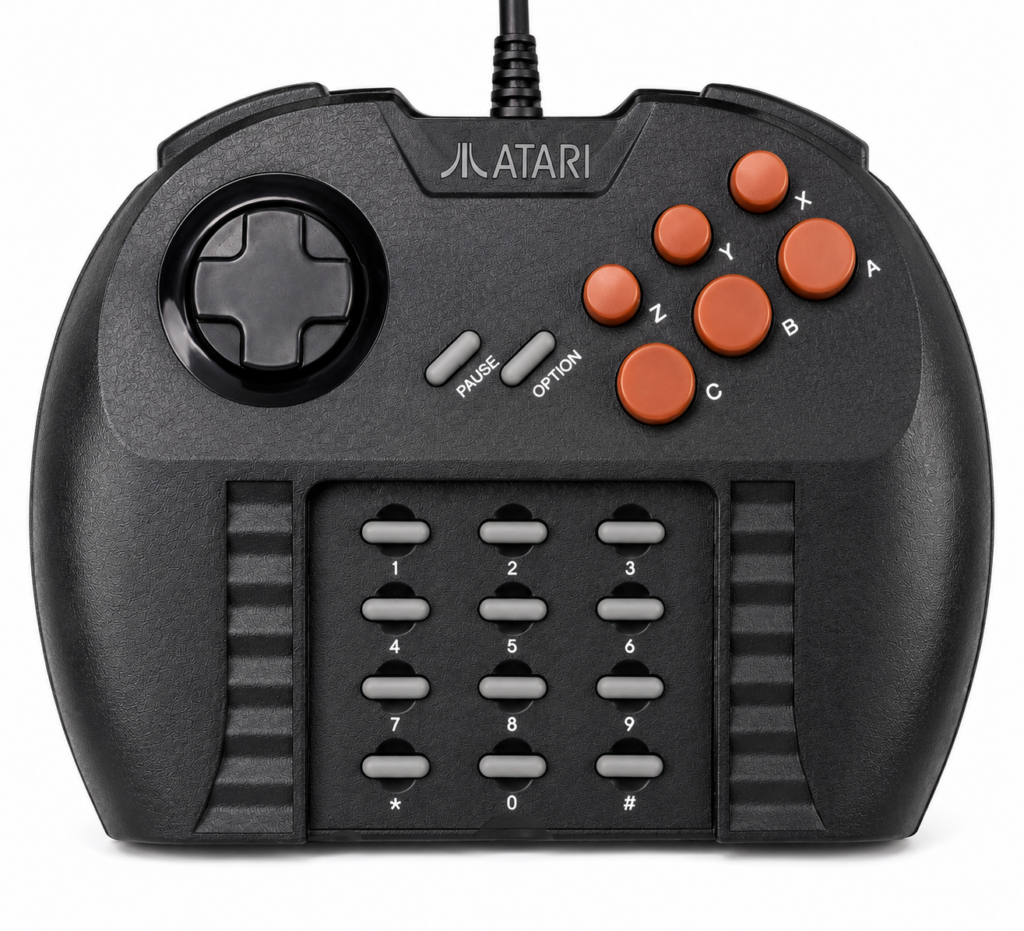
Jaguar ProController
The Atari Jaguar ProController was an enhanced controller released for the Atari Jaguar that improved upon the original Jaguar controller design by adding extra action buttons and a more ergonomic layout. While retaining the Jaguar’s distinctive 12-button numeric keypad, the ProController introduced additional shoulder buttons and a more contoured grip that made it better suited for fast-paced action games and first-person shooters such as Alien vs. Predator and Tempest 2000. The controller was designed to support more complex gameplay styles that became common during the mid-1990s, helping Atari compete with evolving console standards from companies like Nintendo and Sega. Although the Jaguar itself struggled commercially, many players considered the ProController a significant improvement over the original pack-in controller due to its increased comfort and expanded control options. Today, the Atari Jaguar ProController remains a popular accessory among Jaguar collectors and retro gaming enthusiasts.
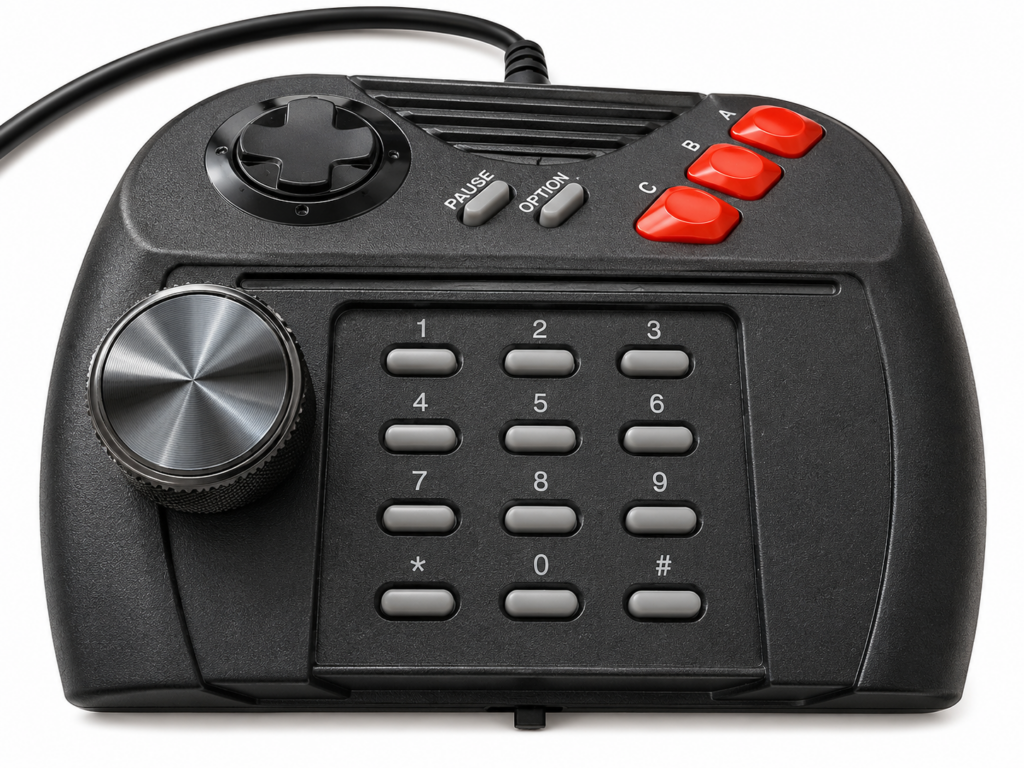
Rotary Controller
The Atari Jaguar Rotary Controller was a specialized controller accessory developed for the Atari Jaguar to deliver arcade-style rotational control for certain games. The device attached to the standard Jaguar controller and added a large rotary dial that allowed players to smoothly rotate or aim in games requiring precision directional movement. It was designed primarily for titles such as Tempest 2000, where rapid spinning and accurate rotational input closely matched the feel of classic arcade controls. The rotary controller demonstrated Atari’s continued interest in creating unique gameplay experiences through innovative hardware accessories, much like the company had done with paddle and driving controllers in earlier generations. Although the accessory was produced in limited numbers and supported by only a small selection of games, it remains a highly sought-after collectible among Atari Jaguar enthusiasts today.
Expansion Hardware
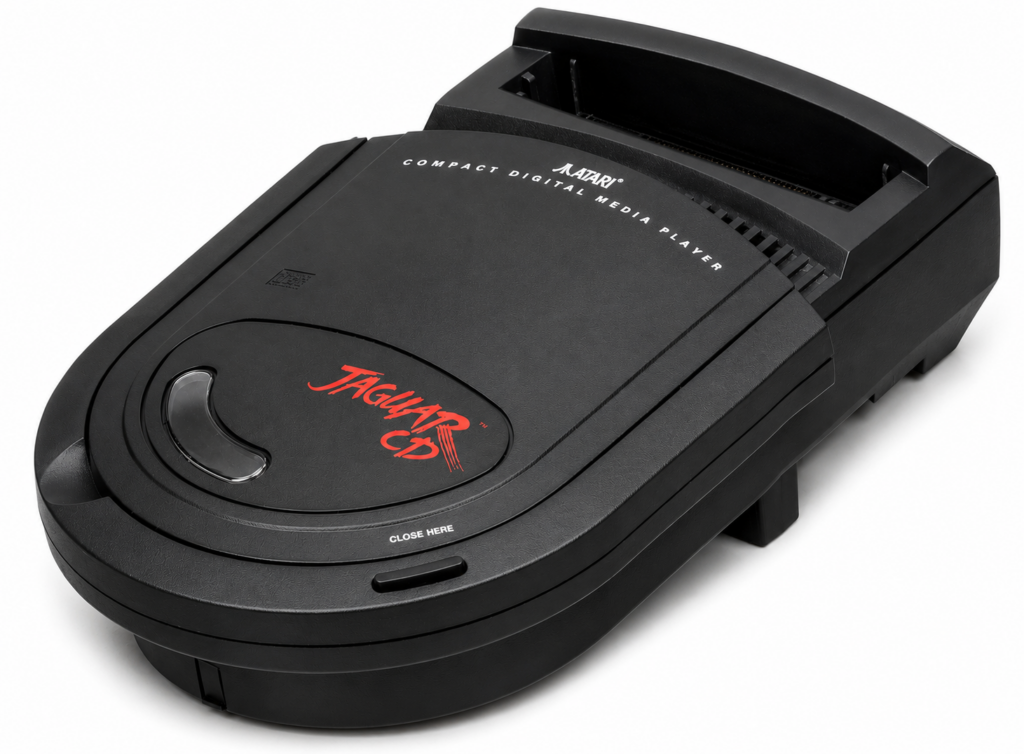
Jaguar CD add-on
The Atari Jaguar CD was an ambitious expansion device created for the Atari Jaguar that brought CD-ROM technology to Atari’s final home console platform. Released in 1995, the Jaguar CD attached directly to the top of the Jaguar console and allowed games to use the vastly larger storage capacity of compact discs compared to traditional cartridges. This enabled developers to include enhanced music, full-motion video, voice acting, and more detailed graphics in their games. The add-on featured a distinctive futuristic design that gave the combined system a unique appearance often compared to a “toilet” by fans due to its unusual shape. Although only a limited number of Jaguar CD games were released before Atari exited the console market, the device represented Atari’s attempt to compete with emerging CD-based systems from competitors such as Sony and Sega. Today, the Atari Jaguar CD is one of the rarest and most collectible pieces of Atari hardware ever produced.
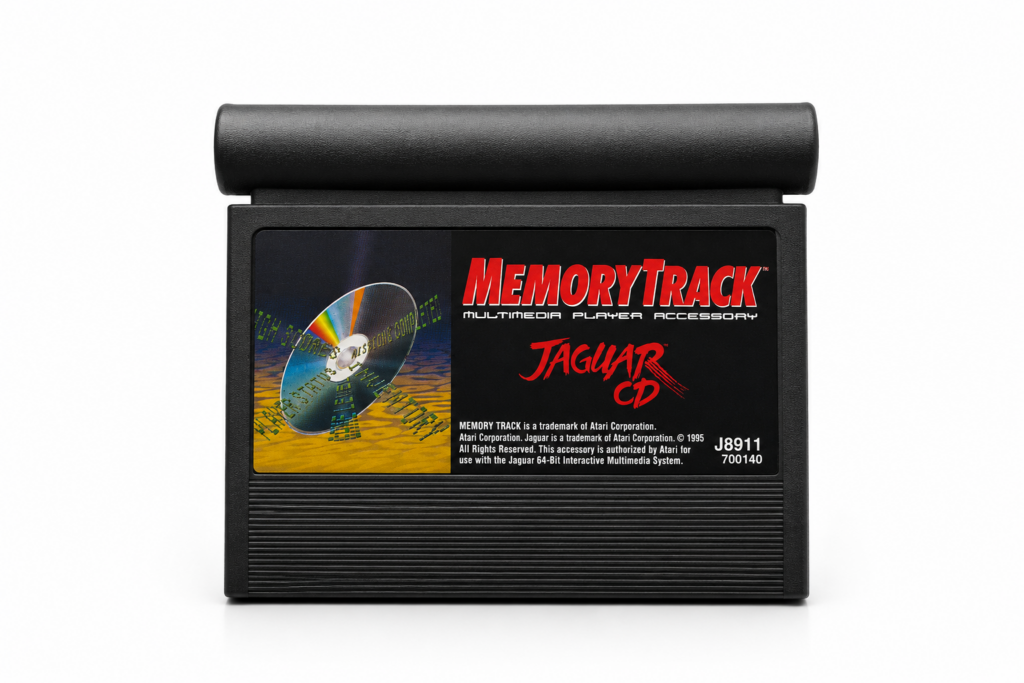
Memory Track Cartridge
The Atari Jaguar Memory Track was a memory card accessory designed for the Atari Jaguar and the Atari Jaguar CD to provide portable game save storage. The device plugged directly into the cartridge slot built into the Jaguar controller and allowed players to save game progress, high scores, and custom settings for compatible games. This feature became especially important for Jaguar CD titles, which often included larger and more complex games requiring long-term progress storage. The Memory Track used EEPROM technology, giving users a reusable and battery-free storage solution at a time when many game systems still relied on internal save batteries. Although only a limited number of Jaguar games supported it, the Atari Jaguar Memory Track represented Atari’s effort to modernize the Jaguar platform with features that were becoming increasingly common in mid-1990s gaming systems.
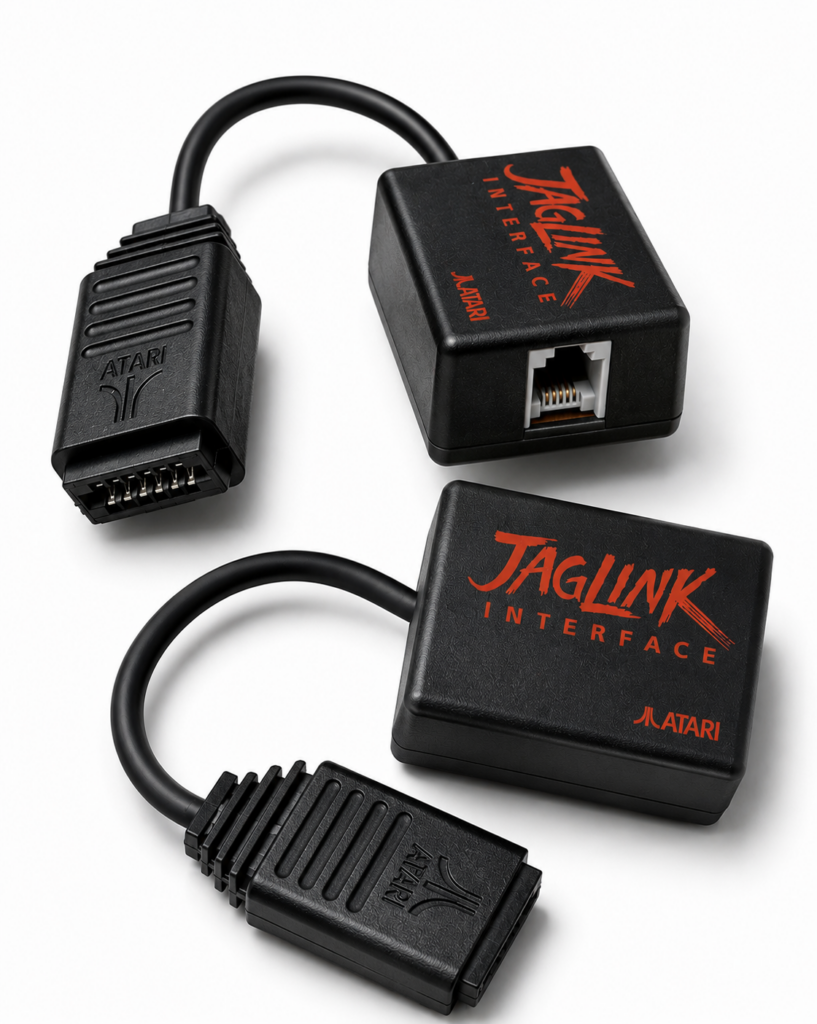
JagLink Multiplayer Adapter
The Atari Jaguar JagLink was a networking accessory designed for the Atari Jaguar that allowed two Jaguar consoles to be connected together for multiplayer gameplay. Using a specialized cable connection between systems, the JagLink enabled head-to-head gaming experiences in supported titles such as Doom and AirCars, giving players the ability to compete against each other on separate televisions. At a time when console networking was still relatively uncommon, the JagLink demonstrated Atari’s interest in expanding multiplayer gaming beyond split-screen play. However, compatibility issues with some Jaguar hardware revisions limited widespread adoption, and only a small number of games officially supported the feature. Despite its limited commercial success, the JagLink remains an important and fascinating example of early console networking technology during the mid-1990s.
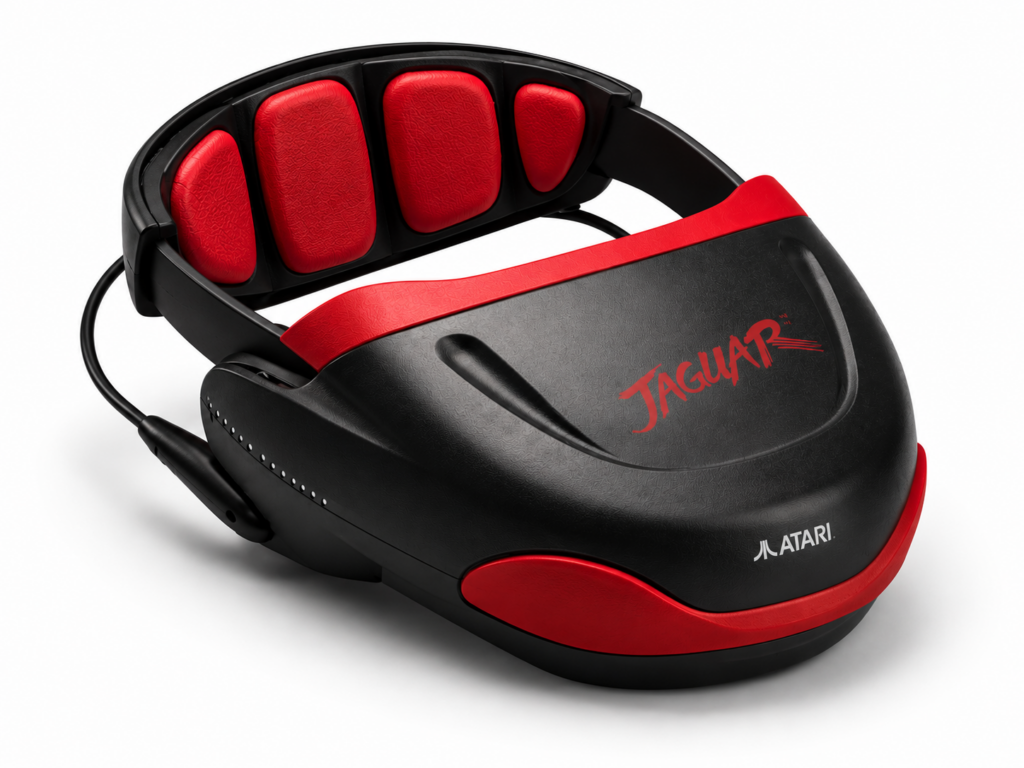
Jaguar VR Headset
The Jaguar VR Headset was an ambitious virtual reality accessory developed for the Atari Jaguar during the mid-1990s. Created in partnership with Virtuality, the headset was designed to bring immersive 3D virtual reality gaming into the home at a time when VR technology was still in its infancy. The Jaguar VR featured stereoscopic displays and head-tracking technology that allowed players to look around virtual environments by moving their head, creating a highly futuristic gaming experience for the era. Demonstrations of the headset impressed many attendees at trade shows, and several prototype games were reportedly in development. However, technical limitations, high production costs, and Atari’s declining financial situation ultimately led to the project being canceled before release. Even though it never reached consumers, the Jaguar VR remains one of the most legendary unreleased products in Atari history and an early example of home virtual reality gaming concepts long before modern VR systems became mainstream.
