
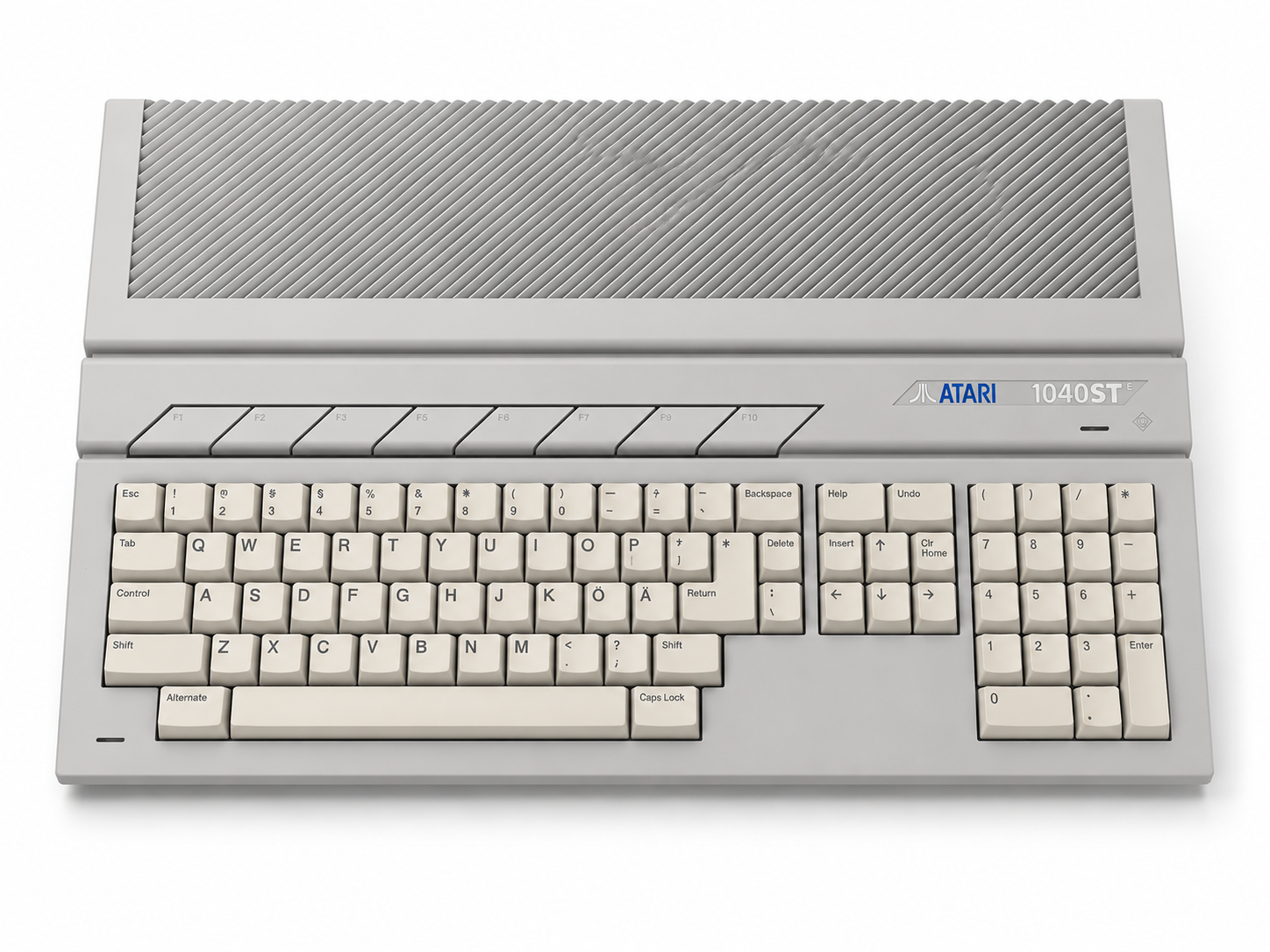
Release information
- Released: 1989
- Manufacturer: Atari
- Type: Enhanced 16/32-bit home computer
The Atari 1040STE Computer
The Atari 1040STE was Atari’s upgraded and enhanced version of the highly successful Atari ST computer line. Released in 1989, the 1040STE — with “STE” standing for “ST Enhanced” — introduced major improvements in graphics, sound, scrolling performance, and multimedia capabilities while maintaining compatibility with much of the existing Atari ST software library. Although the external appearance remained similar to earlier ST systems, the hardware inside the 1040STE represented one of the most significant upgrades Atari ever made to the ST platform.
At the heart of the Atari 1040STE was the Motorola 68000 processor running at 8 MHz, paired with enhanced custom hardware that dramatically improved multimedia performance. One of the most important upgrades was the addition of a new sound system capable of playing 8-bit stereo PCM digital audio. This represented a major leap forward compared to the older Yamaha sound chip used in earlier ST systems and helped make the STE far more capable for gaming, music, and multimedia applications.
The Atari 1040STE also introduced hardware scrolling and a built-in blitter chip that accelerated graphics operations. These features allowed games and graphical applications to display smoother animation and more advanced visual effects. Combined with expanded color capabilities, the STE could deliver significantly more impressive graphics than earlier ST computers while remaining largely compatible with the existing Atari ST ecosystem.
Another major improvement was the enhanced color palette. While earlier ST systems could display a maximum of 512 colors, the 1040STE increased this dramatically to a palette of 4,096 colors. This allowed developers to create much richer and more vibrant graphics, helping the STE remain competitive with systems such as the Amiga 500 during the late 1980s and early 1990s.
Like earlier Atari ST computers, the 1040STE retained built-in MIDI ports, which remained one of the platform’s greatest strengths. Musicians and recording studios continued to rely heavily on Atari computers because of their excellent MIDI timing and strong sequencing software support. The addition of enhanced digital audio capabilities made the STE even more attractive for music production and multimedia experimentation.
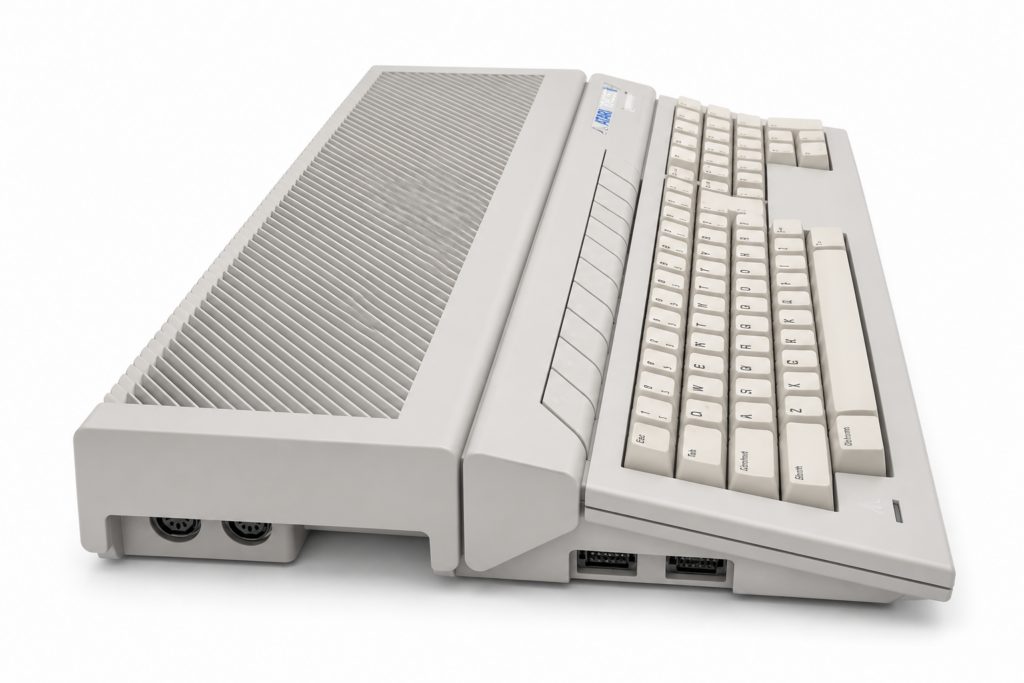
The Atari 1040STE also featured improved joystick ports that supported analog controllers and light guns, opening the door for more advanced gaming peripherals. The system became especially popular within Europe’s gaming and demo scene communities, where programmers pushed the enhanced hardware to create impressive graphics demonstrations, digital music productions, and technically advanced games.
Despite its improvements, the Atari STE arrived during a rapidly changing period in computing history. IBM-compatible PCs and advanced gaming consoles were becoming increasingly dominant, and Atari faced strong competition from both Commodore and emerging PC hardware manufacturers. Even so, the STE developed a loyal following among gamers, musicians, programmers, and retro computing enthusiasts.
Today, the Atari 1040STE is remembered as one of the most refined and capable versions of the Atari ST platform. Its improved sound, graphics, multimedia features, and strong compatibility helped extend the life of the Atari ST family and solidified its reputation as one of Atari’s most technically impressive home computers.
CPU
- Motorola 68000
- Clock Speed: 8 MHz
Graphics
- Enhanced Atari STE graphics hardware
- Color resolutions:
- 320 × 200 (up to 16 colors from 4,096-color palette)
- 640 × 200 (4 colors)
- Monochrome resolution:
- 640 × 400
- Hardware scrolling support
- Blitter graphics acceleration
Sound
- Enhanced PCM stereo sound
- 8-bit stereo audio playback
- DMA sound support
- Yamaha YM2149 sound compatibility
Memory
- RAM: 1 MB
Storage Support
- Built-in 3.5-inch floppy disk drive
- External hard drive support
- External floppy drive support
Operating System
- Atari TOS operating system
- GEM graphical user interface
Ports & Expansion
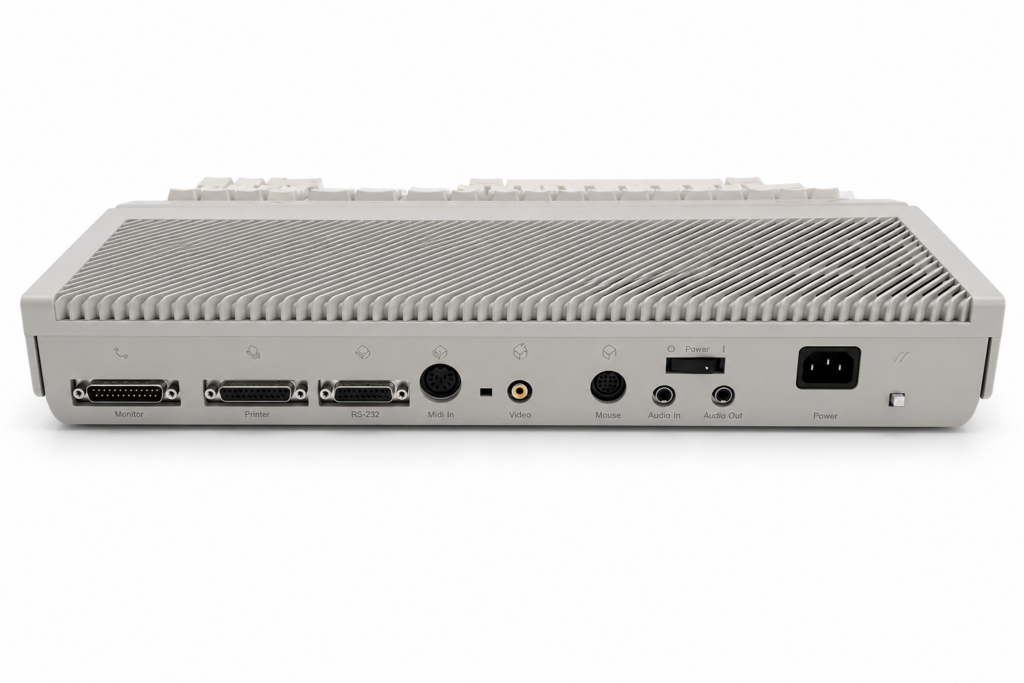
- Built-in MIDI In/Out ports
- Serial and parallel ports
- Mouse and joystick ports
- Enhanced joystick ports with analog support
- Monitor output support
Input Devices
- Full-travel keyboard
- Atari ST mouse
- Joystick and analog controller support
Physical Design
- Integrated floppy disk drive
- Refined ST-style desktop case
- Light gray industrial design
Notable Features
Enhanced graphics and sound capabilities
- 4,096-color palette
- Built-in blitter chip
- Hardware scrolling support
- Improved multimedia performance
Notable Facts
- The Atari 1040STE introduced DMA stereo sound, allowing much higher-quality audio than earlier Atari ST systems.
- Some early Atari STE software accidentally failed on older ST models because developers relied on the new hardware scrolling features.
- The STE’s enhanced joystick ports supported analog paddles and light guns in addition to standard digital joysticks.
