
Release Information
- Released: 1986
- Manufacturer: Atari
- Type: 16/32-bit home computer
The Atari 1040ST Computer
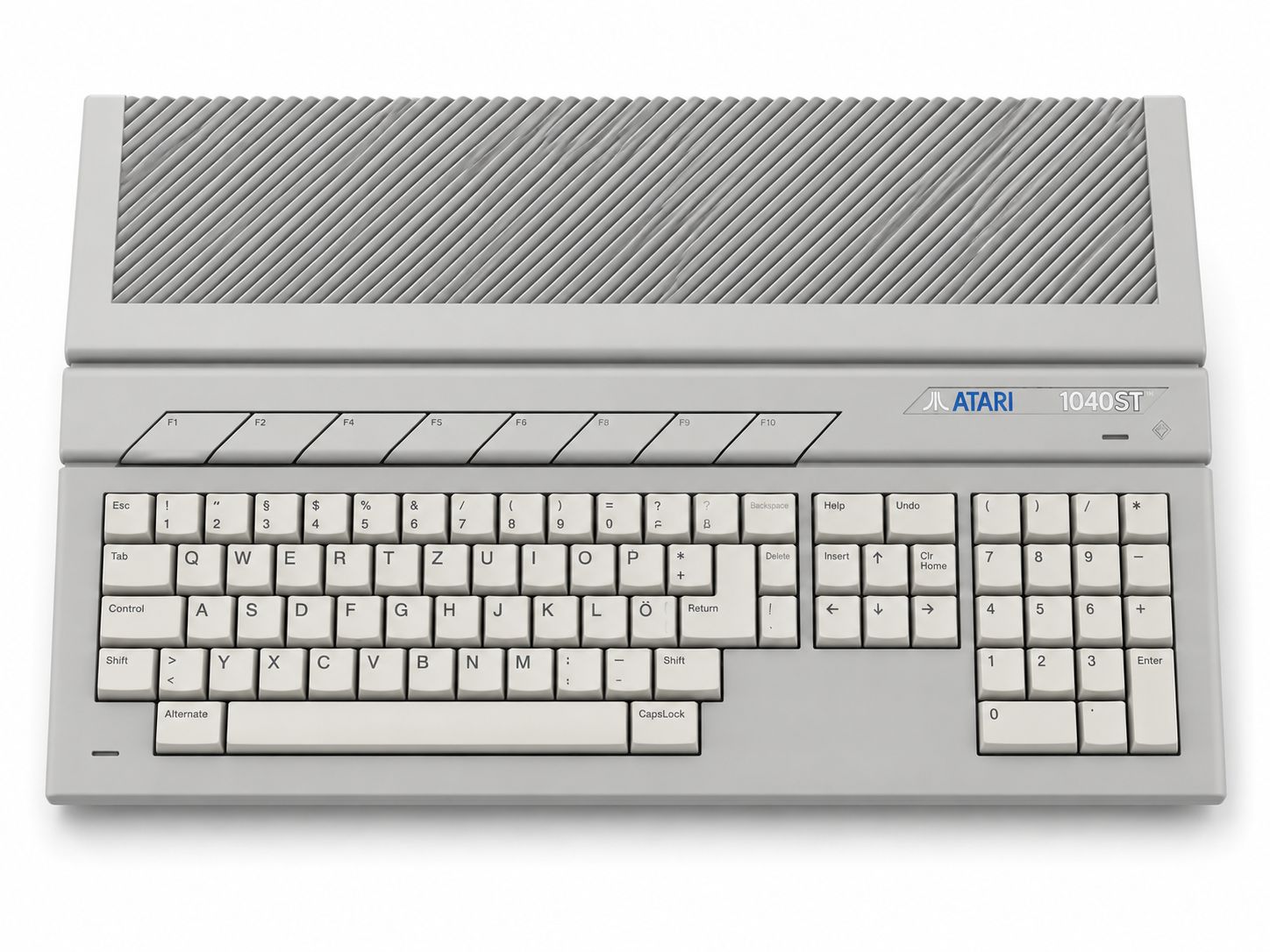
The Atari 1040ST was one of the most important and successful computers in Atari’s ST computer family and helped establish Atari as a serious competitor in the 16-bit home computer market during the mid-to-late 1980s. Released in 1986, the 1040ST built upon the foundation established by the earlier Atari 520ST while significantly increasing memory capacity and integrating the floppy disk drive directly into the main system unit. Combining affordability, strong graphics capabilities, a graphical operating environment, and built-in MIDI support, the Atari 1040ST became one of the defining home computers of its era.
The “1040” in the system’s name referred to its 1 MB of RAM — an impressive amount of memory for a consumer computer at the time. In fact, the Atari 1040ST became one of the first personal computers to ship with 1 MB of RAM for under $1,000 USD, making advanced 16/32-bit computing accessible to a much wider audience. This combination of affordability and power helped the 1040ST gain popularity among gamers, programmers, musicians, students, and creative professionals.
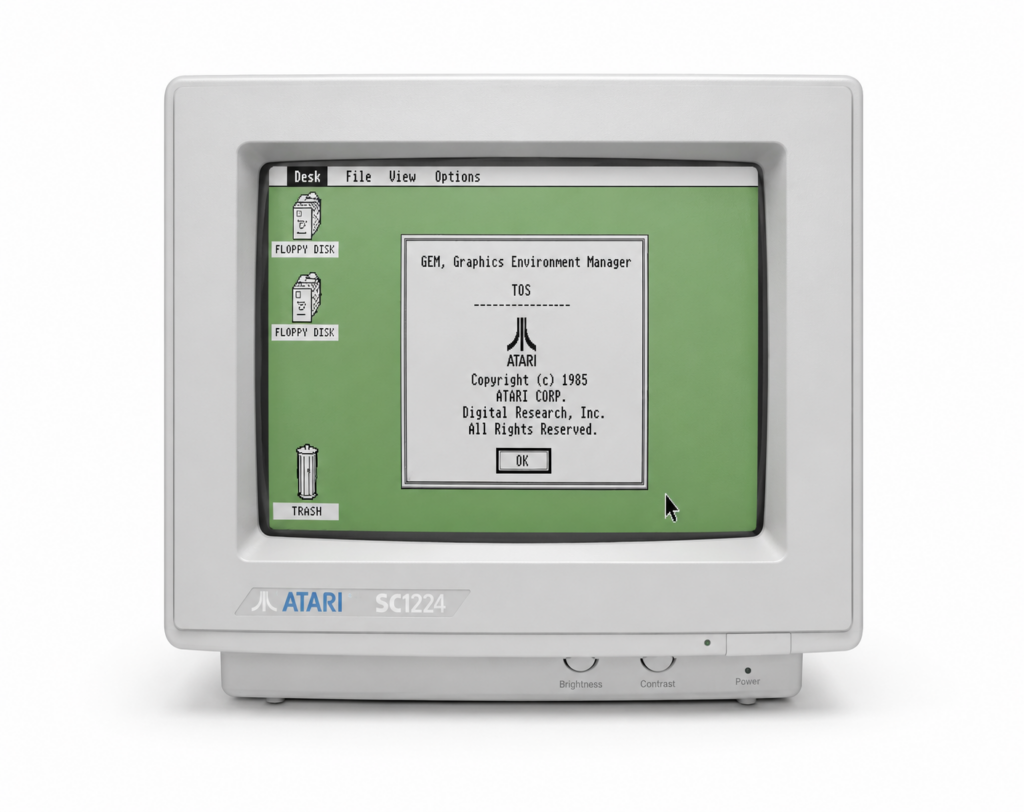
At the heart of the Atari 1040ST was the Motorola 68000 processor running at 8 MHz, providing performance comparable to far more expensive systems. The computer also featured Atari’s TOS operating system paired with the GEM graphical user interface, giving users a modern desktop-style environment with windows, icons, menus, and mouse control. For many users, the Atari ST line represented their first experience with a graphical operating system.
One of the Atari 1040ST’s most revolutionary features was its built-in MIDI ports. Unlike many competing systems that required expensive expansion hardware, the 1040ST allowed musicians to connect synthesizers, drum machines, and MIDI equipment directly to the computer out of the box. This made the Atari ST family legendary within the music industry. Professional musicians and studios around the world adopted the Atari ST because of its reliable MIDI timing, affordability, and excellent sequencing software.
The Atari 1040ST also developed a strong reputation as a gaming machine, particularly in Europe where the Atari ST became enormously popular. Thousands of games were released for the platform, ranging from arcade-style action titles and flight simulators to strategy games and adventure games. The computer’s graphics and sound capabilities allowed developers to create visually impressive games that rivaled many dedicated gaming systems of the period.
Beyond gaming and music production, the 1040ST found success in desktop publishing, business applications, telecommunications, and education. The system supported hard drives, printers, modems, scanners, and numerous expansion devices, allowing it to function as a serious productivity workstation. Atari’s affordable pricing strategy helped make advanced computing technology available to many users who previously could not afford higher-end systems.
The Atari 1040ST also became highly influential within the demo scene, where programmers created increasingly advanced graphics demonstrations, animations, and music productions that pushed the hardware far beyond its original intended capabilities. The ST’s active enthusiast community helped keep the platform alive for many years after Atari officially discontinued the system.
Today, the Atari 1040ST is remembered as one of Atari’s greatest computing achievements. Its combination of affordability, multimedia capabilities, MIDI support, graphical computing, and strong software support helped secure its place as one of the defining home computers of the 1980s.
CPU
- Motorola 68000
- Clock Speed: 8 MHz
Graphics
- Atari ST graphics hardware
- Color resolutions:
- 320 x 200 (16 colors)
- 640 x 200 (4 colors)
- Monochrome resolutions:
- 640 x 400
Sound
- Yamaha YM2149 sound chip
- Three-channel sound support
Memory
- RAM: 1 MB
Storage Support
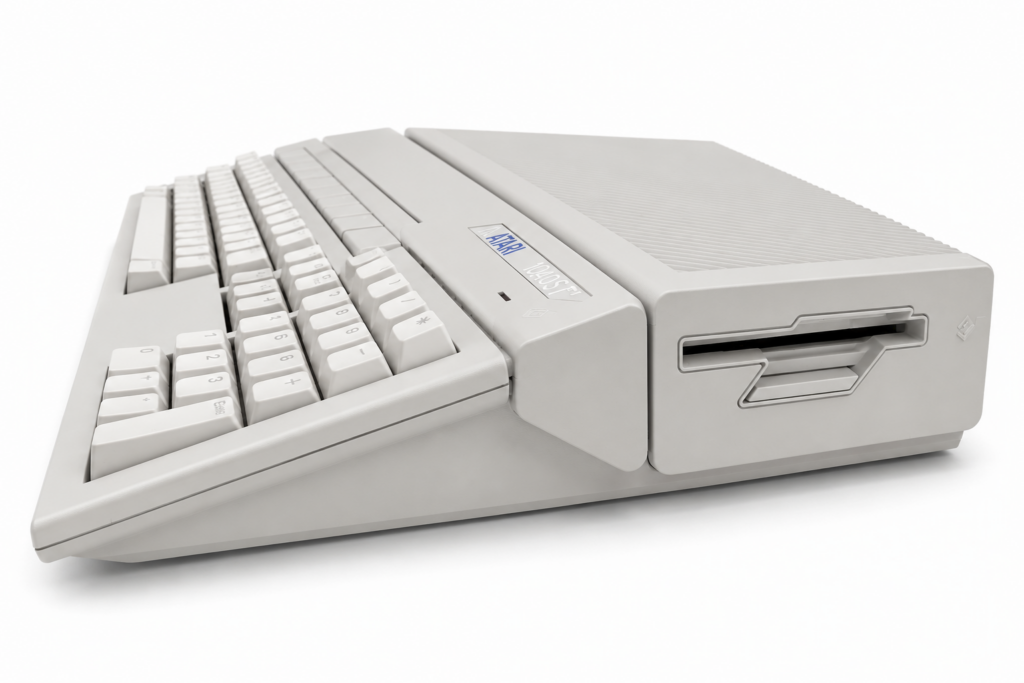
- Built-in 3.5-inch floppy disk drive
- External hard drive support
- External floppy drive support
Operating System
- Atari TOS operating system
- GEM graphical user interface
Ports & Expansion
- Built-in MIDI In/Out ports
- Serial and parallel ports
- Mouse and joystick ports
- Monitor output support
- External hard drive interface
Input Device
- Full-travel keyboard
- Atari ST mouse
- Joystick support
Physical Design
- Integrated floppy disk drive
- Compact wedge-style desktop case
- Light gray industrial design
Notable Features
One of the first affordable 1 MB home computers
- Built-in MIDI support
- Graphical operating environment
- Popular in music studios and gaming communities
- Strong desktop publishing and productivity support
Notable Facts
- The Atari 1040ST was recognized by Guinness World Records as the first personal computer with 1 MB of RAM selling for under $1,000.
- The Atari 1040ST became one of the most widely used MIDI sequencing computers in professional music studios during the late 1980s and early 1990s.
- Some early Atari 1040ST models used external power supplies because of heat and space considerations inside the compact case.
