
Release Information
- Released: 1979
- Manufacturer: Atari
- Type: 8-bit home computer
The Atari 800 Home Computer
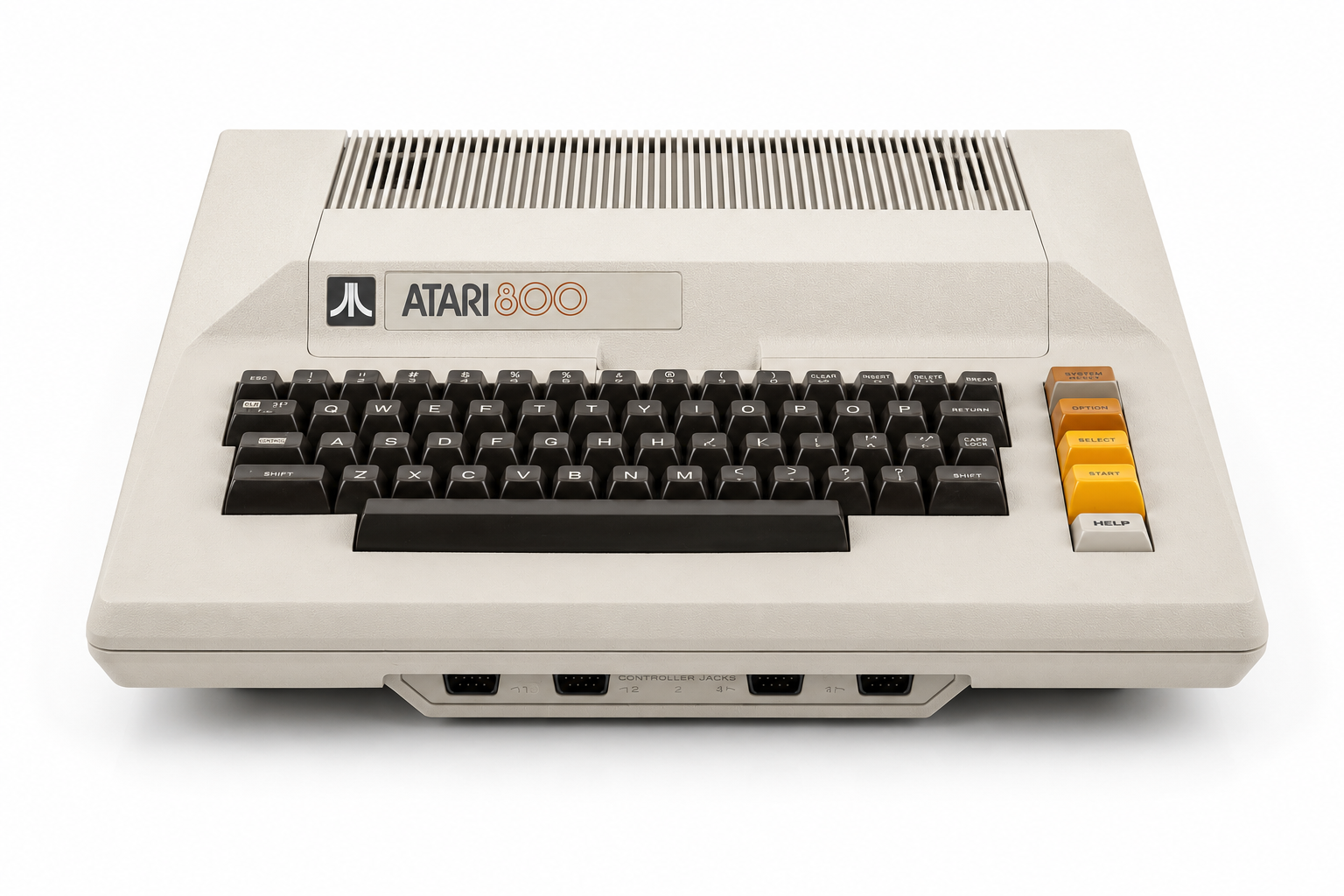
The Atari 800 was one of the most advanced and influential home computers of the late 1970s and early 1980s. Released in 1979 alongside the Atari 400, the Atari 800 represented the premium model in Atari’s first generation of 8-bit computers. Designed with expandability, performance, and versatility in mind, the Atari 800 quickly earned a reputation as one of the most powerful and capable home computers available during the early years of personal computing.
Atari built the 800 using technology inspired by its successful arcade machines, giving the computer graphics and sound capabilities that were far ahead of many competing systems. The computer featured Atari’s custom ANTIC and GTIA graphics chips along with the powerful POKEY sound chip, allowing it to display colorful graphics, smooth animation, hardware sprites, and advanced multi-channel audio. These features made the Atari 800 especially popular for gaming, where it often delivered experiences closer to arcade-quality entertainment than many other home computers of the era.
Unlike the lower-cost Atari 400, the Atari 800 featured a full-travel professional-style keyboard that made it much more comfortable for typing and programming. The system also included expandable memory slots and multiple internal cartridge connectors, reflecting Atari’s intention for the machine to serve not only as a gaming platform but also as a serious personal computer. Users could write programs in Atari BASIC, create graphics, manage files, connect printers and disk drives, and even communicate through early modems and bulletin board systems.
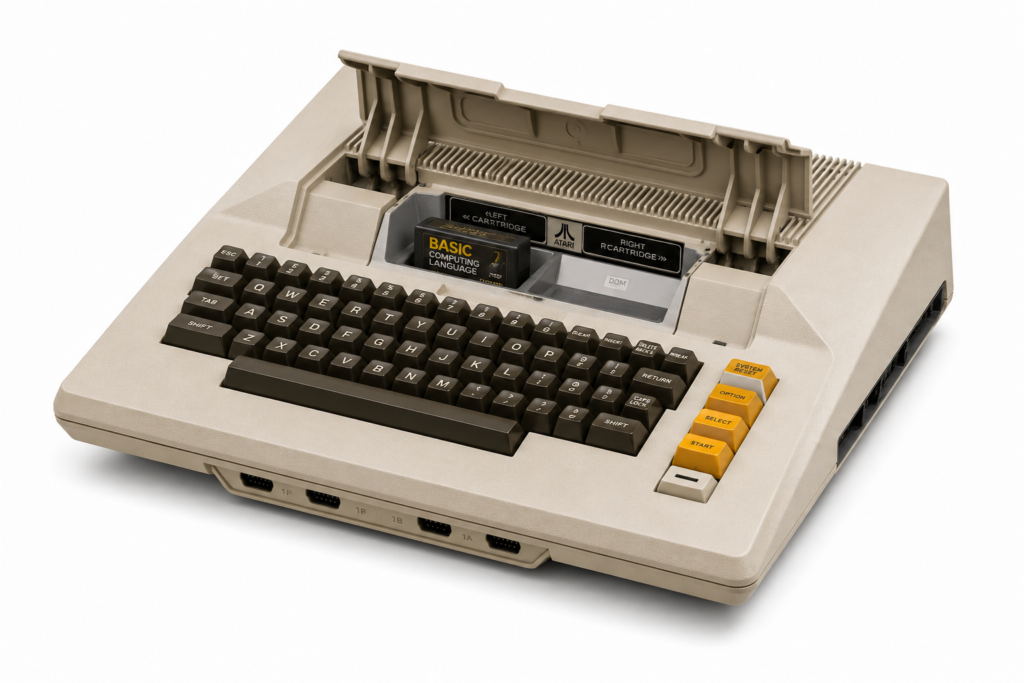
The Atari 800’s internal construction was also unique. The system featured heavy internal RF shielding and a modular design with plug-in memory boards housed beneath a removable top cover. This robust construction gave the computer a durable, premium feel and helped meet strict FCC radio interference requirements of the time. Many enthusiasts still consider the Atari 800 one of the best-built home computers ever produced.
The system supported a rapidly growing library of software that included games, educational titles, productivity applications, programming tools, telecommunications software, and music programs. Popular games such as Star Raiders, Eastern Front (1941), M.U.L.E., and Miner 2049er helped establish the Atari 800 as one of the premier gaming computers of the early 1980s. At the same time, schools and hobbyists embraced the platform for learning programming and experimenting with home computing.
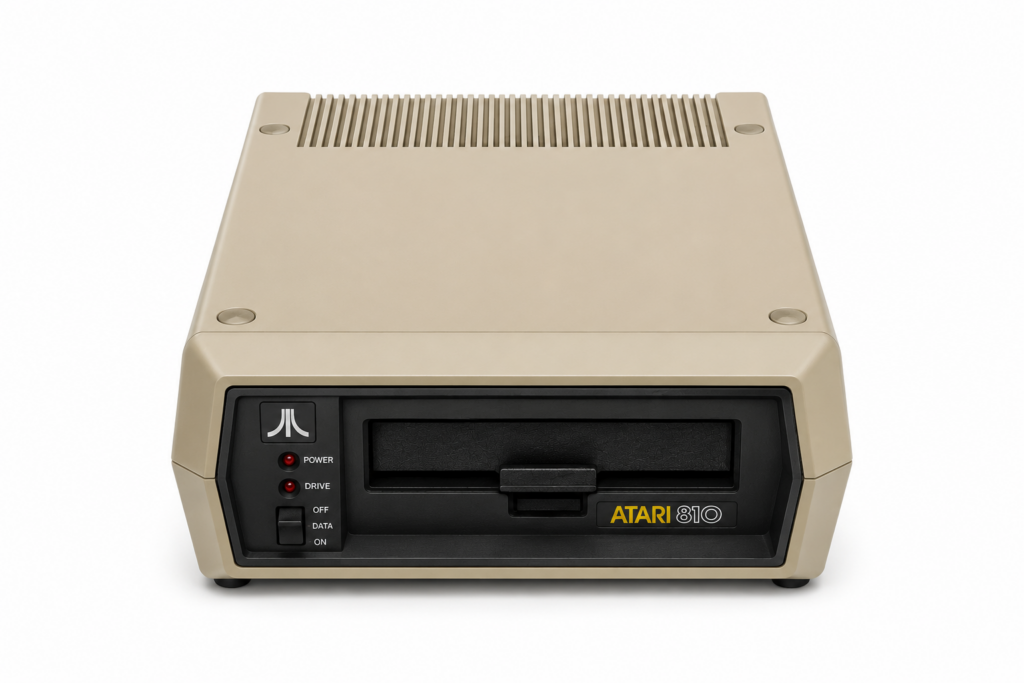
The Atari 800 also benefited from Atari’s extensive peripheral ecosystem. Users could connect cassette tape systems, floppy disk drives, printers, modems, plotters, and additional controllers that expanded the computer’s capabilities far beyond simple gaming. For many users, the Atari 800 became their first experience with personal computing, software development, digital art, and telecommunications.
As the Atari 8-bit family evolved into the XL and XE series, the Atari 800 remained highly respected for its build quality, expandability, and technical capabilities. Even decades later, collectors and retro computing enthusiasts continue to admire the system for its industrial design, software library, and historical importance.
Today, the Atari 800 is remembered as one of the defining home computers of the early personal computing era. It combined advanced multimedia hardware, expandability, gaming excellence, and educational potential into a machine that helped shape the future of home computing and inspired an entire generation of technology enthusiasts.
CPU
- MOS Technology 6502C
- Clock Speed: Approximately 1.79 MHz
Graphics
- ANTIC graphics processor
- CTIA / later GTIA graphics chip
- Resolution up to 320 × 192
- Hardware sprite support
- Advanced color graphics modes
Sound
- POKEY sound chip
- Four-channel audio support
Memory
- Originally shipped with 8 KB or 16 KB RAM
- Expandable up to 48 KB through internal memory slots
Storage Support
- Cartridge support
- Cassette tape support
- Floppy disk drive support
Keyboard
- Full-travel professional-style keyboard
- Function keys and system controls
Expansion & Ports
- Multiple internal expansion slots
- Peripheral bus interface (SIO)
- Printer support
- Modem support
- Joystick controller ports
Output
- RF television output
- Composite monitor support
Physical Design
- Large beige case design
- Heavy internal RF shielding
- Removable top access panel
- Dual cartridge slots
Operating System
- Atari OS ROM
- Atari BASIC available through cartridge
Notable Features
Premium version of Atari’s first home computer family
- Advanced graphics and sound for its era
- Strong expandability and peripheral support
- Arcade-inspired hardware architecture
- Widely respected for build quality and durability
Notable Facts
- The Atari 800 contained so much internal RF shielding that it weighed significantly more than many competing home computers.
- Atari 800 units included two cartridge slots, although very few commercial programs ever used the second slot.
- Atari engineers designed the Atari 800 to pass extremely strict FCC interference regulations that many competitors initially struggled to meet.
