
Release Information
- Released: 1993
- Manufacturer: Atari
- Type: Cartridge-based home video game console
The Jaguar Game Console
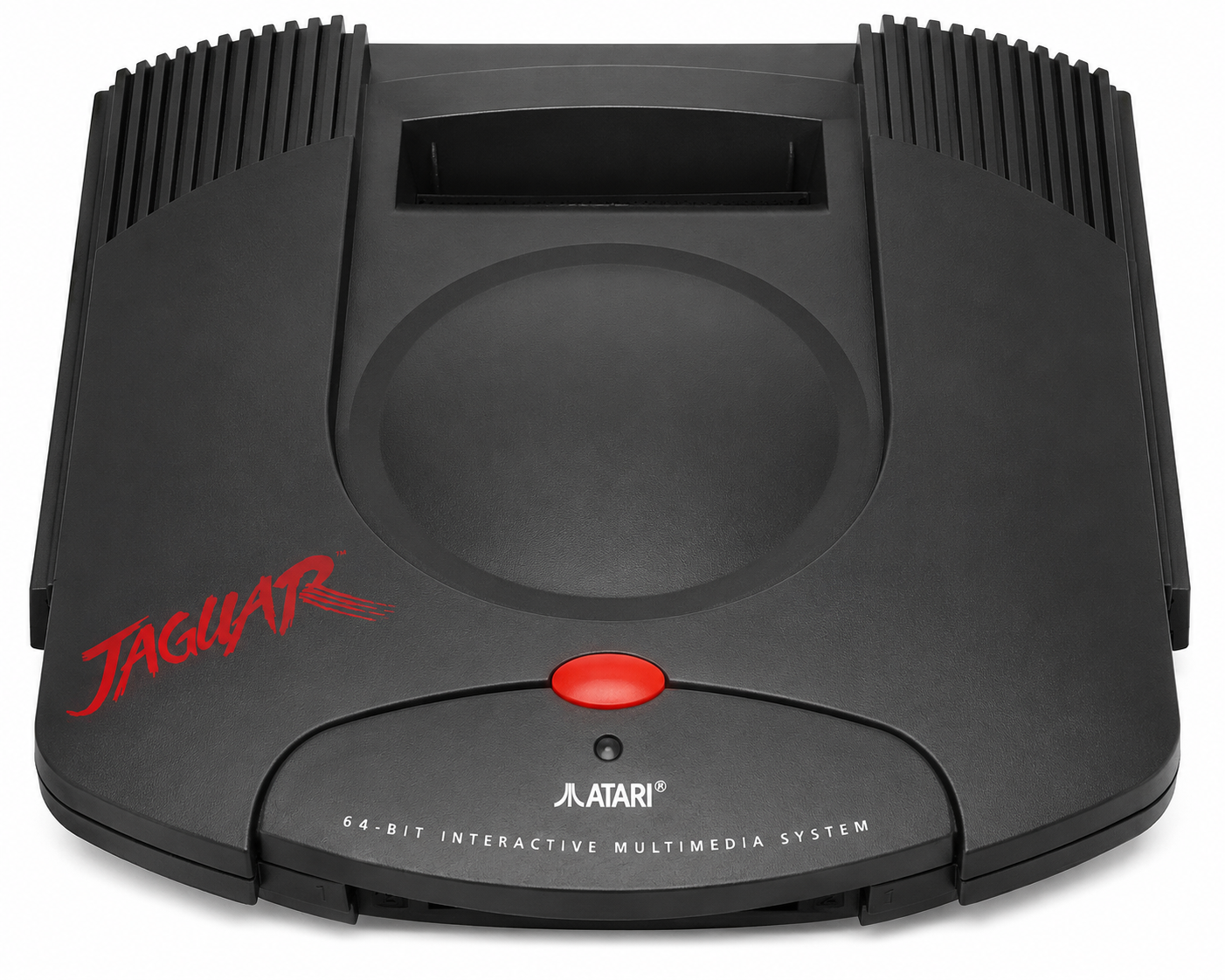
The Atari Jaguar was Atari’s final major home gaming console and one of the company’s most ambitious attempts to return to the forefront of the video game industry. Released in 1993, the Jaguar was heavily marketed as the world’s first 64-bit video game system, positioning it as a powerful next-generation alternative to competing consoles from companies such as Nintendo and Sega. Atari hoped the Jaguar would restore the company’s reputation as an innovator in gaming technology and establish a new era for the Atari brand.
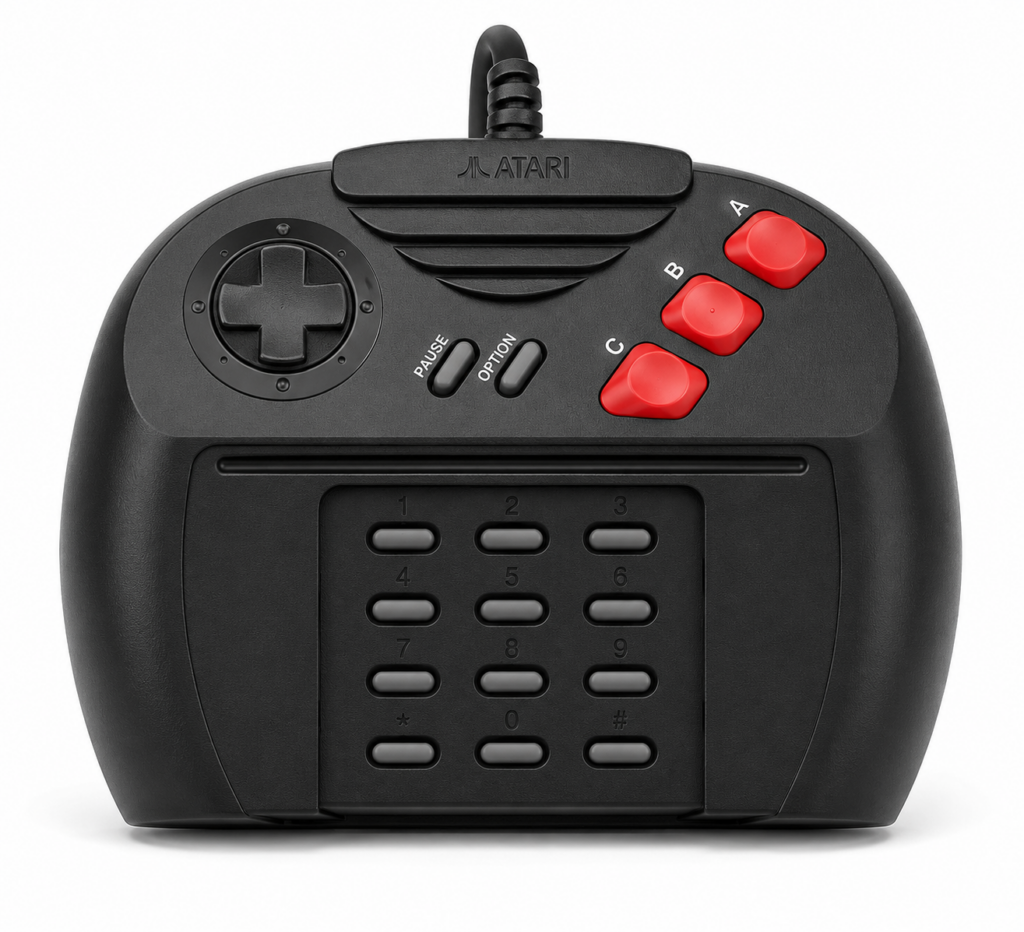
The Jaguar featured a sleek black design with curved styling and a distinctive controller that immediately stood out from other consoles of the era. The controller included a traditional directional pad, three action buttons, and a large numeric keypad that supported interchangeable overlays for different games. While unusual by modern standards, Atari believed the keypad would provide developers with additional control options and flexibility for more advanced gameplay experiences.
Technically, the Jaguar was an extremely ambitious system. The console used multiple custom processors with names such as “Tom” and “Jerry,” which handled graphics, sound, and other advanced functions. Atari promoted the Jaguar as a true 64-bit machine capable of delivering arcade-quality 3D graphics, detailed textures, and advanced sound capabilities. Games such as Tempest 2000, Alien vs Predator, Cybermorph, Rayman, and DOOM demonstrated the system’s potential and remain highly regarded by retro gaming enthusiasts today.
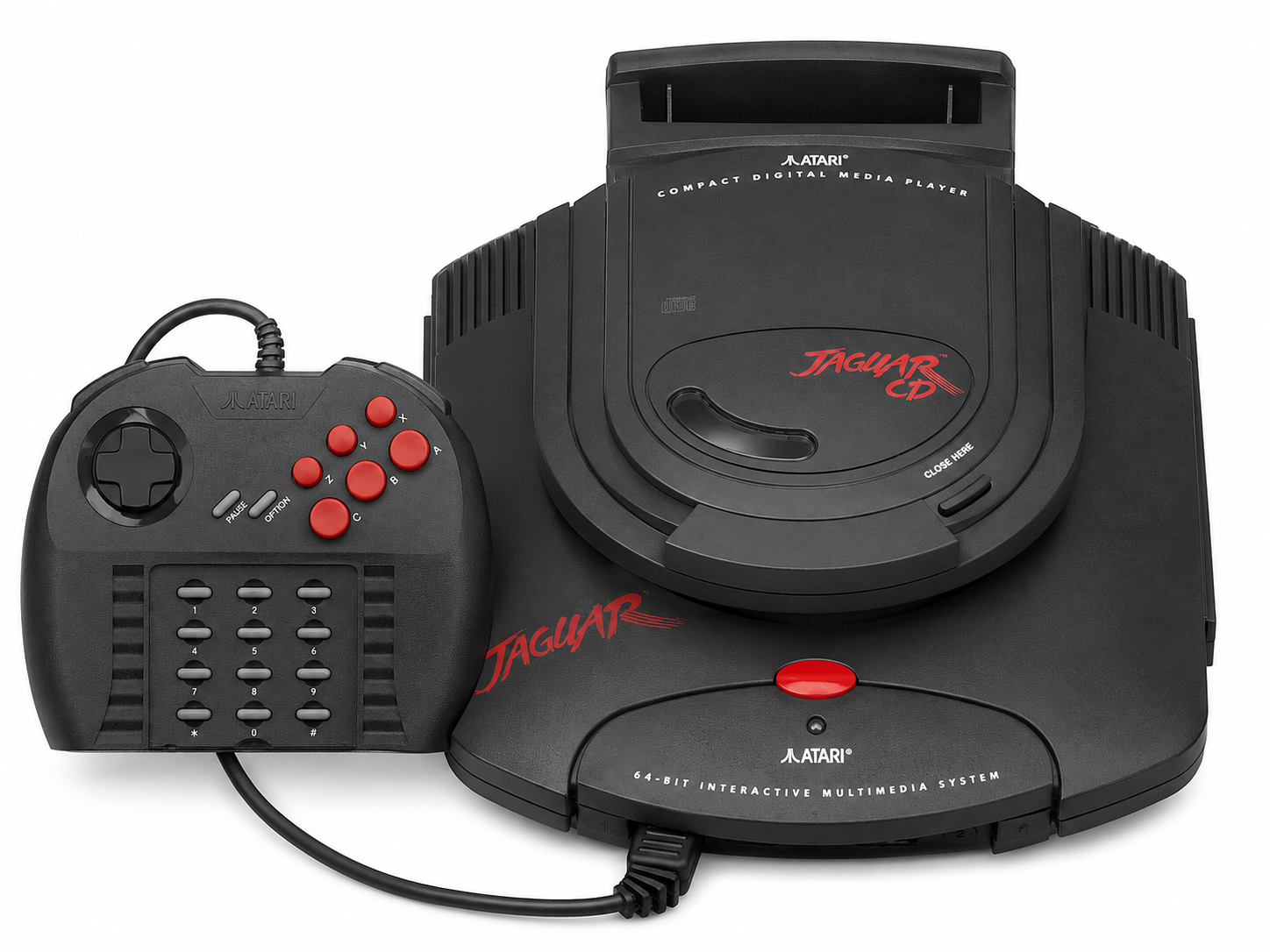
One of the Jaguar’s most important achievements was its ability to deliver impressive graphics and fast gameplay during the early years of the 3D gaming era. Titles like Alien vs Predator created immersive first-person environments that were technologically impressive for a home console at the time, while Tempest 2000 became widely recognized as one of the best arcade-style shooters of the 1990s. The Jaguar also received a CD-ROM add-on called the Jaguar CD, which expanded storage capacity and allowed for enhanced multimedia experiences.
Despite its advanced hardware, the Jaguar faced significant challenges in the marketplace. The console suffered from a relatively small game library, limited third-party developer support, and increasing competition from systems such as the PlayStation and Sega Saturn. Additionally, the Jaguar’s complex hardware architecture made game development difficult, preventing many developers from fully utilizing the console’s capabilities. Although Atari marketed the Jaguar aggressively, the system struggled to achieve widespread commercial success.
Even so, the Atari Jaguar remains one of the most fascinating and collectible consoles of the 1990s. It represented Atari’s final major effort to compete in the home gaming market and symbolized the company’s continued desire to innovate despite growing industry challenges. Today, the Jaguar has developed a strong cult following among collectors and retro gaming fans who appreciate its unique design, ambitious technology, and memorable game library.
The Atari Jaguar stands as an important reminder of a transitional moment in gaming history — a period when companies were experimenting with increasingly powerful hardware and the future of 3D gaming was just beginning to emerge.
CPU & Processors
- Motorola 68000 CPU
- Clock Speed: 13.295 MHz
- Custom “Tom” graphics processor
- Custom “Jerry” audio processor
Graphics
- 64-bit graphics architecture
- Advanced sprite and polygon support
- Hardware scaling and shading
- Resolution up to 800 × 576 (interlaced modes)
- 24-bit color palette
Sound
- 16-bit stereo audio
- DSP-based sound processing
- CD-quality audio support with Jaguar CD add-on
Memory
- RAM: 2 MB
Media Format
- ROM cartridge-based games
- Optional Jaguar CD-ROM add-on support
Controllers
- Directional pad
- Three action buttons
- 12-button numeric keypad
- Game-specific controller overlays
Output
- RF television output
- Composite video support
- Stereo audio support
Physical Design
- Curved black plastic console
- Front-loading cartridge slot
- Distinctive large controller design
Notable Features
Marketed as the world’s first 64-bit console
- Advanced graphics hardware for its era
- Supported optional CD-ROM expansion
- Featured multiple custom processors
- Atari’s final major home gaming console
Notable Games
- Tempest 2000
- Alien vs Predator
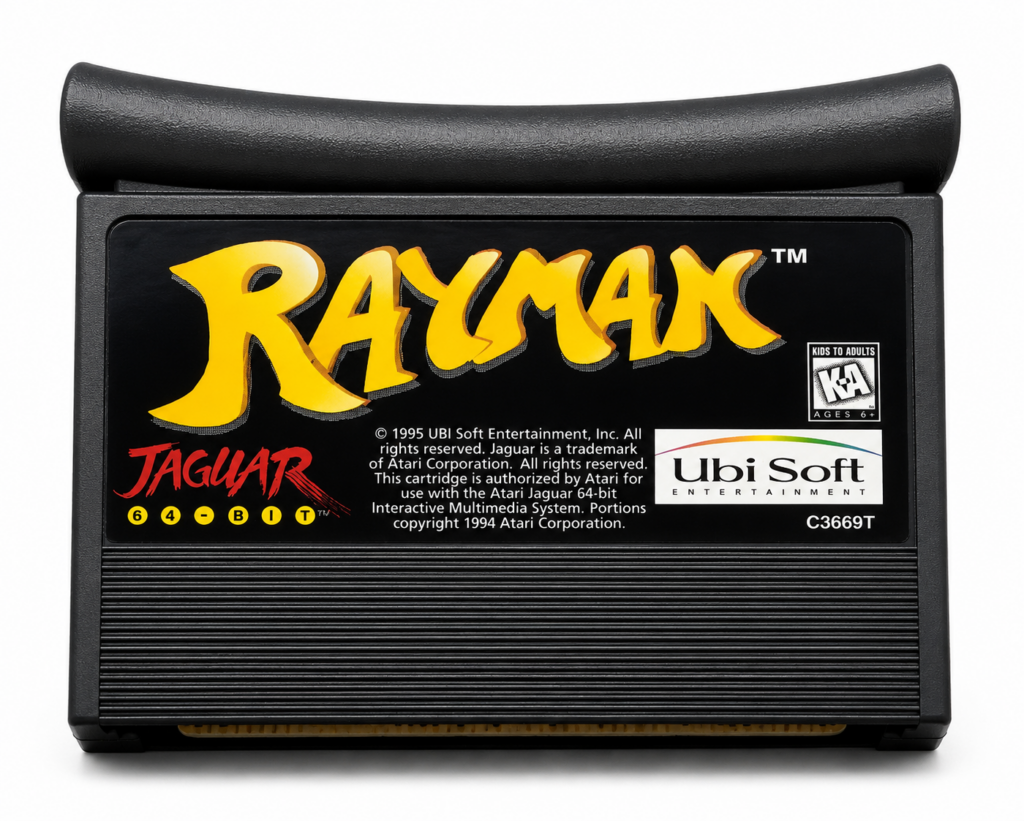
- Rayman
- DOOM
- Cybermorph
